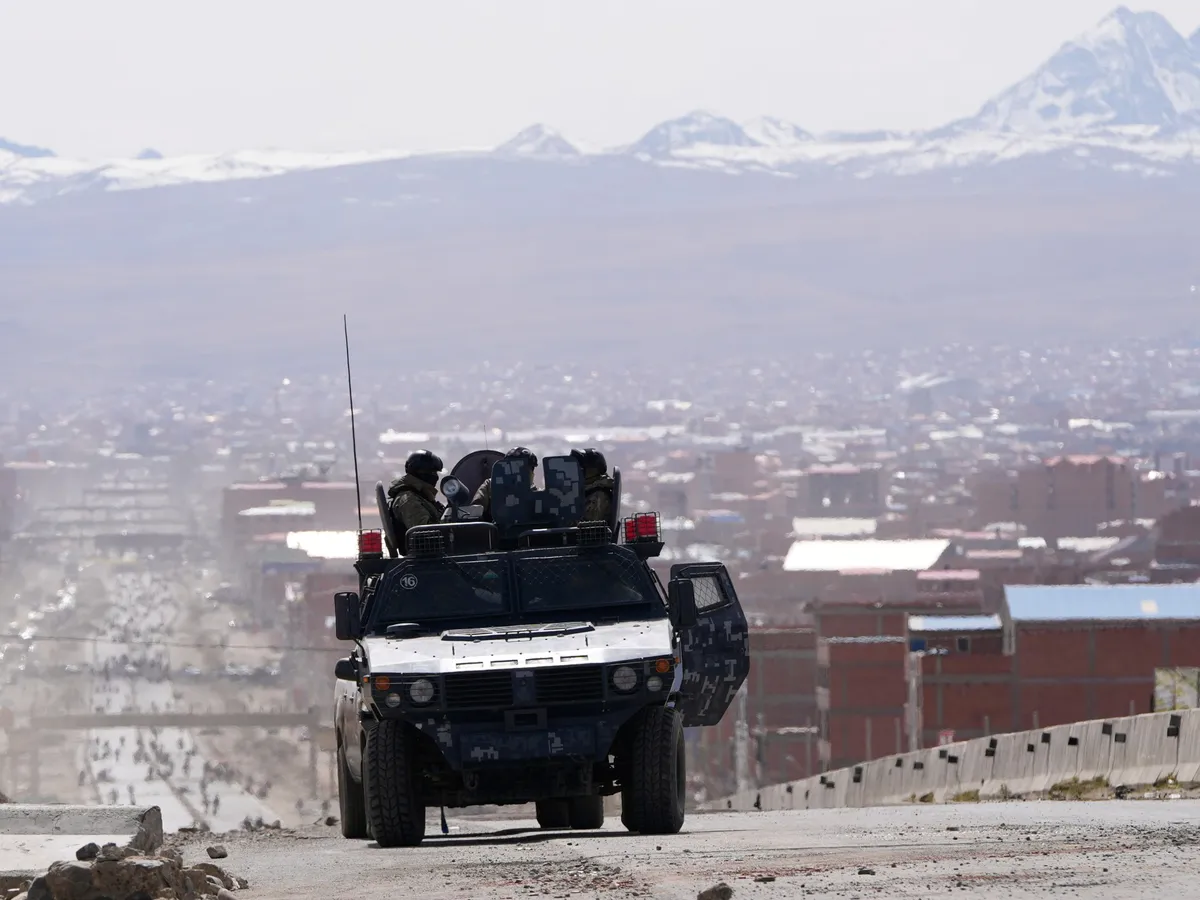
state of emergency permits deployment of military to support police amid five weeks of anti-government protests.Authorities in Bolivia report no active road blockades in the country, the day after President Rodrigo Paz declared a state of emergency in response to weeks of protests.Early on Sunday, the South American country’s Legislative Assembly approved Paz’s decree, which prohibited “blocking streets, avenues, roads and highways in ways that affect transportation and supplies”.Recommended Stories list of 3 itemslist 1 of 3Bolivia’s legislature passes law allowing use of troops against protesterslist 2 of 3Bolivia approves military measures against nationwide protestslist 3 of 3Food shortages spark scuffles outside supermarket in Boliviaend of listThe order also permitted Bolivia’s armed forces to support police “in restoring order, reopening roads and protecting the population”.The signs of calm on Sunday coincided with several other breakthroughs with protesters, who launched demonstrations calling for Paz’s resignation after he imposed austerity measures that included cutting fuel subsidies earlier this year.In Santa Cruz, officials and protest leaders signed an agreement to lift a critical blockade in the town of San Julian.A federation of groups representing rural and Indigenous residents announced a pause in protests in La Paz, while maintaining they had not abandoned their demands.Five weeks of road blockades have stranded trucks and choked supplies of food, fuel and medicines to many areas.Bolivia’s ombudsman’s office and human rights organisations have said that at least 17 people have died, many linked with disruptions to medical care caused by the blockades.Violent confrontations between demonstrators and riot police have led to 365 arrests and 37 injuries, according to authorities.While Bolivia’s national highway authority reported no active protest blockades on Sunday, it warned that many roads still required significant clean-up and repair.
SRCAl Jazeera
LANGEN
LEANCenter
WORDS284
ENT12
SUN · 2026-06-21 · 14:27 GMTBRIEF NSR-2026-0621-86172
NSR-2026-0621-86172News Report·EN·Political Strategy
Bolivian authorities say no active blockades after state of emergency decree
Bolivian authorities reported no active road blockades on Sunday, following President Rodrigo Paz's declaration of a state of emergency the previous day. The decree, approved by the Legislative Assembly, allows the military to support police in restoring order and reopening roads affected by five weeks of anti-government protests.
Al Jazeera StaffAl JazeeraFiled 2026-06-21 · 14:27 GMTLean · CenterRead · 2 min
Al JazeeraFIG 01
Reading time
2min
Word count
284words
Sources cited
3cited
Entities identified
12entities
Quality score
100%
§ 01
Briefing Summary
AI-generatedNEWSAR · AI
Bolivian authorities reported no active road blockades on Sunday, following President Rodrigo Paz's declaration of a state of emergency the previous day. The decree, approved by the Legislative Assembly, allows the military to support police in restoring order and reopening roads affected by five weeks of anti-government protests. These demonstrations, which began after the government implemented austerity measures including fuel subsidy cuts, have led to shortages of food, fuel, and medicine, and at least 17 deaths, many due to disruptions in medical care. While some protest groups have announced a pause in demonstrations and an agreement was reached to lift a key blockade in Santa Cruz, demands have not been abandoned. The national highway authority noted that many roads still require significant repair.
Confidence 0.90Sources 3Claims 5Entities 12
§ 02
Article analysis
Model · rule-basedFraming
Political Strategy
Conflict
Tone
Measured
AI-assessed
CalmNeutralAlarmist
Factuality
0.80 / 1.00
Factual
LowHigh
Sources cited
3
Well sourced
FewMany
§ 03
Key claims
5 extracted01
The state of emergency permits the deployment of military to support police.
factualArticle
Confidence
1.00
02
President Rodrigo Paz declared a state of emergency in response to weeks of protests.
factualArticle
Confidence
1.00
03
Violent confrontations between demonstrators and riot police led to 365 arrests and 37 injuries.
statisticAuthorities
Confidence
0.90
04
Bolivian authorities report no active road blockades in the country.
factualAuthorities in Bolivia
Confidence
0.90
05
At least 17 people have died, many linked with disruptions to medical care caused by the blockades.
statisticBolivia’s ombudsman’s office and human rights organisations
Confidence
0.80
§ 04
Full report
2 min read · 284 words§ 05
Entities
12 identifiedKey playerOppositionContextPositiveNeutralNegative
Organizations3
Locations4
§ 06
Keywords & salience
10 termsanti-government protests
1.00
state of emergency
1.00
road blockades
0.90
military deployment
0.80
austerity measures
0.70
fuel subsidies
0.60
restoring order
0.50
indigenous residents
0.40
human rights
0.40
food shortages
0.40
§ 07
Topic connections
Interactive graph Network visualization showing 40 related topics
View Full Graph Person Organization Location Event|Click node to navigate|Edge numbers = shared articles