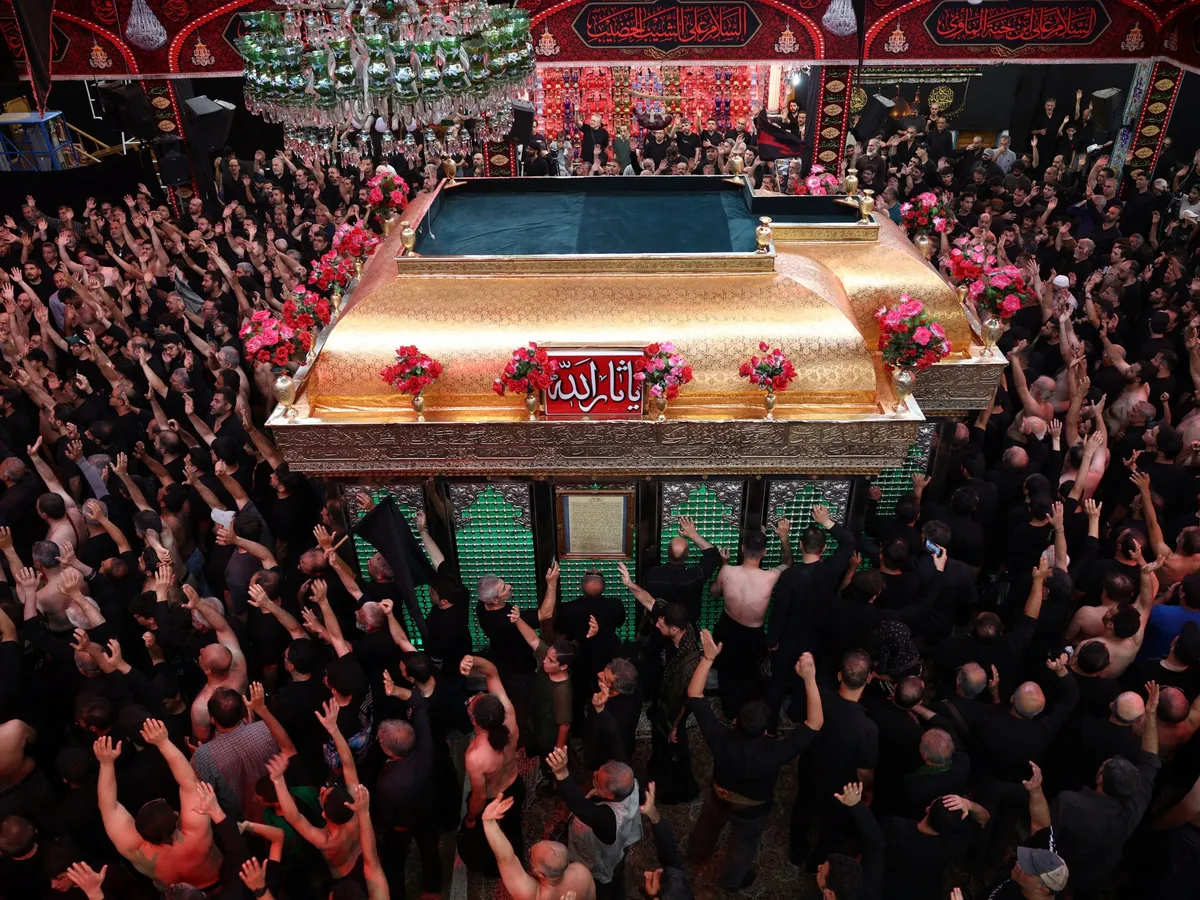
State-backed Ashura events showcase leaders killed by US, Israel, seen as martyrs in the mould of Imam Hussein.Since the start of Muharram – the first month of the Islamic calendar – last week, black cloths have been draped across many of the passageways and neighbourhoods in Tehran and other Iranian cities as a sign of mourning.Wednesday and Thursday marked Tasua and Ashura, declared public holidays in Iran each year by the authorities to mourn the killing more than 1,300 years ago of Hussein ibn Ali, the grandson of the Prophet Muhammad and the third of 12 Shia Muslim imams.Recommended Stories list of 3 itemslist 1 of 3Pragmatic choice: Israel’s war backfires as Gulf backs US-Iran deallist 2 of 3Iran accuses NATO of ‘complicity’ in US war: What role did EU nations play?list 3 of 3IRGC warns against new Hormuz route for ships: What we knowend of listFor the Islamic Republic of Iran, Ashura is also a political affair.The state presents itself as being a continuation of Hussein, the “martyred” leader, who chose to die along with his fighters and family members during an uprising instead of bowing down to what he perceived to be the unjust rule of the Umayyad caliphs of the time.In this vein, slain commanders of the Tehran-backed, and predominantly Shia, “axis of resistance” – such as Iran’s Supreme Leader Ayatollah Ali Khamenei and Hezbollah’s Hassan Nasrallah – are believed by supporters to have attained the highest levels of honour in death.Khamenei, who held absolute power for nearly 37 years, is now called “seyyed ol-shohada” or the most exalted of martyrs, by state media and some followers, which is the title most associated with Imam Hussein.More than four months after his death at the start of the war with the United States and Israel in downtown Tehran on February 28, Khamenei is slated to be buried the second week of July, during the month of Muharram. After six days of events across multiple cities, Khamenei will be buried in the holy Shia shrine of Imam Reza in northeastern Mashhad.
SRCAl Jazeera
LANGEN
LEANCenter
WORDS342
ENT12
THU · 2026-06-25 · 20:12 GMTBRIEF NSR-2026-0625-87459
NSR-2026-0625-87459News Report·EN·Political Strategy
Ashura ceremonies intertwine faith and support for state in Iran
In Iran, state-backed Ashura ceremonies, observed during the Islamic month of Muharram, intertwine religious mourning with political messaging. These events commemorate the martyrdom of Hussein ibn Ali, the grandson of Prophet Muhammad.
Al Jazeera StaffAl JazeeraFiled 2026-06-25 · 20:12 GMTLean · CenterRead · 2 min
Al JazeeraFIG 01
Reading time
2min
Word count
342words
Sources cited
0cited
Entities identified
12entities
Quality score
100%
§ 01
Briefing Summary
AI-generatedNEWSAR · AI
In Iran, state-backed Ashura ceremonies, observed during the Islamic month of Muharram, intertwine religious mourning with political messaging. These events commemorate the martyrdom of Hussein ibn Ali, the grandson of Prophet Muhammad. The Iranian state draws parallels between Hussein's historical uprising against unjust rule and the sacrifices of contemporary leaders, particularly those killed by the US and Israel. Figures like Iran's Supreme Leader Ayatollah Ali Khamenei and Hezbollah's Hassan Nasrallah are presented as martyrs in the mold of Imam Hussein. Khamenei, who died in February, is referred to by state media as "seyyed ol-shohada," the most exalted of martyrs, and is scheduled for burial in Mashhad during Muharram.
Confidence 0.90Claims 4Entities 12
§ 02
Article analysis
Model · rule-basedFraming
Political Strategy
Conflict
Tone
Measured
AI-assessed
CalmNeutralAlarmist
Factuality
0.60 / 1.00
Mixed
LowHigh
Sources cited
0
No named sources
FewMany
§ 03
Key claims
4 extracted01
Ayatollah Ali Khamenei is slated to be buried in the holy Shia shrine of Imam Reza in Mashhad during the second week of July.
factual
Confidence
0.90
02
Supreme Leader Ayatollah Ali Khamenei is referred to as 'seyyed ol-shohada' (the most exalted of martyrs) by state media and some followers.
factual
Confidence
0.90
03
Ashura ceremonies in Iran are presented by the state as a political affair, linking the current leadership to Imam Hussein's martyrdom.
factual
Confidence
0.90
04
Leaders like Ayatollah Ali Khamenei and Hassan Nasrallah are presented by supporters as martyrs in the mould of Imam Hussein.
factual
Confidence
0.80
§ 04
Full report
2 min read · 342 words§ 05
Entities
12 identifiedKey playerOppositionContextPositiveNeutralNegative
People5
Organizations1
Locations5
Events1
§ 06
Keywords & salience
9 termsashura ceremonies
1.00
imam hussein
0.90
islamic republic of iran
0.90
martyrs
0.80
ayatollah ali khamenei
0.70
axis of resistance
0.70
political affair
0.60
mourning
0.50
us, israel
0.40
§ 07
Topic connections
Interactive graph No topic relationship data available yet. This graph will appear once topic relationships have been computed.