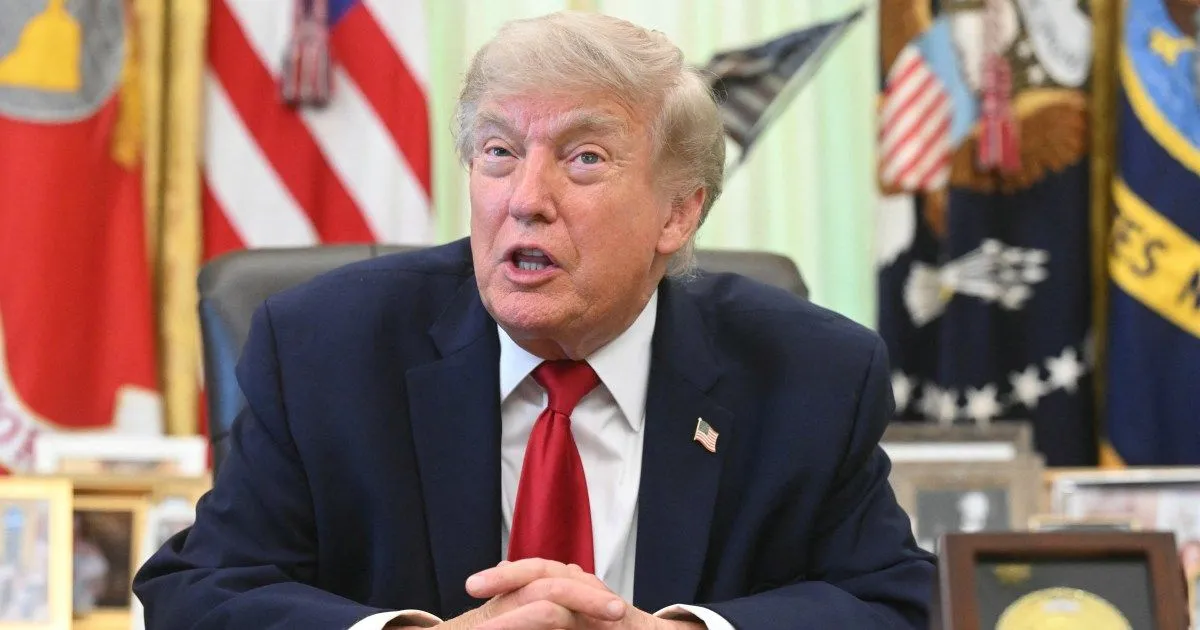
EXPLAINERThe US president has pledged to challenge the ruling, but experts say birthright citizenship is there to stay.US President Donald Trump said the Supreme Court’s ruling was 'too bad for our country' [File: Saul Loeb/AFP]Published On 1 Jul 2026The US Supreme Court has struck down President Donald Trump’s attempt to end the longstanding practice of granting citizenship to anyone born on United States soil, delivering a major blow to his attempts to overhaul immigration policy.In a 6-3 ruling on Tuesday, the court rejected an executive order signed by Trump shortly after taking office in January 2025, which barred those born in the US to parents on temporary legal statuses or without documentation from automatically receiving US citizenship.Recommended Stories list of 3 itemslist 1 of 3What is birthright citizenship, and what does the Supreme Court ruling say?list 2 of 3Donald Trump made $1.4bn in crypto income in 2025, raising his net worthlist 3 of 3‘A rally like none other’: Trump unveils 2026 Republican midterm conventionend of listAhead of the July 4 holiday marking the 250th anniversary of American independence, the court’s ruling reaffirmed what it means to be a US citizen, however – a principle grounded in the 14th Amendment of 1868 in the aftermath of the civil war, which ended the practice of slavery in the US.Chief Justice John Roberts, writing for the majority, hailed the US practice of birthright citizenship. “The Framers of the Fourteenth Amendment extended that promise to ‘every free-born person in this land’,” he wrote. “We keep that promise today.”What was Trump’s case?In line with his hardline anti-immigration agenda, Trump’s executive order stated that if one parent is “unlawfully present in the United States” and the other is not a citizen or a “lawful permanent resident at the time of said person’s birth”, the child cannot claim birthright.It added that if a parent’s presence in the country is “lawful but temporary” through a tourist, student or work visa and the other parent is not a US citizen, birthright citizenship cannot be passed on to the child.birthright citizenship grants automatic US citizenship to babies born in the country, no matter their parents’ status, drawing on the English common law principle of “jus soli”, or “right of the soil”. This is opposed to the “jus sanguinis”, or “right of blood”, which stipulates that the nationality of a child is determined by that of the parents, regardless of the location of birth.Trump repeatedly argued that birthright citizenship “ripped off” taxpayers by allowing undocumented migrants to take advantage of the US welfare state. Lawyers for the administration argued in court that the practice had been based on a “misreading” of the Constitution’s 14th Amendment, which states that “all persons born or naturalised in the United States, and subject to the jurisdiction thereof, are citizens of the United States and of the State wherein they reside”.US Solicitor General John Sauer, representing the administration, argued that “subject to the jurisdiction thereof” automatically precluded some immigrant groups from birthright citizenship, and that it should apply only to those with “allegiance to the United States by virtue of domicile”.Sauer also argued that granting citizenship to any baby born on US soil had led to what he termed “birth tourism”, or the arrival of “uncounted thousands of foreigners from potentially hostile nations” who aimed to secure citizenship for their children.How has Trump responded to the ruling?Trump called the Supreme Court’s ruling “too bad for our country” and suggested there may be other avenues to pursue the same goal, such as for Republicans in Congress to pass legislation that limits who qualifies for citizenship at birth.“Congress should start TODAY to work on ending expensive and unfair to our Country, birthright citizenship,” Trump wrote. “They will have my Complete and Total Support!”The case against birthright has been of high importance for the Trump administration ahead of the November midterm elections. Trump attended the court’s oral arguments in early April, becoming the first sitting president to do so in an active case before the Supreme Court.He was seen barging out in the middle of the hearing shortly before writing on Truth Social: “We are the only Country in the World STUPID enough to allow ‘Birthright’ Citizenship!”The White House deputy chief of staff, Stephen Miller, said the ruling was “destructive and outrageous”. “American citizenship is not the birthright of the world. It belongs only and solely to Americans. No provision of the Constitution can be read to require our national self-obliteration,” he wrote on X.Miller told Al Jazeera that the Trump administration will continue “fighting” to end birthright citizenship in spite of the ruling.Can Trump find another way to end birthright citizenship?Rainer Baubock, a lecturer at the Robert Schuman Centre for Advanced Studies at the European University Institute in Florence, Italy, said that while the ruling comes as no surprise, it is significant because it “preserves an inclusive conception of the American polity that includes the children born to undocumented migrants”.Baubock said future legislation will be unlikely to change that. “By deciding to entrench an obvious and literal interpretation of the Constitution, it seems [the court] closed any road for the Republican majority in Congress to restrict birthright citizenship in ordinary legislation,” the analyst told Al Jazeera. “It would thus take a constitutional amendment and the chances for this to pass are practically zero.”Nando Sigona, a lecturer on migration at the University of Birmingham, said: “Unless Congress were to pursue the extraordinarily difficult route of a constitutional amendment, which requires broad bipartisan support, legislation alone would almost certainly face immediate constitutional challenges,” he added.Who does the Supreme Court ruling benefit?A joint study by Migration Policy Institute (MPI) and Pennsylvania State University in May 2025 predicted that an estimated 255,000 babies a year would be born in the US without citizenship, increasing the undocumented population by 2.7 million by 2045, if Trump’s executive order had succeeded.The Pennsylvania State University estimated that Latino immigrants would be the most affected by the policy change, counting for more than 90 percent of US-born people without legal status by 2050.The Asian population would experience the largest relative growth of any other immigrant group, with 41 “unauthorised” births per 1,000 Asians without legal status, compared with 17 births per 1,000 Latinos without legal status, according to the university.Aside from the affected communities, the ruling also appears to benefit the US economy. The Center for Migration Studies (CMS) estimated that beneficiaries of birthright citizenship will have contributed $7.7 trillion to the US economy through their income between 1975 and 2074.What is the ruling’s significance?Sigona said the ruling was significant as it reaffirms that the Constitution – rather than the executive power – defines the boundaries of American citizenship.“By upholding birthright citizenship, the court reaffirmed a longstanding interpretation of the 14th Amendment dating back more than a century and rejected an attempt to redefine constitutional rights through executive action,” Sigona told Al Jazeera. “More broadly, it signals that even in today’s highly polarised political climate, there remain constitutional limits on presidential authority over immigration.”Culturally, it is also important to view the wider debate about birthright citizenship through the lens of each country’s unique history, Shaw said. In the US’s case, “the 14th amendment needs to be seen in the light of the civil war being fought substantially around slavery”, the analyst said.
SRCAl Jazeera
LANGEN
LEANCenter
WORDS1 215
ENT10
WED · 2026-07-01 · 12:24 GMTBRIEF NSR-2026-0701-89012
NSR-2026-0701-89012News Report·EN·Legal & Judicial
US Supreme Court upholds birthright citizenship: Who wins, who loses?
The US Supreme Court has struck down President Trump's executive order that aimed to end birthright citizenship for children born in the US to parents without legal status or on temporary visas. In a 6-3 ruling, the court upheld the longstanding practice, grounded in the 14th Amendment, which grants citizenship to all persons born or naturalized in the United States.
Federica MarsiAl JazeeraFiled 2026-07-01 · 12:24 GMTLean · CenterRead · 5 min
Al JazeeraFIG 01
Reading time
5min
Word count
1 215words
Sources cited
2cited
Entities identified
10entities
Quality score
100%
§ 01
Briefing Summary
AI-generatedNEWSAR · AI
The US Supreme Court has struck down President Trump's executive order that aimed to end birthright citizenship for children born in the US to parents without legal status or on temporary visas. In a 6-3 ruling, the court upheld the longstanding practice, grounded in the 14th Amendment, which grants citizenship to all persons born or naturalized in the United States. Trump had argued that the practice was a misreading of the Constitution and led to "birth tourism." Despite the ruling, Trump has pledged to challenge it, suggesting Congress could pass legislation to limit birthright citizenship. Experts, however, believe birthright citizenship is likely to remain in place.
Confidence 0.90Sources 2Claims 5Entities 10
§ 02
Article analysis
Model · rule-basedFraming
Legal & Judicial
Political Strategy
Tone
Measured
AI-assessed
CalmNeutralAlarmist
Factuality
0.70 / 1.00
Factual
LowHigh
Sources cited
2
Limited
FewMany
§ 03
Key claims
5 extracted01
Trump argued that birthright citizenship 'ripped off' taxpayers by allowing undocumented migrants to take advantage of the US welfare state.
quoteDonald Trump
Confidence
1.00
02
Chief Justice John Roberts stated, 'The Framers of the Fourteenth Amendment extended that promise to ‘every free-born person in this land’... We keep that promise today.'
quoteChief Justice John Roberts
Confidence
1.00
03
The ruling reaffirmed birthright citizenship as a principle grounded in the 14th Amendment.
factual
Confidence
1.00
04
The court rejected an executive order signed by Trump that barred individuals born in the US to parents on temporary legal statuses or without documentation from receiving US citizenship.
factual
Confidence
1.00
05
The US Supreme Court struck down President Donald Trump’s attempt to end birthright citizenship.
factual
Confidence
1.00
§ 04
Full report
5 min read · 1 215 words§ 05
Entities
10 identifiedKey playerOppositionContextPositiveNeutralNegative
Organizations2
Locations1
§ 06
Keywords & salience
8 termsbirthright citizenship
1.00
us supreme court
0.90
14th amendment
0.80
donald trump
0.70
immigration policy
0.70
jus soli
0.60
executive order
0.50
jus sanguinis
0.40
§ 07
Topic connections
Interactive graph Network visualization showing 51 related topics
View Full Graph Person Organization Location Event|Click node to navigate|Edge numbers = shared articles