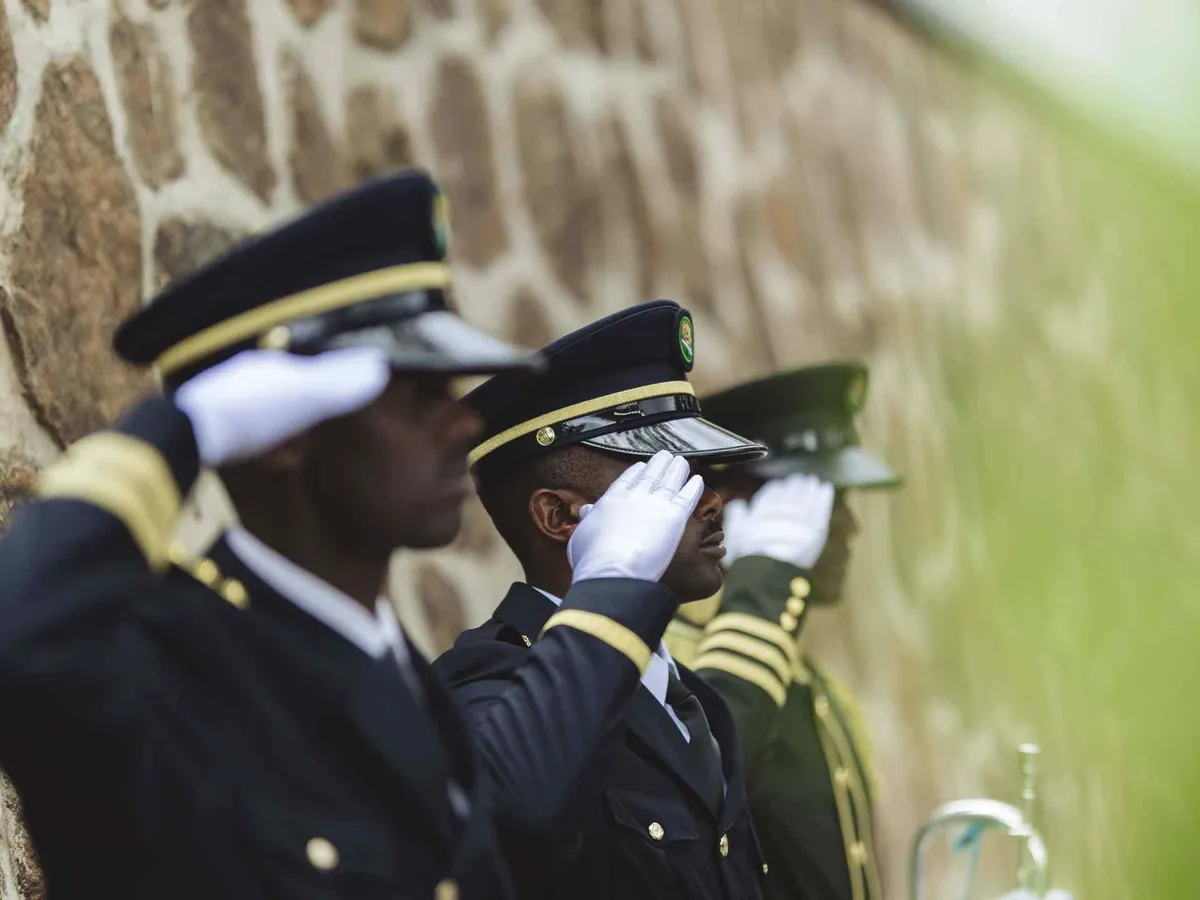
For many young Rwandans, Liberation Day is as much about the future as the past.Uniformed personnel salute during a Liberation Day ceremony in Rwanda. The annual observance commemorates the military victory that ended the Tutsi" class="entity-link entity-event" data-entity-id="158586" data-entity-type="event">1994 genocide against the Tutsi [Photo: Kigali Genocide Memorial/Flickr]Published On 4 Jul 2026Kigali, Rwanda – Tourists browsing Claudette Kamikazi’s souvenir shop see a Rwanda eager to showcase itself to the world. Business has grown steadily as the country has invested heavily in tourism, bringing more visitors through her doors. But Kamikazi sees something different: a country whose darkest chapter still shapes her life.The 29-year-old was born after the Tutsi" class="entity-link entity-event" data-entity-id="158586" data-entity-type="event">1994 genocide against the Tutsi, in which about 800,000 people were killed over 100 days. Yet, she says, the genocide has never felt like history.On July 4, Rwanda marks Liberation Day, commemorating the military victory of the Rwanda-patriotic-front" class="entity-link entity-organization" data-entity-id="158588" data-entity-type="organization">Rwanda Patriotic Front (RPF), led by President Paul Kagame, which ended the genocide and brought the movement to power.“My father has been in prison since I was a toddler. My siblings and I were raised by my mother, who survived the genocide. The history of what happened in my country follows me every day,” Kamikazi told Al Jazeera from her shop in Kigali.Her story reflects one of the genocide’s enduring complexities. While some Hutu extremists killed their Tutsi spouses and even their own children, others risked their lives to protect family members despite the violence. Kamikazi’s mother survived, but her father was convicted for his role in the genocide and sentenced to life imprisonment in 1998.“Liberation means survival for my mother. It means my life. But it also reminds me why my father is where he is. It’s a difficult feeling to explain,” she said.Different meaningsSince taking office in 2000, Kagame has cast Rwanda’s recovery as more than rebuilding after genocide. His government has presented it as a long-term national project centred on unity, economic transformation and the legacy of what it calls the liberation struggle.The economy has expanded by an average of about 7 percent a year over the past decade, driven by tourism, technology, mining and agribusiness. Young people, who make up more than 65 percent of the population, are expected to carry that vision forward.Yet not everyone feels the benefits of that progress.An eternal flame burns at a genocide memorial in Rwanda. The flame symbolizes remembrance of the victims of the Tutsi" class="entity-link entity-event" data-entity-id="158586" data-entity-type="event">1994 genocide against the Tutsi [Photo: Kigali Genocide Memorial/Flickr]For Christopher Teganya, liberation is both a source of pride and a reminder of the challenges that remain.“Liberation was a great start for a new Rwanda, but the government needs to do more,” the 26-year-old, who recently completed a master’s degree and is unemployed, told Al Jazeera.“We honour Liberation Day as an important part of our history, but everything loses its meaning when you don’t see a future,” he said.Unfinished promiseRwanda’s skyline and economy have changed dramatically over the past three decades. Investment in infrastructure, technology, mining and tourism has reshaped parts of the country, while major projects, including a new international airport under construction about 40 kilometres outside Kigali, have created thousands of jobs.Yet creating enough work for young people remains one of the government’s toughest challenges. According to the latest government survey, youth unemployment stands at about 14 percent.“The liberation we want is the 200,000 jobs the government promised to create every year, which, in my view, has not been fulfilled,” Teganya said, referring to a key pledge made by Kagame’s ruling Rwanda-patriotic-front" class="entity-link entity-organization" data-entity-id="158588" data-entity-type="organization">Rwanda Patriotic Front (RPF) during the 2024 presidential election campaign, which he won with more than 99 percent of the vote.Rwanda’s transformation has also drawn criticism from rights groups over restrictions on political opposition, freedom of expression and civic space. The ongoing trial of opposition leader Victoire Ingabire continues to divide opinion inside and outside the country.For Sabrine Gatesi, Rwanda’s recovery cannot be measured only by what has been rebuilt, but also by what many people continue to carry within themselves.“Liberation is more about healing from wounds we cannot see but live with every day,” the 30-year-old nurse told Al Jazeera. “The trauma left by the genocide is still with many people, and healing is a long journey.”A memorial marks 32 years since the Tutsi" class="entity-link entity-event" data-entity-id="158586" data-entity-type="event">1994 genocide against the Tutsi ahead of Rwanda’s Liberation Day commemorations [Photo: Kigali Genocide Memorial/Flickr]Research by Rwanda’s health authorities found that one in five people in the country lives with a mental health disorder, with the figure rising to more than half among genocide survivors. More than three decades after the genocide, mental health professionals remain in short supply.“Yes, we celebrate the liberation that stopped a genocide, and we celebrate the country’s remarkable transformation,” she said. “But the state of mental health shows that we are still healing as a nation. For me, liberation is not over yet.”For the government, Liberation Day has come to represent more than the military victory that ended the genocide. Officials increasingly describe it as an ongoing national project aimed at transforming Rwanda into a high-income country by 2050.Despite the weight of that history, many young Rwandans say they draw hope from the country’s determination never to return to the divisions that fuelled the genocide.For Kamikazi, that hope is deeply personal.As Rwanda continues reconciliation efforts and gradually releases some prisoners convicted over the genocide after rehabilitation and reconciliation programmes, she expects her father to return home before the end of the year.His return, she says, would close a chapter that has defined much of her life.For Kamikazi, liberation is neither a single day nor a political slogan. It is something she lives every day.“Liberation is that sad past and a lively hope for a bright future,” she told Al Jazeera. “In it, I see mum who endured a genocide, I see dad that I knew as a prisoner but now hoping to see him a free man, and I see my shop, which defines my life today.”
SRCAl Jazeera
LANGEN
LEANCenter
WORDS981
ENT10
SAT · 2026-07-04 · 04:12 GMTBRIEF NSR-2026-0704-89935
NSR-2026-0704-89935News Report·EN·Human Interest
Thirty-two years on, young Rwandans reflect on progress, pain and hope
On July 4th, Rwanda marks Liberation Day, commemorating the military victory of the Rwanda Patriotic Front (RPF) that ended the 1994 genocide against the Tutsi. Thirty-two years later, young Rwandans reflect on this day as a complex mix of progress and enduring pain.
By Al Jazeera staffAl JazeeraFiled 2026-07-04 · 04:12 GMTLean · CenterRead · 4 min
Al JazeeraFIG 01
Reading time
4min
Word count
981words
Sources cited
2cited
Entities identified
10entities
Quality score
100%
§ 01
Briefing Summary
AI-generatedNEWSAR · AI
On July 4th, Rwanda marks Liberation Day, commemorating the military victory of the Rwanda Patriotic Front (RPF) that ended the 1994 genocide against the Tutsi. Thirty-two years later, young Rwandans reflect on this day as a complex mix of progress and enduring pain. While the country has seen significant economic growth and development, driven by tourism and other sectors, many young people face unemployment and the ongoing psychological impact of the genocide. For some, like Claudette Kamikazi, liberation signifies survival but also the painful reality of family members imprisoned for genocide involvement. Others, like Christopher Teganya, feel the economic progress hasn't translated into sufficient job opportunities. The article highlights that healing from the genocide's trauma remains a long journey for many, with mental health challenges persisting.
Confidence 0.90Sources 2Claims 5Entities 10
§ 02
Article analysis
Model · rule-basedFraming
Human Interest
Social Justice
Tone
Measured
AI-assessed
CalmNeutralAlarmist
Factuality
0.60 / 1.00
Mixed
LowHigh
Sources cited
2
Limited
FewMany
§ 03
Key claims
5 extracted01
Christopher Teganya, a 26-year-old unemployed graduate, believes the government needs to do more to ensure young people see a future in Rwanda.
quoteChristopher Teganya
Confidence
1.00
02
Claudette Kamikazi, born after the 1994 genocide, feels the event continues to shape her life, with her father imprisoned for his role in the genocide.
quoteClaudette Kamikazi
Confidence
1.00
03
The 1994 genocide against the Tutsi resulted in approximately 800,000 deaths over 100 days.
statistic
Confidence
1.00
04
Liberation Day in Rwanda commemorates the military victory of the Rwanda Patriotic Front (RPF) that ended the 1994 genocide against the Tutsi.
factual
Confidence
1.00
05
Rwanda's economy has expanded by an average of about 7 percent a year over the past decade, driven by tourism, technology, mining, and agribusiness.
statistic
Confidence
0.90
§ 04
Full report
4 min read · 981 words§ 05
Entities
10 identifiedKey playerOppositionContextPositiveNeutralNegative
Organizations3
Topics1
§ 06
Keywords & salience
8 termsrwandan genocide
1.00
liberation day
0.90
national progress
0.80
youth reflection
0.70
economic transformation
0.60
legacy of liberation
0.50
tourism development
0.40
paul kagame
0.40
§ 07
Topic connections
Interactive graph No topic relationship data available yet. This graph will appear once topic relationships have been computed.