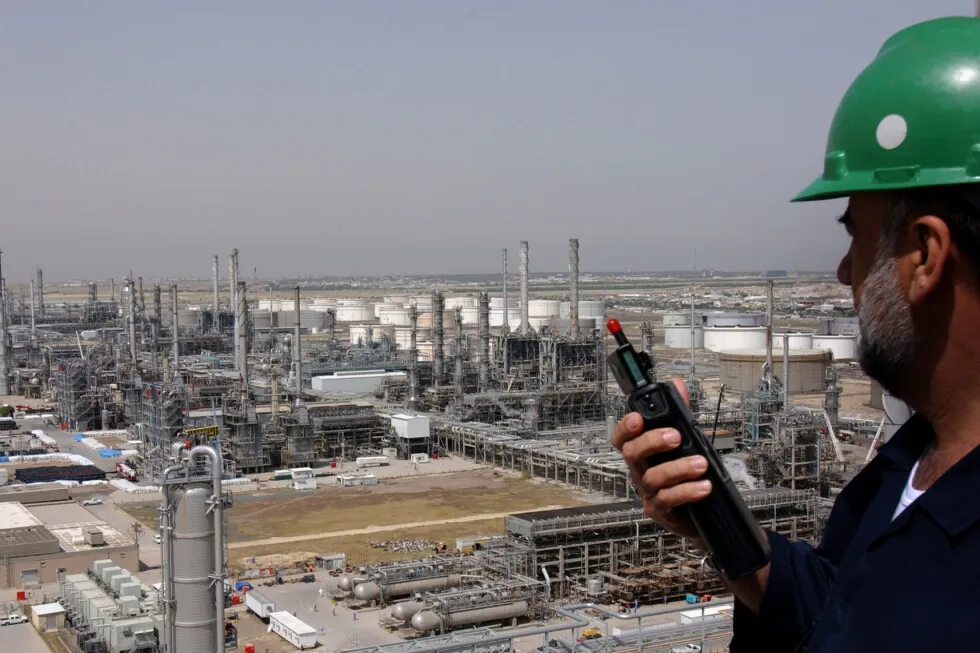
7 OPEC+ countries agree to expand monthly oil production modestly as prices slide 1 of 4 | A Kuwaiti oil worker talks on his radio at Mina Abdulah Oil Refinery, 50 Km South of Kuwait City in this file photo taken April 2005. (AP Photo/Gustavo Ferrari, File) 2 of 4 | Storage tanks are seen at the North Jiddah bulk plant, an Aramco oil facility, in Jiddah, Saudi Arabia, on March 21, 2021. (AP Photo/Amr Nabil, File) 3 of 4 | Iraqi oil workers at an oil installation at Beiji in northern Iraq Tuesday, February 29, 2000. (AP Photo/Jassim Mohammed, File) 4 of 4 | FILE--Reservoirs seen at Priobskoye oil field near Nefteyugansk, in western Siberia, April 5, 2006. (AP Photo/Misha Japaridze, File) By WYATTE GRANTHAM-PHILIPS Updated 8:47 PM MESZ, July 5, 2026 Leer en español Add AP News on Google Add AP News as your preferred source to see more of our stories on Google. Share Share Facebook Copy Link copied Print Email X LinkedIn Bluesky Flipboard Pinterest Reddit NEW YORK (AP) — A handful of countries in the OPEC+ oil-producing alliance plan to increase their outputs modestly next month, which would bring more oil online after fuel prices have fallen to levels not seen since before the U.S. and Israel’s war with Iran. The Organization of the Petroleum Exporting Countries and its allies — collectively known as OPEC+ — announced on Sunday that seven countries would expand oil production by a combined total of 188,000 barrels per day in August. It was the fifth consecutive month OPEC+ agreed to raise oil outputs. The participating countries in Sunday’s decision are Saudi Arabia, Russia, Iraq, Kuwait, Kazakhstan, Algeria and Oman. “The countries will continue to monitor and assess market conditions, and in their continuous efforts to support market stability, they reaffirmed the importance of adopting a cautious approach,” the group of oil producers said in a statement. In the last month, market optimism caused crude oil prices to tumble before and after the U.S. and Iran reached an interim deal to end their fighting. As part of a broader memorandum of understanding, Iran agreed to allow ships to pass unimpeded through the Strait of Hormuz, and the U.S. agreed to end its blockade of Iran’s ports. Trump to meet with Ukraine’s Zelenskyy and Syria’s al-Sharaa during the NATO summit 2 MIN READ Pope begins his summer break after decisive flexing of muscle on international and church stage 6 MIN READ 15 NATO chief faces challenge at summit as Trump demands ‘loyalty’ and not just burden-sharing 4 MIN READ 300 More and more commercial vessels have since transited the strait, which before the war was a conduit for roughly a fifth of the world’s oil. But ship traffic remains below pre-war levels, and tensions over the waterway continue. Iran’s joint military command warned as recently as Thursday that all oil tankers moving through the strait must use its approved routes or face a “forceful response.” oil prices have continued to decline while negotiators for Iran and the U.S. try to reach a final peace agreement. Brent crude, the international benchmark, closed at under $72 a barrel on Friday. That’s close to what it cost before the U.S. and Israel launched strikes on Iran in late Feburary — and far below soaring prices that in March climbed to nearly $120 per barrel. The war created an energy crisis in much of the world. With most shipping blocked in the Strait of Hormuz, the limited production hikes pledged by OPEC+ in previous months could not counteract the impact on global oil supplies. Early in the war, many major oil producers across the Middle East had to cut production because their crude had no where to go. S&P Global Energy said in a recent estimate that it did not expect Gulf oil production to rebound fully until at least the first quarter of 2027. Energy experts have repeatedly warned that fuel prices and the cost of consumer good were likely to stay elevated long past the conflict’s end. WYATTE GRANTHAM-PHILIPS Grantham-Philips is a business reporter who covers trending news for The Associated Press. She is based in New York. twitter mailto
SRCAssociated Press (AP)
LANGEN
LEANCenter
WORDS697
ENT12
SUN · 2026-07-05 · 18:53 GMTBRIEF NSR-2026-0705-90268
NSR-2026-0705-90268News Report·EN·Economic Impact
7 OPEC+ countries agree to expand monthly oil production modestly as prices slide
Seven OPEC+ countries, including Saudi Arabia and Russia, have agreed to modestly increase their monthly oil production by a combined 188,000 barrels per day in August. This marks the fifth consecutive month of production increases by the alliance.
Associated Press (AP)Filed 2026-07-05 · 18:53 GMTLean · CenterRead · 3 min
Associated Press (AP)FIG 01
Reading time
3min
Word count
697words
Sources cited
1cited
Entities identified
12entities
Quality score
100%
§ 01
Briefing Summary
AI-generatedNEWSAR · AI
Seven OPEC+ countries, including Saudi Arabia and Russia, have agreed to modestly increase their monthly oil production by a combined 188,000 barrels per day in August. This marks the fifth consecutive month of production increases by the alliance. The decision comes as oil prices have fallen significantly, reaching levels not seen since before the U.S. and Israel's war with Iran. The price drop is attributed to market optimism following an interim deal between the U.S. and Iran that eased passage through the Strait of Hormuz, a key oil transit route. Despite increased commercial vessel traffic, it remains below pre-war levels, and tensions persist. OPEC+ stated they will continue to monitor market conditions to support stability.
Confidence 0.90Sources 1Claims 5Entities 12
§ 02
Article analysis
Model · rule-basedFraming
Economic Impact
Diplomatic
Tone
Measured
AI-assessed
CalmNeutralAlarmist
Factuality
0.80 / 1.00
Factual
LowHigh
Sources cited
1
Limited
FewMany
§ 03
Key claims
5 extracted01
The participating countries in Sunday's decision are Saudi Arabia, Russia, Iraq, Kuwait, Kazakhstan, Algeria and Oman.
factual
Confidence
1.00
02
Seven OPEC+ countries will increase oil production by a combined 188,000 barrels per day in August.
statisticOPEC+
Confidence
1.00
03
Iran's joint military command warned that oil tankers must use approved routes or face a 'forceful response'.
quoteIran's joint military command
Confidence
0.90
04
Iran agreed to allow ships to pass unimpeded through the Strait of Hormuz as part of a memorandum of understanding.
factual
Confidence
0.90
05
Fuel prices have fallen to levels not seen since before the U.S. and Iran's war.
factual
Confidence
0.90
§ 04
Full report
3 min read · 697 words§ 05
Entities
12 identifiedKey playerOppositionContextPositiveNeutralNegative
Organizations1
Locations9
§ 06
Keywords & salience
10 termsoil production
1.00
opec+
1.00
oil prices
0.90
market stability
0.80
fuel prices
0.70
energy market
0.60
crude oil
0.50
strait of hormuz
0.50
saudi arabia
0.40
russia
0.40
§ 07
Topic connections
Interactive graph No topic relationship data available yet. This graph will appear once topic relationships have been computed.