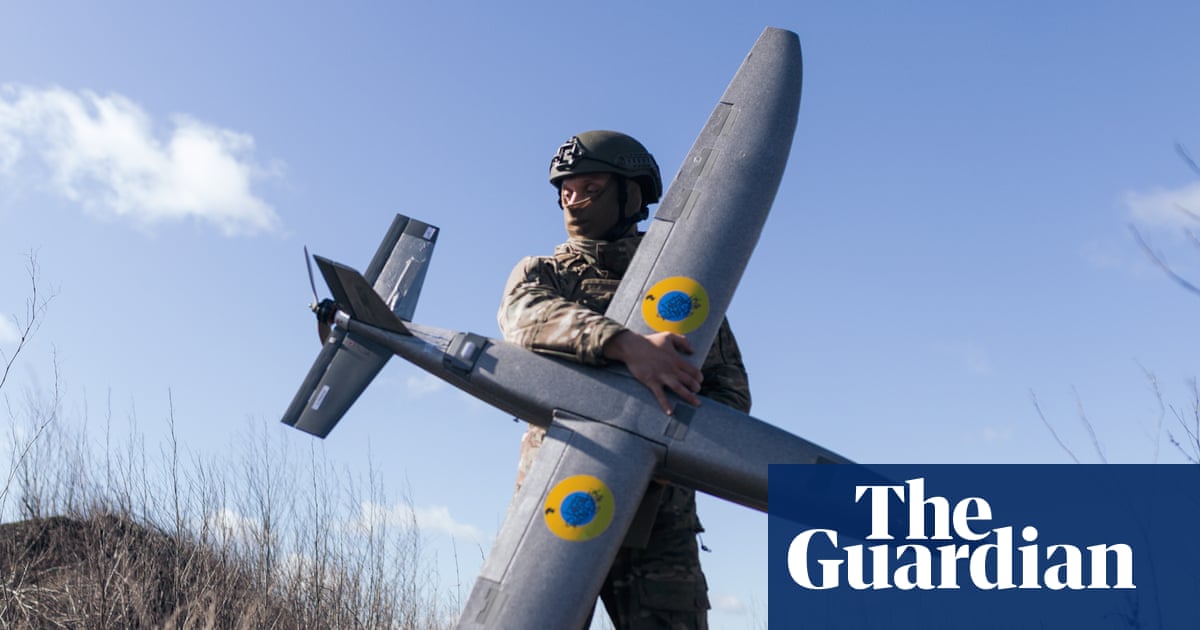
Ukraine hopes to sign major defence deals with at least seven Nato countries by the end of the year, according to a top official, highlighting a new aspect of Kyiv’s foreign policy intended to show it can be a provider as well as a recipient of military hardware and expertise.Kyiv has signed “drone deals” with six countries in recent months. Three are Middle Eastern states, who became eager for Ukrainian support after being targeted with Iranian long-range Shahed drones after the US-Israeli war on Iran began in spring. These are the same weapons that have targeted Ukrainian cities relentlessly over the past four years. Azerbaijan has also signed an agreement with Kyiv, as well as the Nato members Latvia and Lithuania.“The initiative is called the drone deal, but it actually covers way more than just drones … what’s even more important is the experience and knowledge, the access to all the components that form the system here in Ukraine,” said Davyd Aloian, the deputy secretary of Ukraine’s security council and one of those in charge of the deals.The drone diplomacy began during Trump’s war on Iran, when Tehran attacked US allies across the region. Most of the Gulf countries turned out to be unprepared for the threat from drones, even though Iran was mostly using a much less sophisticated version of the Shahed than the upgraded models that Russia uses in Ukraine.An Iranian Shahed-136 attack drone, acquired from Ukraine, is displayed at a press conference in UK parliament in London in 2025. Photograph: Kin Cheung/APIn some cases, expensive Patriot missiles were used to bring down Shaheds, when cheap interceptor drones should be able to do the job – but only if combined with the required knowledge and experience. “The interceptor drone is only a drone. It doesn’t mean that you will be able to shoot down Shaheds with it,” said Aloian. “You need the drones, but you also need sub-components, sensors, ground stations and, even more importantly, the radar systems,” said Aloian.In the aftermath of the attacks, Aloian said one country in the region bought interceptor drones from a western company that had developed the product in cooperation with Ukrainian manufacturers. After the delivery, Kyiv received repeated requests to help with advice on how best to operate the systems.In the end, three Gulf countries – Saudi Arabia, the UAE and Qatar – signed agreements with Ukraine. Kyiv offered the countries a broad assessment of what would be needed on operational and tactical levels to make the weapons effective.Mike Kofman, an analyst at the Carnegie Endowment International Peace in Washington DC, said it was on this big-picture integration that Ukraine can be most useful. “They can provide an ecosystem of products for organising air defence or developing a strike drone capability,” he said.Delivery of the drones themselves is not yet part of the agreement, as Ukraine’s industry is subject to tight controls and focused on the country’s defence needs. Diplomats and analysts said that, to some extent, the “drone diplomacy” had been an attempt to make new allies and ensure Ukraine stayed on the agenda at a time when attention was shifting to the Middle East. But as the most experienced country in the world at defending from drone attacks, as well as using drones in attack against Russia, Kyiv feels it has a lot to offer.“Initially, we do an assessment by a group of experts and provide a report to the partner explaining what they will need,” said Aloian. It’s then up to the partner countries to decide whether they want to place orders for Ukrainian products that can be manufactured depending on available capacity in future, or procure them elsewhere.Aloian said the focus would now move on to Nato partners, where particularly those located closer to Russia or Ukraine have had to pay increasing attention to defending from drones. In Latvia, the government fell in May after a political scandal that began after two long-range Ukrainian drones, pushed off course by Russian electronic warfare measures, hit an oil storage facility.skip past newsletter promotionafter newsletter promotionPolice officers at an oil storage facility in Rezekne, Latvia damaged by a drone. Photograph: Janis Laizans/ReutersSoon after, Latvia signed the drone deal with Ukraine, and last week announced that a joint drone production facility would open soon in the east of the country. Lithuania, where air raid sirens sounded after a similar incident in which Ukrainian drones were pushed off course and into the country’s airspace, has also signed an agreement.Aloian said several more Nato countries had already expressed interest and that some agreements may be signed at the Nato leaders summit in Ankara this week. The target was to sign agreements with at least seven Nato countries by the end of the year, he said.More ambitious and less certain to succeed are Kyiv’s attempts to build a European analogue to the Patriot missile system that would be capable of defending against Russian ballistic missiles – the weakest point in Ukraine’s air defences given the expense and scarcity of the US-built Patriot systems. Ukraine’s president, Volodymyr Zelenskyy, has made production of such a missile a top priority, and Aloian said discussions between European partners were taking place on a political level and among major arms companies.Whatever the fate of specific initiatives, what is clear is that as Europe realises it will have to organise its own security with less US support in future, there is an increasing realisation that Ukraine must be part of the picture.Alyona Getmanchuk, Ukraine’s ambassador to Nato, said she had noticed a huge difference in how allies spoke about Ukraine since she took up the job last summer. “When I arrived at Nato and talked about Ukraine’s potential as a security provider there was often a look of hesitancy in people’s eyes,” she said. “Now some of the same people often start conversations by saying this. It’s become fashionable to talk about Ukraine in this way.”
SRCThe Guardian - World News
LANGEN
LEANCenter-Left
WORDS986
ENT12
MON · 2026-07-06 · 04:00 GMTBRIEF NSR-2026-0706-90372
NSR-2026-0706-90372News Report·EN·Diplomatic
Ukraine hopes to sign ‘drone deals’ with seven Nato countries by end of year
Ukraine aims to sign defense deals, particularly focused on drone technology and expertise, with at least seven NATO countries by year-end. Having already secured agreements with six nations, including three Middle Eastern states, Azerbaijan, Latvia, and Lithuania, Kyiv is transitioning from a military hardware buyer to a security provider.
Shaun Walker in KyivThe Guardian - World NewsFiled 2026-07-06 · 04:00 GMTLean · Center-LeftRead · 4 min
The Guardian - World NewsFIG 01
Reading time
4min
Word count
986words
Sources cited
2cited
Entities identified
12entities
Quality score
100%
§ 01
Briefing Summary
AI-generatedNEWSAR · AI
Ukraine aims to sign defense deals, particularly focused on drone technology and expertise, with at least seven NATO countries by year-end. Having already secured agreements with six nations, including three Middle Eastern states, Azerbaijan, Latvia, and Lithuania, Kyiv is transitioning from a military hardware buyer to a security provider. Ukraine offers its experience in developing radar systems, ground stations, and integrated drone defense capabilities, drawing on its extensive combat experience. These "drone deals" extend beyond just the drones themselves, emphasizing the transfer of knowledge and access to components. The initiative is driven by the growing threat of drone attacks, prompting countries to seek Ukraine's specialized assistance in building effective air defense systems.
Confidence 0.90Sources 2Claims 5Entities 12
§ 02
Article analysis
Model · rule-basedFraming
Diplomatic
Technology
Tone
Measured
AI-assessed
CalmNeutralAlarmist
Factuality
0.70 / 1.00
Factual
LowHigh
Sources cited
2
Limited
FewMany
§ 03
Key claims
5 extracted01
Ukraine can provide an ecosystem of products for organizing air defense or developing strike drone capability.
quoteMike Kofman
Confidence
1.00
02
The 'drone deals' cover more than just drones, including experience, knowledge, and access to system components.
quoteDavyd Aloian
Confidence
1.00
03
Ukraine aims to position itself as a provider of military hardware and expertise, not just a recipient.
factualarticle
Confidence
0.90
04
Kyiv has signed 'drone deals' with six countries in recent months, including three Middle Eastern states, Azerbaijan, Latvia, and Lithuania.
factualarticle
Confidence
0.90
05
Ukraine hopes to sign defense deals with at least seven NATO countries by the end of the year.
predictiontop official
Confidence
0.80
§ 04
Full report
4 min read · 986 words§ 05
Entities
12 identifiedKey playerOppositionContextPositiveNeutralNegative
Organizations2
§ 06
Keywords & salience
8 termsdrone deals
1.00
nato countries
0.90
military hardware
0.80
shahed drones
0.80
ukraine foreign policy
0.70
interceptor drones
0.60
defence deals
0.50
security council
0.40
§ 07
Topic connections
Interactive graph Network visualization showing 51 related topics
View Full Graph Person Organization Location Event|Click node to navigate|Edge numbers = shared articles