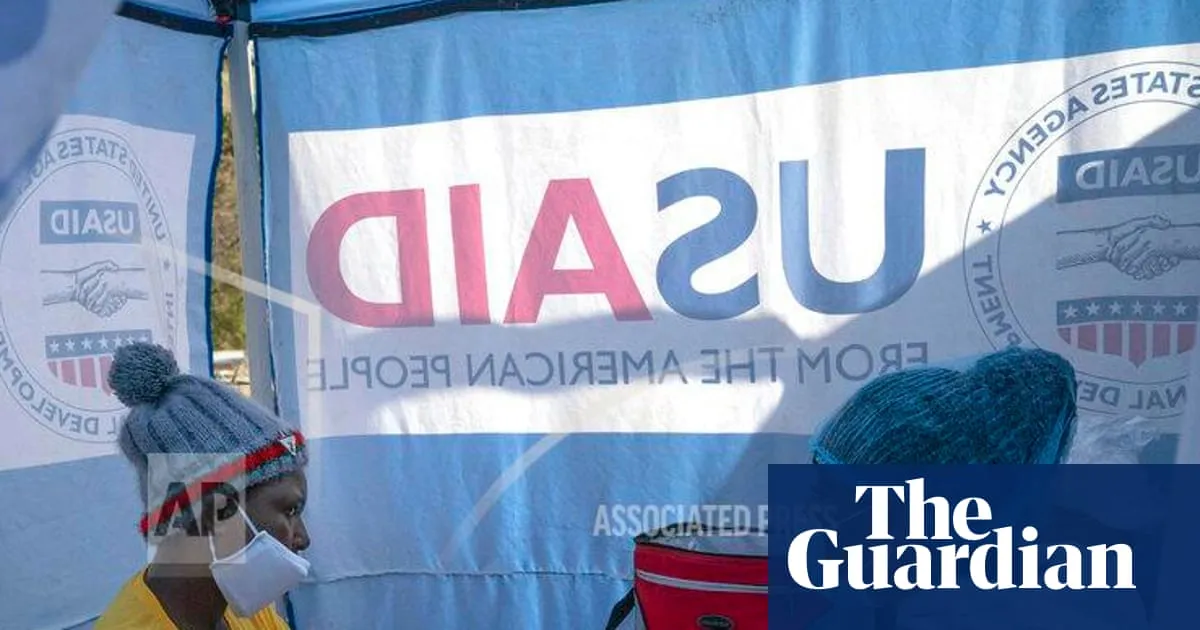
US diplomats have been encouraged to “unabashedly and aggressively” remind African governments about the “generosity” of the American people, according to a leaked email sent to staff in the US state department’s Bureau of African Affairs this January and obtained by the Guardian.“It’s not gauche to remind these countries of the American people’s generosity in containing HIV/Aids or alleviating famine,” says the email.“Rather, it’s essential to counter the false narrative that the United States isn’t in many cases the largest donor and to ensure that we can more effectively leverage that assistance to advance our interests.”The email was sent by Nick Checker, who became the leader of the bureau earlier this month. Checker previously spent more than a decade with the CIA as a conflict analyst; previous appointees to the role have generally been career diplomats.Checker’s appointment comes after the Trump administration released a new US national security strategy in November. That strategy outlines the administration’s foreign policy priorities: promoting far-right interests in Europe, and taking a more transactional view towards much of the rest of the world. It says the US should “transition from an aid-focused relationship with Africa to a trade- and investment-focused relationship.”The US should favour partnerships with “capable, reliable partners committed to opening their markets to US goods and services,” it says.Checker’s email elaborates further on what this strategy means, saying that in Africa “the stakes are often limited, indirect and largely negative (risk management)”.“To put it bluntly, Africa is a peripheral – rather than a core – theater for US interests that demands strategic economy,” it says. “Framing Africa as ‘strategic’ has often historically served bureaucratic and moral imperatives, not hard interests.”It identifies several “opportunities for engagement” for the US, among them “negotiating settlements to ongoing conflicts (eg, DRC-Rwanda, Sudan),” and says that promising areas for investment are critical mineral development and the energy sector.A former senior state foreign service official with two decades of experience in Africa who had seen the email called it “offensive and downright racist”, and said its suggestions were against US national security interests.Checker is “wildly out of touch with reality”, said Kristofer Harrison, a former senior official at the US state department and president of the Dekleptocracy Project, an anti-corruption NGO.“He’s talking about communities where the US withdrew lifesaving drugs that kept people alive. Yet, he’s concerned about messaging to those surviving that America is generous?”A diplomat from west Africa, who has worked in mediating conflicts across Chad, the DRC and beyond, said: “US humanitarian aid in the medical and food sectors has greatly alleviated the suffering of many African populations.“If aid continues, the US can provide information on its volume and usefulness to inform American and international public opinion. However, the fact that aid has been abruptly reduced or stopped is indeed creating unease. It is therefore no longer appropriate to reiterate that the US has demonstrated generosity.”Separately, last week the United States Agency for International Development (USAID), which was gutted last year by Elon Musk’s “department of government efficiency”, circulated an invitation for private companies to bid on a contract to close down the agency. That invitation, also obtained by the Guardian, is for “Institutional Support for USAID Closeout”.“USAID is undertaking an agency-wide closeout effort requiring the orderly completion of statutory, regulatory, financial, and personnel obligations,” it says.The invitation offers an unspecified amount to shut down USAID and suggests the contract will extend, at a maximum, until March 2028. It bars potential bidders from hiring anyone who has previous experience working with USAID.The closure of USAID has widely been argued to be against the law, as the agency was created through an act of Congress and dismantled without congressional approval. However, a funding bill that passed the US House last week attempts to codify the final shutdown of the agency.“It’s absolutely illegal,” said the former state department official. “And it’s illegal to target former USAID staff who served this country.”While the bill has yet to pass the Senate, the invitation for bids suggests the state department is nonetheless moving into a final phase of shutting down the agency.Harrison said closing USAID was “a gift to worldwide corruption and authoritarianism” and an unwise move on the part of the administration.The US state department did not immediately respond to a request for comment.
SRCThe Guardian - World News
LANGEN
LEANCenter-Left
WORDS714
ENT9
TUE · 2026-01-20 · 17:11 GMTBRIEF NSR-2026-0120-9059
NSR-2026-0120-9059News Report·EN·Political Strategy
Head of US Africa bureau urges staff to highlight US ‘generosity’ despite aid cuts
A leaked email from the new head of the US State Department's Bureau of African Affairs, Nick Checker, instructed staff to aggressively highlight American "generosity" in Africa. The email, sent in January, urges diplomats to counter narratives suggesting the US isn't a major donor, aiming to leverage aid to advance US interests.
Aisha DownThe Guardian - World NewsFiled 2026-01-20 · 17:11 GMTLean · Center-LeftRead · 3 min
The Guardian - World NewsFIG 01
Reading time
3min
Word count
714words
Sources cited
4cited
Entities identified
9entities
Quality score
100%
§ 01
Briefing Summary
AI-generatedNEWSAR · AI
A leaked email from the new head of the US State Department's Bureau of African Affairs, Nick Checker, instructed staff to aggressively highlight American "generosity" in Africa. The email, sent in January, urges diplomats to counter narratives suggesting the US isn't a major donor, aiming to leverage aid to advance US interests. This directive follows the Trump administration's shift toward a more transactional foreign policy, prioritizing trade and investment over aid in Africa. The email also characterizes Africa as a "peripheral" theater for US interests, advocating for "strategic economy" and focusing on opportunities like conflict resolution and investment in minerals and energy. The email has been criticized by some as "offensive and downright racist" and against US national security interests.
Confidence 0.90Sources 4Claims 5Entities 9
§ 02
Article analysis
Model · rule-basedFraming
Political Strategy
Diplomatic
Tone
Mixed Tone
AI-assessed
CalmNeutralAlarmist
Factuality
0.70 / 1.00
Factual
LowHigh
Sources cited
4
Well sourced
FewMany
§ 03
Key claims
5 extracted01
US humanitarian aid in the medical and food sectors has greatly alleviated the suffering of many African populations.
quoteDiplomat from west Africa
Confidence
1.00
02
Checker previously spent more than a decade with the CIA as a conflict analyst.
factualGuardian
Confidence
1.00
03
Africa is a peripheral – rather than a core – theater for US interests that demands strategic economy.
quoteNick Checker (email)
Confidence
1.00
04
The US should transition from an aid-focused relationship with Africa to a trade- and investment-focused relationship.
factualTrump administration (national security strategy)
Confidence
1.00
05
US diplomats have been encouraged to remind African governments about the “generosity” of the American people.
factualGuardian (leaked email)
Confidence
1.00
§ 04
Full report
3 min read · 714 words§ 05
Entities
9 identifiedKey playerOppositionContextPositiveNeutralNegative
§ 06
Keywords & salience
6 termsus aid cuts
0.80
africa policy
0.70
transactional view
0.60
us national security strategy
0.50
strategic economy
0.50
trade and investment
0.40
§ 07
Topic connections
Interactive graph Network visualization showing 51 related topics
View Full Graph Person Organization Location Event|Click node to navigate|Edge numbers = shared articles