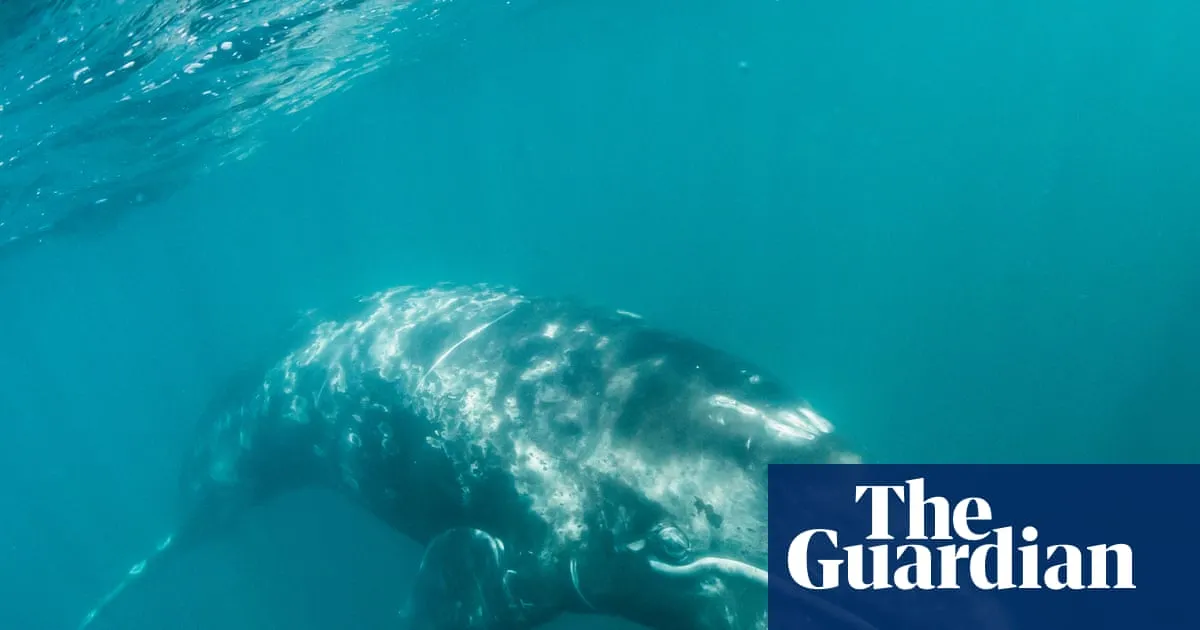
Climate change is driving a gray whale “catastrophic mortality event” in the Pacific Ocean as melting sea ice depletes food sources and the animals starve, environmental groups warn.Meanwhile, a range of other issues, like ship strikes, oil spills, microplastic pollution, algal blooms and Russian harvesting are also probably contributing to the die-off that has nearly halved the whales’ estimated population. It fell from 20,000 in 2019 to fewer than 13,000 this year, and the deaths appear to be accelerating.Environmental groups have petitioned the National Oceanic and Atmospheric Administration (Noaa) to relist the gray whale under the Endangered Species Act (ESA), which would alleviate some problems, but its approval is a long shot as the Trump administration moves to gut wildlife protections.The whales are in “very, very serious trouble”, said Rick Steiner, an Alaska marine ecologist and chair of Public Employees for Environmental Responsibility’s (Peer’s) board of directors.“The stranding numbers last year and this year are enormous compared to their annual average,” Steiner said. “Stranding” is the term for whales that wash up onshore.The gray whales, which travel from Baja California to Alaska to feed each year, came close to extinction in the 1970s, but rebounded following robust conservation efforts. They were delisted from the ESA in 1994, which Steiner called a “colossal mistake”.The estimates are most dire for 2026 – somewhere between 2,500-8,000 whales are estimated to have died so far this year, which meets the criteria for a “catastrophic mortality event”.Determining an exact number is difficult because marine biologists can only count the whales that are stranded. The average annual number of gray whale strandings from 2006 to 2023 was 43, but rose to 179 in 2025. Through the first half of this year, 146 whale carcasses have been directly counted.Scientific literature estimates the ratio between unobserved, or sunk, mortalities offshore and observed mortalities onshore for gray whales is between 7-to-1 and 25-to-1.The whales that wash up are emaciated, Steiner said, and the scientific consensus is that they are starving due to a loss of access to food sources that is driven by the dramatic reduction in sea ice around Alaska due to Climate change.While the whales have been resilient in the past, evidence points to a dire situation, said David Weller, a Noaa marine biologist, in an agency release.“The environment may now be changing at a pace or in ways that is testing the time-honored ability of the population to rapidly rebound while it adjusts to a new ecological regime,” Weller said.Some of the stranded cetaceans show signs of being struck by ships and their propellers, and Indigenous populations in Russia hunt the whales, killing up to 40 annually. The groups claim the hunt is for subsistence, but the whale meat is actually fed to cattle, Steiner said.Also, the Trump administration is increasing oil drilling in the region, which creates more pollution and threats.skip past newsletter promotionafter newsletter promotionState and federal governments can act, Steiner said. A Noaa response to the petition to relist the gray whales under the ESA is due in about a month, and, if the Trump administration ignores it, or rejects the request, then Peer will sue, Steiner said. The second Trump administration has so far not listed an animal on the endangered or threatened list, and it has taken unprecedented steps to try to dismantle the ESA.Steiner said the science was so clear on the issue, and the whales were “immensely” popular in the US west, so he is hopeful that the gray whale will be the administration’s first listing.“The gray whales are in dire straits, so hopefully they see that and this can be the first one they list,” Steiner said.California has ship speed reduction zones in areas known to have higher gray whale concentrations, and, though the program is voluntary, many ships do reduce their speed, and some station spotters to look out for whales, Steiner said. Those have reduced whale ship strike deaths in the region by about 50%.Oregon, Washington and Alaska have not implemented similar programs because of shipping industry opposition, Steiner said, but advocates are pushing for action.“If you lose thousands of whales in two years – that should concern everyone,” Steiner said.
SRCThe Guardian - World News
LANGEN
LEANCenter-Left
WORDS695
ENT12
FRI · 2026-07-10 · 13:00 GMTBRIEF NSR-2026-0710-91968
NSR-2026-0710-91968News Report·EN·Environmental
Pacific gray whales facing ‘catastrophic’ die-off as climate crisis hits food supply
Pacific gray whales are experiencing a "catastrophic mortality event" in the Pacific Ocean, with their population nearly halving from 20,000 in 2019 to under 13,000 this year. Environmental groups attribute this severe decline primarily to climate change, which is melting sea ice and depleting the whales' food sources, leading to starvation.
Tom PerkinsThe Guardian - World NewsFiled 2026-07-10 · 13:00 GMTLean · Center-LeftRead · 3 min
The Guardian - World NewsFIG 01
Reading time
3min
Word count
695words
Sources cited
3cited
Entities identified
12entities
Quality score
100%
§ 01
Briefing Summary
AI-generatedNEWSAR · AI
Pacific gray whales are experiencing a "catastrophic mortality event" in the Pacific Ocean, with their population nearly halving from 20,000 in 2019 to under 13,000 this year. Environmental groups attribute this severe decline primarily to climate change, which is melting sea ice and depleting the whales' food sources, leading to starvation. Additional contributing factors include ship strikes, oil spills, microplastic pollution, algal blooms, and Russian harvesting. Environmental organizations have petitioned the National Oceanic and Atmospheric Administration (NOAA) to relist the gray whale under the Endangered Species Act, a move that faces potential opposition from the Trump administration's efforts to reduce wildlife protections. Stranding numbers have significantly increased, indicating an accelerating death rate.
Confidence 0.90Sources 3Claims 5Entities 12
§ 02
Article analysis
Model · rule-basedFraming
Environmental
Human Interest
Tone
Sensational
AI-assessed
CalmNeutralAlarmist
Factuality
0.70 / 1.00
Factual
LowHigh
Sources cited
3
Well sourced
FewMany
§ 03
Key claims
5 extracted01
The estimated gray whale population has fallen from 20,000 in 2019 to fewer than 13,000 this year.
statisticarticle
Confidence
0.95
02
The whales are starving due to a loss of access to food sources driven by the reduction in sea ice around Alaska.
factualscientific consensus
Confidence
0.90
03
Climate change is driving a gray whale catastrophic mortality event in the Pacific Ocean due to depleted food sources from melting sea ice.
factualenvironmental groups
Confidence
0.90
04
Between 2,500-8,000 whales are estimated to have died so far this year, meeting the criteria for a 'catastrophic mortality event'.
statisticarticle
Confidence
0.85
05
The Trump administration is moving to gut wildlife protections and increasing oil drilling in the region.
factualarticle
Confidence
0.80
§ 04
Full report
3 min read · 695 words§ 05
Entities
12 identifiedKey playerOppositionContextPositiveNeutralNegative
Organizations3
§ 06
Keywords & salience
10 termsclimate crisis
1.00
gray whale die-off
1.00
food supply
0.90
catastrophic mortality event
0.80
melting sea ice
0.70
population decline
0.60
endangered species act
0.60
marine ecologist
0.50
conservation efforts
0.40
wildlife protections
0.40
§ 07
Topic connections
Interactive graph Network visualization showing 51 related topics
View Full Graph Person Organization Location Event|Click node to navigate|Edge numbers = shared articles