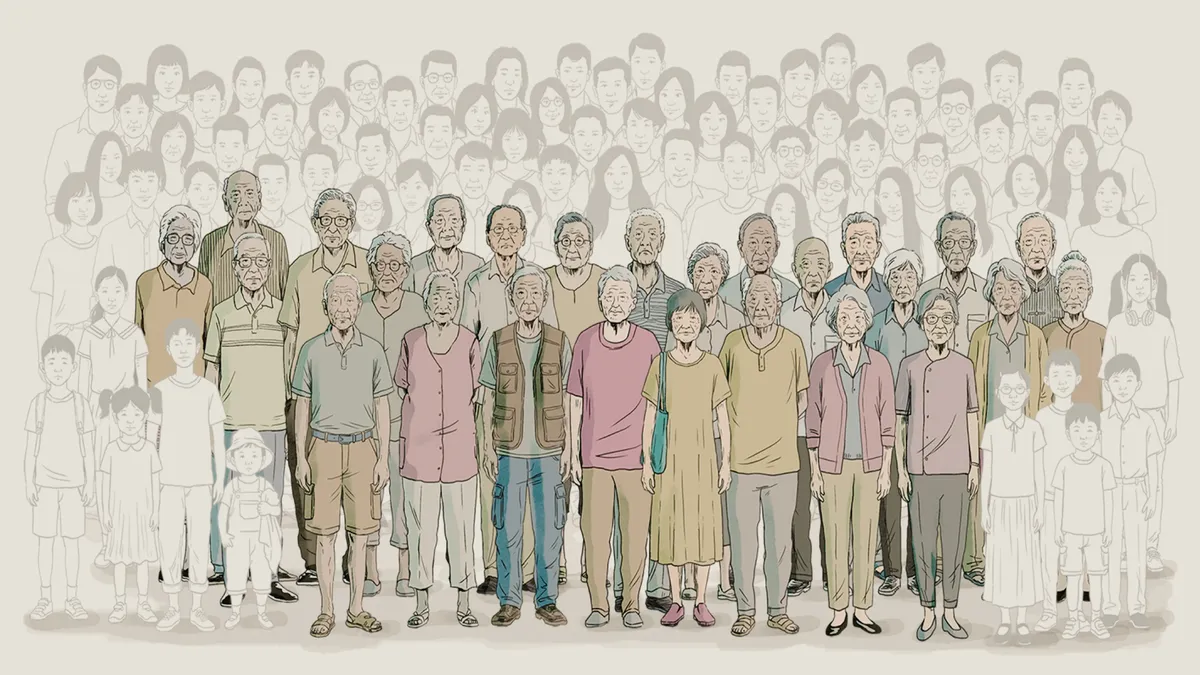
Wellness series Last updated: July 11, 2026 Hong Kong is one of the fastest-ageing societies in the world. In the coming decades, the city’s elderly population is projected to exceed one-third of the total, up from about a quarter today. The inevitable shift is bringing substantial structural changes, most noticeably in the healthcare sector. Over the past decade, health expenditure has grown at an average annual rate four times faster than overall GDP. Meanwhile, policymakers continue to grapple with complex social issues such as poverty and isolation. If Hong Kong were 100 people, 26 would be elderly... Hong Kong ageing population in 2026* But the city’s rapidly ageing population is simultaneously driving new economic opportunities. More start-ups are emerging in the “gerontech” sector, developing innovative, hi-tech solutions to help the elderly live more comfortable and meaningful lives. Businesses and policymakers are also increasingly focused on boosting the “silver economy” as elderly consumers' spending power increases. Current projections indicate that elderly spending in Hong Kong could reach nearly HK$500 billion (US$64 billion) by the mid-2030s. So how quickly is Hong Kong’s population ageing? How significant are the challenges the city is facing, and what is being done to tap into emerging opportunities? Here is what you need to know about Hong Kong’s ageing population. ‘Oldest’ districts According to the latest population statistics, Sha Tin has overtaken Kwun Tong as the district with the largest population aged 65 or above, with more than 167,000 elderly residents in 2025. Besides these two districts, others with more than 100,000 people aged 65 or above include Eastern district on Hong Kong Island, Wong Tai Sin in Kowloon, and Kwai Tsing, Tuen Mun, Yuen Long and Sai Kung in the New Territories. Population over the age of 65 in each district (2025) Note: Percentages are expressed as annualised average(Population figures based on 2025 General Household Survey)Meanwhile, Eastern district has the highest proportion of elderly residents, accounting for 27.1 per cent of its population, followed by Wong Tai Sin at 26.9 per cent.Elderly population projections Due to a combination of lower fertility rates, youth emigration and longer life expectancies, Hong Kong is ageing faster than expected. In 2021, when the last census was released, Hongkongers aged 65 and over made up about 20 per cent of the city’s total population, excluding domestic helpers. By 2026, that figure had risen to 26 per cent, and by 2046, it is expected to surge to 36 per cent. Projected population aged 65 and over Percentage relative to the total population * Excluding foreign domestic helpers ** Base population period(Population figures based on Census and Statistics Department's Hong Kong Population Projections 2022-2046 report)The city’s falling birth rate is partly to blame. In 2017, the government projected 177,000 births between mid-2020 and mid-2023. But the actual number was under 110,000. Meanwhile, Hong Kong’s elderly dependence ratio – the number of people aged 65 and over per 1,000 aged between 15 and 64 – rose from 262 in 2020 to 356 in 2025. Hong Kong’s retirement age compared with selected jurisdictions as of 2026 While Hong Kong does not have a statutory retirement age, it is common for men and women to retire around 65, when they can begin withdrawing from their Mandatory Provident Fund (MPF). Early withdrawal is also possible from the age of 60, provided they make a statutory declaration that they will not return to work. Men: retirement age Women: retirement age * Where no statutory retirement age exists, the age at which residents can withdraw pension benefits is used instead.** In mainland China, retirement age for women varies: 55 (blue-collar) and 58 (white-collar)Hong Kong’s de facto retirement age is largely in line with other jurisdictions around the world. Canada, for example, also allows residents to begin withdrawing their pension at 65, while Taiwan has a statutory retirement age of 65. Many countries have begun raising retirement ages in response to ageing populations. In the UK, state pensions are only available at 67 for people born after March 5, 1961, compared with 66 for those born earlier. Japan will raise its retirement age from 60 to 65 starting from next year, while South Korea is considering a similar change. Mainland China, meanwhile, is gradually extending its statutory retirement age from 60 to 63 for men, and from 50 and 55 for women, depending on whether they are blue-collar or white-collar workers, to 55 and 58, respectively. Battling poverty among the elderly Among the most pressing issues affecting the elderly in Hong Kong is poverty. Surveys have repeatedly shown that many seniors cannot afford to retire and must continue working well into old age. Hong Kong previously used an income-based poverty line – set at half the city’s median income – to identify those most in need. Earlier this year, however, the government announced a new 21-indicator framework as part of its poverty alleviation efforts. Poverty rate based on Hong Kong Poverty Situation Report 2020According to the latest poverty report, about 717,600 senior residents lived in “all-elderly households” in 2024, accounting for roughly 45.1 per cent of the population aged 65 and above.Number of residents aged 65+ living in all-elderly households Ageing increases needs in: daily living support, mental and emotional wellbeing, and digital literacy and technology use. (Household statistics based on Report on Impact of Targeted Poverty Alleviation Strategy in Hong Kong)The report also found that about 84.6 per cent of these households received “major cash benefits” from the government, including Old Age Living Allowance, Old Age Allowance – commonly known as “fruit money” – and Comprehensive Social Security Assistance.Proportion of "all-elderly households" receiving major cash benefits from the government The government said the previous income-based metric overstated the number of underprivileged people by ignoring billions of dollars spent on public housing and healthcare. But some experts have argued that the new strategy makes it harder to objectively assess the city’s overall situation and have called for multiple measures to be adopted. According to the previous 2020 poverty report – the last to use the income-based poverty line – about 584,000 elderly Hongkongers, or 45 per cent, were living below the poverty line. That year, the threshold was set at HK$9,500 for a two-person household. After government intervention, including social assistance, the figure dropped to just 14.5 per cent. The loneliness epidemic Studies have linked social isolation to worsening physical and mental health outcomes, including depression and suicide among the elderly. According to the latest census, more than 188,000 Hongkongers aged 65 or above lived alone in 2021. Studies have linked social isolation to worsening physical and mental health outcomes, including depression and suicide among the elderly. Hongkongers aged 60 or above had the highest suicide rate among all age groups in 2024, according to data from concern group Samaritan Befrienders Hong Kong. In 2024, 472 suicides were reported among people aged 60 or above, accounting for 41.5 per cent of all such deaths that year. Suicides among elderly (60+) Share of total suicide deaths in 2024 4 in 10 suicides were among people aged 60 and above472 cases (41.5%)The government has implemented several policies to address the issue. It subsidises various social service organisations, district groups and educational institutions to run programmes under its Opportunities for the Elderly Project. It has also launched digital literacy programmes for elderly residents so they can stay connected with family and friends, while earmarking hundreds of millions of Hong Kong dollars for mental health initiatives. Meanwhile, Hong Kong’s Housing Authority offers support for low- and middle-income families, including the Priority Scheme for Families with Elderly Members and Full Rent Exemption Scheme for Elderly Households. Government support measures for carers and at-risk seniors SMART SILVER Enriched ICT Training Programme for the ElderlyOffers free advanced training courses to help elderly people use digital technologies.GET MORE INFO → OPPORTUNITIES FOR THE ELDERLY PROJECT Promotes community involvement among the elderly to cultivate a sense of self-worth.GET MORE INFO → HOUSING AUTHORITY Full rent exemption scheme for elderly householdsProvides full rent exemption for eligible elderly households who transfer to designated public rental flats.GET MORE INFO → HOUSING AUTHORITY Elderly Persons Priority SchemeGives priority processing to applications for public rental housing submitted jointly by two or more elderly people.GET MORE INFO → Hong Kong’s policies to tackle elderly isolation are similar to those in other jurisdictions. Singapore offers digital literacy programmes for seniors, as well as subsidised smartphones and data plans. Germany has also experimented with innovative policies, including its Living for Help programme, where students or other young people can live with seniors or people with disabilities for free in exchange for household services. The country also has a long-running Multigenerational Homes initiative that provides community spaces where different generations can interact. Loneliness support in other selected jurisdictions Note: Studies link social isolation to poorer physical and mental health outcomes, including depression and suicide among the elderly. In 2024, Hong Kong residents aged 60 or above recorded the highest suicide rate among all age groups, according to Samaritan Befrienders Hong Kong. A total of 472 cases were reported in this age group, accounting for 41.5% of all suicides.Earlier this year, South Korea launched a nationwide Community Integrated Care programme, which provides necessary services to the elderly at home so they can remain in their communities rather than enter long-term care facilities. Seoul also offers a Smart Check-in Service that uses AI and other technology to conduct remote monitoring and wellness checks. Common healthcare issues Ageing is often associated with greater healthcare needs and a higher prevalence of chronic illness. The Hospital Authority estimates that the number of Hongkongers with chronic diseases will reach 3 million by 2039, while 70 per cent of elderly residents already have at least one chronic illness. Hypertension is one of the most prevalent health issues affecting the elderly, with about 57.4 per cent diagnosed with the condition. Meanwhile, 27.1 per cent have been diagnosed with cataracts. Other common illnesses include diabetes and arthritis, with 18.9 per cent and 12.6 per cent of residents aged 65 or over diagnosed, respectively. Dementia is also an increasing concern. An estimated 9.7 per cent of older adults aged 60 or above are living with dementia, according to the Department of Health’s Centre for Health Protection, with some academics expecting the number could reach 330,000 by 2039. Strain on the healthcare industry As Hong Kong ages, the strain on the city’s healthcare system grows. Total healthcare expenditure rose by more than 52 per cent between the 2013-14 financial year and 2023-24, from HK$165 billion to HK$251 billion, with public health expenditure growth outpacing private. Hong Kong health expenditure* 2013-14 to 2023-24 (HK$ billion) Public Private Total expenditure* Excludes additional Covid-19 spending from 2019-20 to 2022-23Taken as an annualised average, Hong Kong’s health expenditure grew at nearly four times the rate of GDP over that same period.Health expenditure vs GDP growth Average annual growth (2013-14 to 2023-24) Public healthcare expenditure is also rising as a share of GDP. According to the Health Bureau, the increase is largely in line with growth in the population aged 65 and above over the same period. The bureau said this reflected the fact that an ageing population was "one of the key factors" driving growth in public healthcare expenditure. Public healthcare expenditure as a percentage of GDP 2013/14 to 2023/24 Note: According to the Health Bureau, the increase in public healthcare expenditure as a percentage of GDP is in line with the growth rate of the city’s population aged 65 and above over the same time span. The bureau said that this reflects that the ageing population is “one of the key factors” driving growth in public healthcare expenditure.The elderly are also making up a larger share of those using public healthcare services, with general outpatient and specialist outpatient usage among that age group up 8 percentage points between 2018 and 2019, and 2024 and 2025.Public healthcare usage by age Despite rising healthcare needs, most elderly residents are not entitled to medical benefits through an employer or covered by private medical insurance. In 2025, only 23.9 per cent were covered. While that was up from 14.2 per cent a decade earlier, it means more than three-quarters lacked health coverage.Medical coverage (aged 65+) Proportion covered by employer-provided or individual insurance Note: Coverage for ages 25-44 was 67.5% in 2025.The government offers several health benefits for the elderly, including the Vaccination Subsidy Scheme and Elderly Health Care Voucher Scheme, the latter of which was recently expanded under a pilot scheme to cover healthcare services within the Greater Bay Area.Other medical support for the elderly Elderly Health Care Voucher Scheme Provides HK$2,000 in annual vouchers for subsidised healthcare services.GET MORE INFO → Elderly Health Care Voucher Scheme – Greater Bay Area Pilot Scheme Extends the voucher scheme to selected medical institutions in Guangdong Province.GET MORE INFO →Waiving of Medical Charges (for Eligible People) A means-tested programme that allows eligible residents to have their medical fees waived..GET MORE INFO →Government Vaccination Programme Provides free vaccinations to high-risk groups at public healthcare facilities.GET MORE INFO → Vaccination Subsidy Scheme Provides subsidised seasonal influenza and pneumococcal vaccinations to eligible Hong Kong residents.GET MORE INFO →Some elderly Hongkongers can also have their medical fees waived depending on means-tested financial eligibility.Gerontechnology To help ease the strain on Hong Kong’s healthcare system, a new generation of start-ups is emerging in gerontechnology, developing innovative solutions and services. The city’s two flagship start-up incubators, Cyberport and the Hong Kong Science and Technology Park, currently support more than 130 companies in the sector, with around HK$156 million raised in funding so far. Gerontechnology in Hong Kong 130 companies at Cyberport and Hong Kong Science and Technology ParkTotal funding: HK$156 million. Examples of Hong Kong start-up companies specialising in gerontechnology solutions and services Other companiesAmong the companies specialising in gerotechnology, some of the key innovations include telenursing, smart monitoring systems and robot companions, as well as portable health screening devices and cognitive rehabilitation.Other government initiatives Beyond innovation companies and government support measures, city authorities have also launched several other initiatives to help alleviate pressure on the elderly. Among key programmes are voucher schemes for community care and residential care services. Community Care Service Voucher Scheme for the Elderly Provides subsidies for selected home and community care services.Residential Care Service Voucher Scheme for the Elderly Provides subsidies for residential care home expenses.“Smart Silver” ICT Outreach Programme for EldersFunds non-profit organisations to deliver outreach programmes that promote digital inclusion among the elderly. “Smart Silver” Digital Inclusion Programme for EldersProvides technical support and training for the elderly through community digital support stations. District Services andCommunity Care Teams Scheme on Supporting Elderly and CarersDeploys government care teams to support elderly residents living alone or with another person. Innovation and Technology Fund for Application in Elderly and Rehabilitation Care Provides subsidies to elderly service units to procure and adopt new technologies that support their users.The government has earmarked HK$2 billion since 2018 for the Innovation and Technology Fund for Application in Elderly and Rehabilitation Care, which allows service providers to procure, rent and trial technology products that could help improve the quality of life for their users. Another HK$100 million has also been allocated to the Social Innovation and Entrepreneurship Development Fund to support the “Smart Silver” Digital Inclusion Programme, while several other programmes are also offered under the Smart Silver banner. Tapping the silver economy Perhaps the biggest opportunity from the city’s rapidly ageing population lies in the “silver economy”. In recent years, authorities have been looking for new ways to capitalise on this emerging market of seniors who are wealthier and more willing to spend. To that end, the government set up a Working Group on Promoting the Silver Economy in 2024, which is currently chaired by Deputy Chief Secretary Warner Cheuk Wing-hing. According to the group’s estimates, spending by Hongkongers aged over 60 hit HK$342 billion in 2024, accounting for about 11 per cent of the city’s total GDP. By 2034, spending in that age group is forecast to rise 45 per cent to HK$496 billion. Spending by those aged 60+ 11% of Hong Kong’s GDP in 2024 According to a Consumer Council survey, older Hongkongers spend an average of HK$7,785 a month, excluding housing costs. Most of that goes towards retail and shopping, dining, and leisure and entertainment.Monthly expenditure by elderly * Excluding housingEarlier this year, the working group rolled out a series of measures to better address the needs of the city’s ageing population, in line with the five measures laid out by Chief Executive John Lee Ka-chiu in his 2024 policy address.Top spending categories The key measures included boosting silver consumption through discounts and promotions, developing the silver industry, and unleashing silver productivity by supporting seniors through retraining and re-employment. Promoting certification of products catering to older people and helping seniors strengthen their financial security were also among the key measures. Five measures to boost the ‘silver economy’ 2025 policy address Deputy Chief Secretary Cheuk said promoting the silver economy would not only help older residents enjoy high-quality products tailored to their needs, but also inject vitality into Hong Kong’s economy and drive overall economic development. “The elderly … are a huge consumer group that cannot be ignored, and they create huge demand for products and services related to the silver economy,” he said.
SRCSouth China Morning Post
LANGEN
LEANCenter-Right
WORDS2 889
ENT12
SUN · 2026-07-12 · 04:15 GMTBRIEF NSR-2026-0712-92346
NSR-2026-0712-92346Analysis·EN·Economic Impact
Ageing in Hong Kong – should you fear it?
Hong Kong is experiencing one of the world's fastest population ageing, with the elderly projected to comprise over a third of the population by 2046. This demographic shift is significantly impacting the healthcare sector, with health expenditure growing substantially faster than GDP.
Rocio Marquez,Connor Mycroft,Mario Cameira,Lau Ka Kuen,Joe LoSouth China Morning PostFiled 2026-07-12 · 04:15 GMTLean · Center-RightRead · 12 min
South China Morning PostFIG 01
Reading time
12min
Word count
2 889words
Sources cited
1cited
Entities identified
12entities
Quality score
100%
§ 01
Briefing Summary
AI-generatedNEWSAR · AI
Hong Kong is experiencing one of the world's fastest population ageing, with the elderly projected to comprise over a third of the population by 2046. This demographic shift is significantly impacting the healthcare sector, with health expenditure growing substantially faster than GDP. Policymakers are also addressing social challenges like poverty and isolation among seniors. Simultaneously, this trend is fostering new economic opportunities in the "gerontech" sector and boosting the "silver economy," as elderly spending power is expected to reach nearly HK$500 billion by the mid-2030s. Districts like Sha Tin and Eastern have the largest and highest proportion of elderly residents, respectively. Hong Kong's de facto retirement age of around 65 aligns with many other jurisdictions, though some countries are raising their retirement ages in response to ageing populations.
Confidence 0.90Sources 1Claims 5Entities 12
§ 02
Article analysis
Model · rule-basedFraming
Economic Impact
Public Health
Tone
Measured
AI-assessed
CalmNeutralAlarmist
Factuality
0.80 / 1.00
Factual
LowHigh
Sources cited
1
Limited
FewMany
§ 03
Key claims
5 extracted01
Eastern district has the highest proportion of elderly residents, accounting for 27.1 per cent of its population.
statistic
Confidence
0.90
02
Sha Tin has overtaken Kwun Tong as the district with the largest population aged 65 or above, with over 167,000 elderly residents in 2025.
statistic
Confidence
0.90
03
Hong Kong is one of the fastest-ageing societies in the world, with the elderly population projected to exceed one-third of the total by the mid-2030s.
statistic
Confidence
0.90
04
By 2046, the elderly population (65+) is expected to surge to 36 per cent of Hong Kong's total population.
predictionCensus and Statistics Department's Hong Kong Population Projections 2022-2046
Confidence
0.85
05
Elderly spending in Hong Kong could reach nearly HK$500 billion (US$64 billion) by the mid-2030s.
prediction
Confidence
0.80
§ 04
Full report
12 min read · 2 889 words§ 05
Entities
12 identifiedKey playerOppositionContextPositiveNeutralNegative
Locations12
HK
Hong Kong
CityContext
11x
100
ST
Sha Tin
CityContext
60
WT
Wong Tai Sin
CityContext
2x
50
ED
Eastern district
RegionContext
2x
50
KT
Kwun Tong
CityContext
50
HK
Hong Kong Island
RegionContext
40
SK
Sai Kung
CountryContext
40
YL
Yuen Long
RegionContext
40
TM
Tuen Mun
CityContext
40
KT
Kwai Tsing
RegionContext
40
K
Kowloon
RegionContext
40
NT
New Territories
RegionContext
40
§ 06
Keywords & salience
10 termshong kong
1.00
ageing population
1.00
healthcare sector
0.70
silver economy
0.60
gerontech
0.60
elderly consumers
0.50
economic opportunities
0.50
social issues
0.50
policy makers
0.40
population statistics
0.40
§ 07
Topic connections
Interactive graph Network visualization showing 51 related topics
View Full Graph Person Organization Location Event|Click node to navigate|Edge numbers = shared articles