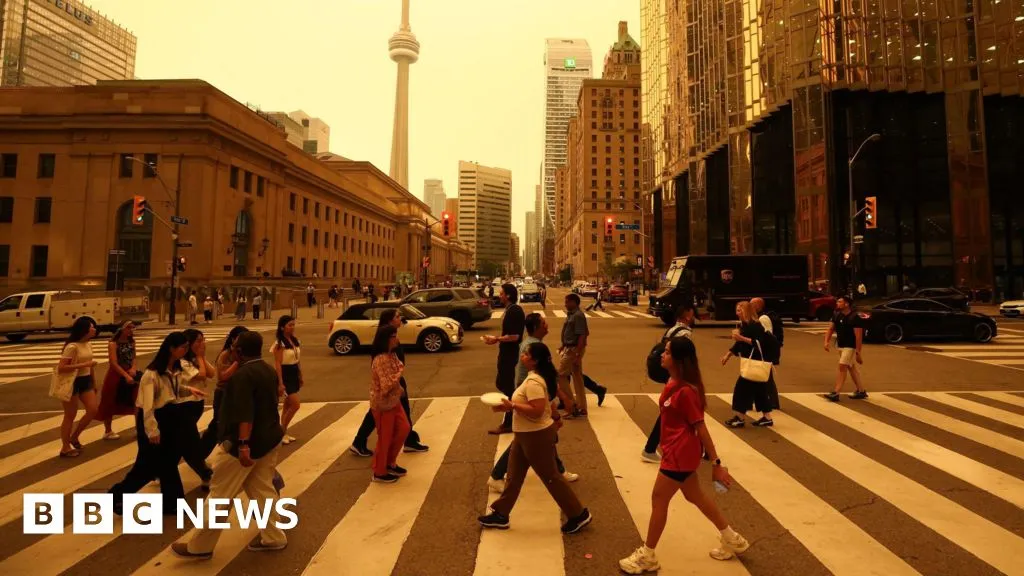
Where is the smoke and what is the impact?Satellite images over the past few days show the wind carrying smoke primarily south-east from Ontario across to Toronto, New York State and reaching Boston.IQAir, a company which tracks global air quality, ranked Detroit, Toronto and Minneapolis as the cities currently with the worst air quality in the world.Wildfire smoke is hazardous for humans as it contains a mixture of very small polluting particles like PM2.5 and nitrogen dioxide."These particles when they get into our system get all the way down into our lungs, all the way down to our tiny breathing tubes and… they cause inflammation," said Jim McDonald, New York State Department of Health commissioner, in a public address video on social media.The smoke can exacerbate existing respiratory, heart, kidney and eye conditions, according to the World Health Organization. Emergency responders, and vulnerable groups such as those with chronic illnesses and children – who are closer to the ground where the smoke can sink – are most at risk.
SRCBBC News - World
LANGEN
LEANCenter
WORDS169
ENT12
THU · 2026-07-16 · 16:08 GMTBRIEF NSR-2026-0716-93595
NSR-2026-0716-93595News Report·EN·Public Health
What to know about the Canadian and US wildfires and their impact
Wildfires in Ontario, Canada, are generating smoke that is traveling southeast, impacting cities in both the US and Canada, including Toronto, New York State, and Boston. Satellite imagery confirms this widespread smoke plume.
2 hours agoBBC News - WorldFiled 2026-07-16 · 16:08 GMTLean · CenterRead · 1 min
BBC News - WorldFIG 01
Reading time
1min
Word count
169words
Sources cited
2cited
Entities identified
12entities
Quality score
100%
§ 01
Briefing Summary
AI-generatedNEWSAR · AI
Wildfires in Ontario, Canada, are generating smoke that is traveling southeast, impacting cities in both the US and Canada, including Toronto, New York State, and Boston. Satellite imagery confirms this widespread smoke plume. Air quality tracking company IQAir has identified Detroit, Toronto, and Minneapolis as having the worst air quality globally due to this smoke. The smoke contains hazardous pollutants like PM2.5 and nitrogen dioxide, which can cause inflammation in the lungs and exacerbate existing respiratory, heart, kidney, and eye conditions. Emergency responders, vulnerable individuals with chronic illnesses, and children are identified as being at the highest risk.
Confidence 0.90Sources 2Claims 5Entities 12
§ 02
Article analysis
Model · rule-basedFraming
Public Health
Environmental
Tone
Measured
AI-assessed
CalmNeutralAlarmist
Factuality
0.80 / 1.00
Factual
LowHigh
Sources cited
2
Limited
FewMany
§ 03
Key claims
5 extracted01
Emergency responders, children, and vulnerable groups with chronic illnesses are most at risk from wildfire smoke.
factual
Confidence
1.00
02
Wildfire smoke can exacerbate existing respiratory, heart, kidney, and eye conditions.
factualWorld Health Organization
Confidence
1.00
03
Wildfire smoke contains hazardous particles like PM2.5 and nitrogen dioxide that can cause inflammation in the lungs.
quoteJim McDonald, New York State Department of Health commissioner
Confidence
1.00
04
Detroit, Toronto, and Minneapolis were ranked as cities with the worst air quality in the world by IQAir.
statisticIQAir
Confidence
1.00
05
Wildfire smoke is being carried by wind from Ontario across to Toronto, New York State, and reaching Boston.
factual
Confidence
1.00
§ 04
Full report
1 min read · 169 words§ 05
Entities
12 identifiedKey playerOppositionContextPositiveNeutralNegative
Locations8
§ 06
Keywords & salience
8 termswildfire smoke
1.00
air quality
0.90
health impact
0.80
pm2.5
0.70
respiratory conditions
0.60
vulnerable groups
0.50
nitrogen dioxide
0.40
inflammation
0.40
§ 07
Topic connections
Interactive graph Network visualization showing 20 related topics
View Full Graph Person Organization Location Event|Click node to navigate|Edge numbers = shared articles