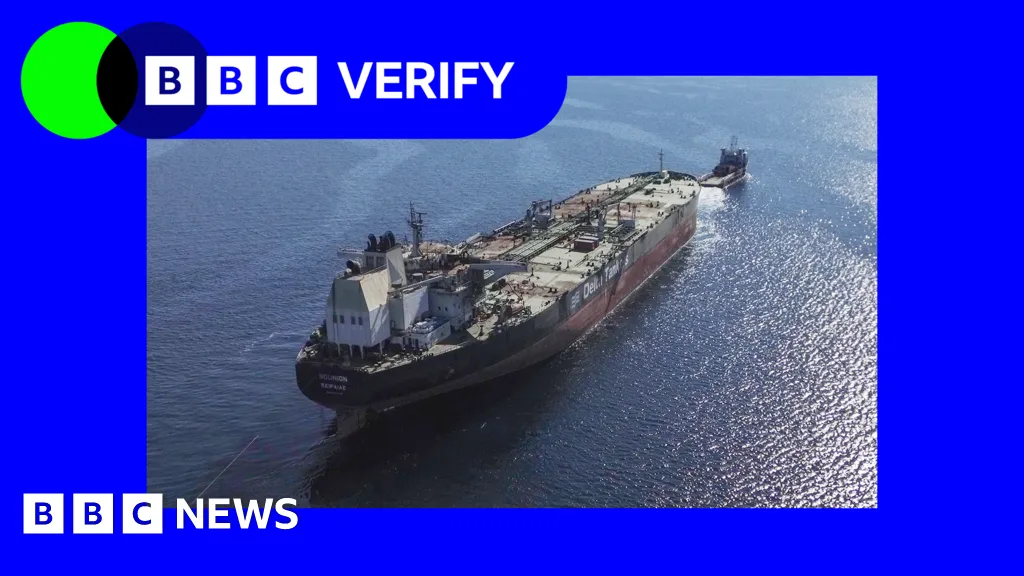
About four million barrels per day have been shipped from Yanbu in recent weeks, compared with about 973,000 a year earlier, according to data from Kpler and maritime analytics platform Signal Ocean.Naveen Das, a senior oil analyst from Kpler, told BBC Verify the only option left to the Saudis if the Bab al-Mandab Strait is effectively closed would be to move oil all the way through the Mediterranean and around the southern tip of Africa to get to Asia.The impact of the blockade on consumers won't be immediate, but the conflict with Iran has made the global energy system more vulnerable to shocks like these, Das added. "We could weather it for two weeks, three weeks, even a month, but even in that time, we will see higher freight rates, higher energy prices and that bleeds into higher energy consumer costs."Ships close to the Red Sea are also broadcasting messages in an attempt to deter attacks, a common practise in the region since the Houthis targeted vessels during the war in Gaza.At least 50 vessels in the region are broadcasting they have armed guards on board, according to data from MarineTraffic.Martin Kelly, from crisis management firm EOS Risk Group, told BBC Verify that captains will fear the "Houthis might read your situation wrong" and think their ships have "called at a Saudi port in the past, then therefore you could be attacked"."A lot of these ships are very large crude oil carriers. I think the damage would be catastrophic. There would be certainly be deaths onboard these ships," he added.
SRCBBC News - World
LANGEN
LEANCenter
WORDS260
ENT12
WED · 2026-07-22 · 14:42 GMTBRIEF NSR-2026-0722-95107
NSR-2026-0722-95107News Report·EN·Economic Impact
Tankers make sharp U-turns after Houthi shipping threat
Tankers are making sharp U-turns after Houthi threats to shipping in the Red Sea. Ship-tracking data indicates that approximately four million barrels of oil per day have been shipped from Yanbu recently, a significant increase from the previous year.
1 hour agoShareSaveAdd as preferred on GoogleThomas Copeland and Joshua CheethamBBC VerifyBBC News - WorldFiled 2026-07-22 · 14:42 GMTLean · CenterRead · 2 min
BBC News - WorldFIG 01
Reading time
2min
Word count
260words
Sources cited
3cited
Entities identified
12entities
Quality score
100%
§ 01
Briefing Summary
AI-generatedNEWSAR · AI
Tankers are making sharp U-turns after Houthi threats to shipping in the Red Sea. Ship-tracking data indicates that approximately four million barrels of oil per day have been shipped from Yanbu recently, a significant increase from the previous year. If the Bab al-Mandab Strait is effectively closed, Saudi Arabia's only alternative for reaching Asia would be to reroute oil shipments through the Mediterranean and around the southern tip of Africa. While the immediate impact on consumers may not be felt, the global energy system is becoming more vulnerable to shocks, potentially leading to higher freight and energy prices. At least 50 vessels in the region are broadcasting messages indicating they have armed guards on board, a practice adopted since Houthi attacks during the war in Gaza. Captains fear misinterpretations by the Houthis could lead to attacks on large crude oil carriers, with potentially catastrophic consequences.
Confidence 0.90Sources 3Claims 5Entities 12
§ 02
Article analysis
Model · rule-basedFraming
Economic Impact
Conflict
Tone
Mixed Tone
AI-assessed
CalmNeutralAlarmist
Factuality
0.70 / 1.00
Factual
LowHigh
Sources cited
3
Well sourced
FewMany
§ 03
Key claims
5 extracted01
At least 50 vessels in the region are broadcasting they have armed guards on board.
statisticdata from MarineTraffic
Confidence
1.00
02
The impact of the blockade on consumers won't be immediate, but the conflict with Iran has made the global energy system more vulnerable to shocks like these.
quoteNaveen Das
Confidence
1.00
03
The only option left to the Saudis if the Bab al-Mandab Strait is effectively closed would be to move oil all the way through the Mediterranean and around the southern tip of Africa to get to Asia.
quoteNaveen Das, a senior oil analyst from Kpler
Confidence
1.00
04
About four million barrels per day have been shipped from Yanbu in recent weeks, compared with about 973,000 a year earlier.
statisticdata from Kpler and maritime analytics platform Signal Ocean
Confidence
1.00
05
We could weather it for two weeks, three weeks, even a month, but even in that time, we will see higher freight rates, higher energy prices and that bleeds into higher energy consumer costs.
quoteNaveen Das
Confidence
0.80
§ 04
Full report
2 min read · 260 words§ 05
Entities
12 identifiedKey playerOppositionContextPositiveNeutralNegative
Organizations5
§ 06
Keywords & salience
9 termshouthi shipping threat
1.00
bab al-mandab strait
0.90
oil tankers
0.80
global energy system
0.70
energy prices
0.60
freight rates
0.60
armed guards
0.50
red sea
0.50
crude oil carriers
0.40
§ 07
Topic connections
Interactive graph Network visualization showing 51 related topics
View Full Graph Person Organization Location Event|Click node to navigate|Edge numbers = shared articles