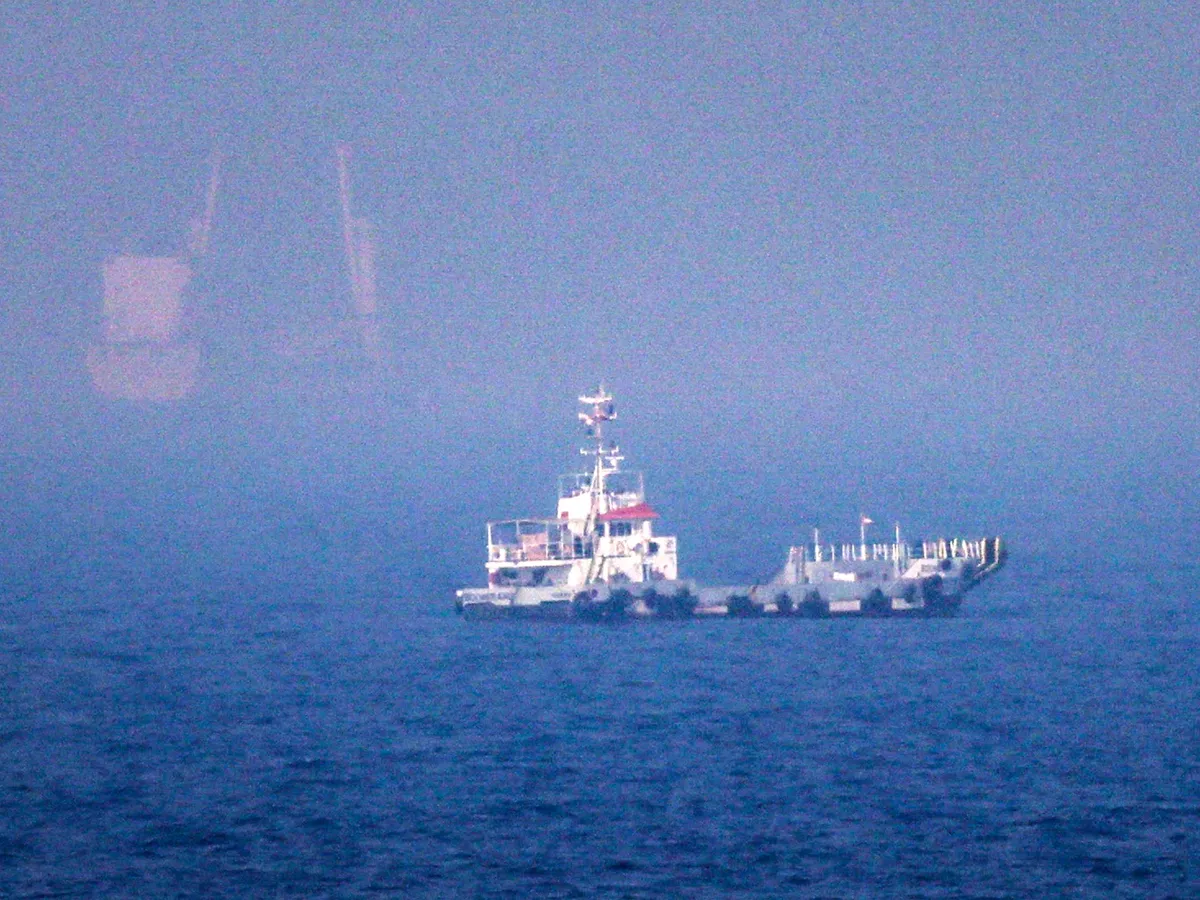
EXPLAINERInsurance rates through Hormuz are currently four times the five-year average.Published On 23 Jul 2026Maritime insurance prices have soared amid shipping disruptions in the Strait of Hormuz and are also rising for vessels traversing the Bab al-Mandeb, with both waterways – critical channels for the global economy – now theatres of war.Yemen’s Iran-aligned Houthi group announced a blockade of Saudi Arabian ports and ships in the Bab al-Mandeb Strait, which connects the Red Sea to the Indian Ocean, earlier this week.This comes on top of ongoing disruptions in the Strait of Hormuz due to the Iran" class="entity-link entity-event" data-entity-id="38678" data-entity-type="event">US-Israel war on Iran. Tehran has insisted that ships consult it before trying to pass, while the US has imposed a naval blockade of Iran-linked ships.Here is a look at the shipping disruptions caused by the war, and how they are driving up insurance prices.What is happening in the Strait of Hormuz?Iran’s Islamic Revolutionary Guard Corps (IRGC) said on Thursday that an explosion set a tanker ablaze in the Strait of Hormuz after it attempted to navigate the southern route off the coast of Oman.In a statement carried by Iranian media, it said two other vessels quickly turned back following the explosion.The IRGC claimed the three ships were acting under US orders and had “intended to pass through the mine-laid route south of the Strait of Hormuz”.“The powerful IRGC Navy emphasises that the Strait of Hormuz is under our control and that as long as America’s evil deeds in the region continue, it is completely closed and no oil tanker will enter or exit [the strait],” it warned.The Strait of Hormuz has been a major bone of contention between the US and IranBefore the war, an estimated 120-140 vessels crossed through the strait each day, roughly half of them oil tankers moving approximately 20 million barrels per day. At the height of the war on Iran, traffic through the waterway collapsed to as few as two tankers a day.Ten vessels passed through the strait on Tuesday, down from 16 on Monday, according to data from S&P Global.How have insurance rates in Hormuz changed?Marine insurance premiums for ships traversing the strait have surged, with insurance companies reluctant to insure those voyages as they have become more prone to attacks, according to a report published by S&P Global on Wednesday.The report added that war-risk insurance costs in the waterway used to constitute between 1 percent to 3 percent of a ship’s hull value. These have now increased to between 7.5 and 10 percent of hull value.The report said that on Wednesday, the market cost was $77.96 per metric tonne of crude oil to ship a 270,000 metric tonne cargo from the Gulf to China, and this price has remained stable since Monday. Before Monday, the price had been $73.80 per metric tonne.The current rate is four times the five-year average rate of $18.91 per metric tonne. The rate was at its peak in March at about $140 per metric tonne, when the conflict was at its peak. The lowest it has been since March was a little more than $60 per metric tonne in early June.At $77.96 per metric tonne, insurance for a 270,000-metric-tonne tanker could cost about $21m.The US and Iran signed their memorandum of understanding (MoU) on June 17 to extend their ceasefire and continue peace talks. This resulted in a 60-day negotiation period when large-scale hostilities had largely subsided until the second week of July, when they resumed.What is happening at Bab al-Mandeb?The Bab al-Mandeb Strait is between Yemen to its northeast and Djibouti and Eritrea in the Horn of Africa to the southwest.It connects the Red Sea to the Indian Ocean through the Gulf of Aden. It is 29km (18 miles) wide at its narrowest point, limiting traffic to two channels for inbound and outbound shipments and is effectively controlled by the Iran-backed Houthis.On Monday, the Houthis announced a naval blockade against Saudi Arabia. The Yemen-based group is a central part of Iran’s “axis of resistance”.The Houthis claimed a major operation against two Saudi oil tankers in the Red Sea, called the Encelia and the Layla, on Thursday. The Saudi SPA news agency confirmed the Encelia was hit.The Houthis said they targeted those two tankers with cruise and ballistic missiles as well as drones, causing huge balls of fire and devastation.The Houthis framed the attack as part of a tit-for-tat campaign against Saudi Arabia. They are calling it a “siege-for-siege”. They said it has been nearly 12 years since Saudi Arabia has been imposing a siege on the Yemeni people, and that it is now time for Yemen and the Houthis to respond in kind. Riyadh has rejected Houthi claims that it had besieged Yemen.The S&P report said that transit activity through the Bab al-Mandeb fell sharply by 30 percent on Tuesday, with total crossings dropping to 29 vessels from 41 on Monday.The S&P report quoted Marcus Baker, global head of marine, cargo and logistics at Marsh – a US-based insurance and risk management firm – as saying that insurance companies are charging a bit more for risk in the Red Sea and that perceptions of risk have risen, although not to the same extent as in the Strait of Hormuz.It added that premiums for vessels traversing Bab al-Mandeb are currently at 0.5 percent of hull value, compared with 0.1 percent for ships navigating the Red Sea near western Saudi Arabia – from where they head to the Suez Canal, away from the Houthis’ range.
SRCAl Jazeera
LANGEN
LEANCenter
WORDS912
ENT12
THU · 2026-07-23 · 14:19 GMTBRIEF NSR-2026-0723-95384
NSR-2026-0723-95384News Report·EN·Economic Impact
How shipping insurance rates are rising, as Hormuz, Bab al-Mandeb shut down
Shipping insurance rates are significantly increasing due to disruptions in two vital waterways. In the Strait of Hormuz, insurance costs are currently four times the five-year average, with traffic collapsing due to Iran's control and warnings against passage.
Al Jazeera StaffAl JazeeraFiled 2026-07-23 · 14:19 GMTLean · CenterRead · 4 min
Al JazeeraFIG 01
Reading time
4min
Word count
912words
Sources cited
2cited
Entities identified
12entities
Quality score
100%
§ 01
Briefing Summary
AI-generatedNEWSAR · AI
Shipping insurance rates are significantly increasing due to disruptions in two vital waterways. In the Strait of Hormuz, insurance costs are currently four times the five-year average, with traffic collapsing due to Iran's control and warnings against passage. This follows an incident where an explosion set a tanker ablaze. Concurrently, the Bab al-Mandeb Strait is experiencing rising insurance rates as Yemen's Houthi group announced a blockade of Saudi Arabian ports and ships, claiming it as retaliation for a long-standing siege. Transit activity through Bab al-Mandeb fell sharply by 30% following the announcement. These escalating tensions and military actions in both straits are making voyages riskier and driving up the cost of marine insurance.
Confidence 0.90Sources 2Claims 5Entities 12
§ 02
Article analysis
Model · rule-basedFraming
Economic Impact
Conflict
Tone
Measured
AI-assessed
CalmNeutralAlarmist
Factuality
0.70 / 1.00
Factual
LowHigh
Sources cited
2
Limited
FewMany
§ 03
Key claims
5 extracted01
War-risk insurance costs in the Strait of Hormuz have increased from 1-3 percent to 7.5-10 percent of a ship's hull value.
statisticS&P Global
Confidence
1.00
02
Yemen’s Iran-aligned Houthi group announced a blockade of Saudi Arabian ports and ships in the Bab al-Mandeb Strait.
factualHouthi group
Confidence
1.00
03
Maritime insurance prices have soared amid shipping disruptions in the Strait of Hormuz and are also rising for vessels traversing the Bab al-Mandeb.
factual
Confidence
1.00
04
Insurance rates through Hormuz are currently four times the five-year average.
statistic
Confidence
1.00
05
The Strait of Hormuz is under IRGC control and is completely closed as long as America's actions continue.
quoteIRGC
Confidence
0.80
§ 04
Full report
4 min read · 912 words§ 05
Entities
12 identifiedKey playerOppositionContextPositiveNeutralNegative
Organizations3
Locations6
§ 06
Keywords & salience
10 termsstrait of hormuz
1.00
bab al-mandeb
1.00
shipping insurance rates
1.00
maritime insurance
0.90
shipping disruptions
0.90
war risk insurance
0.80
global economy
0.70
us-iran war
0.60
houthi group
0.50
tanker traffic
0.40
§ 07
Topic connections
Interactive graph No topic relationship data available yet. This graph will appear once topic relationships have been computed.