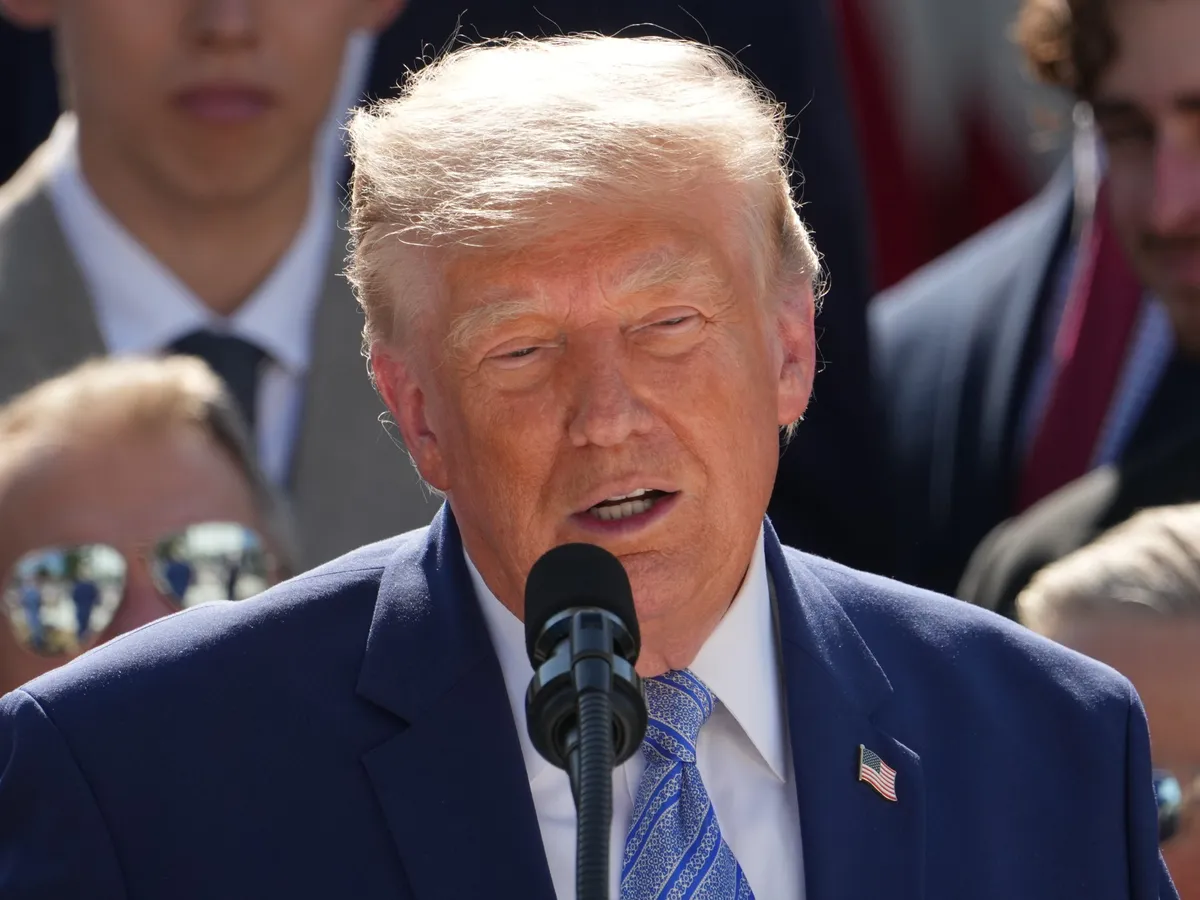
EXPLAINERCountries accounting for almost all of the US’s trade have been hit with tariffs between 10 and 12.5 percent.President Donald Trump speaks during an event to honor the 2025 World Series champions Los Angeles Dodgers in the Rose Garden of the White House, on July 23, 2026, in Washington, DC [Alex Brandon/ AP Photo]Published On 24 Jul 2026US President Donald Trump has imposed new double-digit tariffs on dozens of trading partners of the United States.This announcement came just as the clock ran out on Friday on stopgap levies he announced after a stinging defeat at the Supreme Court.What was announced?The US has slapped levies of 10 to 12.5 percent on imports from 60 countries accounting for 99 percent of US imports, accusing them of inadequately enforcing bans on goods produced by forced labour.“The United States has had a forced labor import ban for nearly a century, and rigorously enforces it; it’s well past time for our trading partners to do the same,” US Trade Representative Jamieson Greer said in a statement on Thursday.“Today’s action will begin to correct what is both a human rights abuse and distortive trade practice to improve the welfare of workers everywhere.”When will these new tariffs take effect?The new tariffs took effect just as the temporary 10 percent worldwide tariffs expired at 12:01am on Friday in Washington, DC (04:01 GMT). Trump had turned to the temporary levies after the Supreme Court struck down his biggest and boldest tariffs in February.Which countries were hit by these tariffs?In the Federal Register notice, where the tariffs were announced, there were details of the countries hit by the tariffs.These countries and economies are: Algeria; Angola; Argentina; Australia; the Bahamas; Bahrain; Bangladesh; Brazil; Cambodia; Chile; China, People’s Republic of; Colombia; Costa Rica; Dominican Republic; Egypt; El Salvador; Guatemala; Guyana; Honduras; Hong Kong, China; India; Iraq; Israel; Japan; Jordan; Kazakhstan; Kuwait; Libya; Malaysia; Morocco; New Zealand; Nicaragua; Nigeria; Norway; Oman; Peru; the Philippines; Qatar; Russia; Saudi Arabia; Singapore; South Africa; South Korea; Sri Lanka; Switzerland; Taiwan; Thailand; Trinidad and Tobago; Turkiye; United Arab Emirates; United Kingdom; Uruguay; Venezuela; Vietnam; Canada; Ecuador; the European Union; Indonesia; Mexico; and Pakistan.What is the legal basis for these tariffs?Trump is tapping more durable tariffs under Section 301 of the Trade Act of 1974, which permits the president to impose import taxes and other sanctions against countries found to engage in “unjustifiable”, “unreasonable”, or “discriminatory” trade practices.Trump used Section 301 to impose major tariffs on China in his first term, and they survived court challenges.Trump, who argues that high tariffs will revive US manufacturing, last year overturned decades of US policy that favoured lower tariffs and freer trade.Invoking the 1977 International Emergency Economic Powers Act (IEEPA), he imposed double-digit tariffs on imports from almost every country, saying that the US’s longstanding trade deficit amounted to a national emergency.But the Supreme Court ruled that IEEPA did not authorise tariffs. The decision forced the Trump administration to pay refunds to importers that had paid the levies.In response, Trump announced 10 percent worldwide tariffs under Section 122 of the Trade Act of 1974. But he can only use Section 122 levies for 150 days, and the time ran out at the start of Friday.John Diamond, director of the Center for Tax and Budget Policy at the Baker Institute, said the administration was looking for a new authority to replace the expiring tariffs and decided to use Section 301.“It’s a little bit ridiculous to think that over 60 major trading partners, including countries in the EU, are really relying on that much forced labour. It’s kind of hard to believe,” Diamond told Al Jazeera. “But I don’t think the courts will want to overrule these tariffs as they did the IEEPA tariffs.”Why have some been charged 10 percent, others 12.5 percent?Countries that have laws against the import of products made using forced labour, including India, Pakistan and Argentina, have been hit with a 10 percent tariff.Nations without such laws, including China and the United Kingdom, have been slapped with a 12.5 percent tariff.What’s next?Additional tariffs on the basis of Section 301 are likely coming: Greer’s office has launched a probe into whether 16 countries, accounting for 70 percent of US imports, have overproduced goods, pushing down prices and putting US companies at a disadvantage in global markets.The administration has yet to complete that investigation.
SRCAl Jazeera
LANGEN
LEANCenter
WORDS723
ENT12
FRI · 2026-07-24 · 09:13 GMTBRIEF NSR-2026-0724-95637
NSR-2026-0724-95637News Report·EN·Human Rights
Trump’s latest ‘forced labour tariffs’: Who’s been hit, how badly?
US President Donald Trump has imposed new tariffs ranging from 10 to 12.5 percent on imports from 60 countries, representing 99 percent of US trade. These tariffs, effective Friday, are justified by the administration as a measure to combat forced labor and distortive trade practices.
Al Jazeera StaffAl JazeeraFiled 2026-07-24 · 09:13 GMTLean · CenterRead · 3 min
Al JazeeraFIG 01
Reading time
3min
Word count
723words
Sources cited
1cited
Entities identified
12entities
Quality score
100%
§ 01
Briefing Summary
AI-generatedNEWSAR · AI
US President Donald Trump has imposed new tariffs ranging from 10 to 12.5 percent on imports from 60 countries, representing 99 percent of US trade. These tariffs, effective Friday, are justified by the administration as a measure to combat forced labor and distortive trade practices. The tariffs are being implemented under Section 301 of the Trade Act of 1974, a legal basis that has previously survived court challenges. Countries with laws against forced labor imports, such as India and Pakistan, face a 10 percent tariff, while those without such laws, including China and the United Kingdom, are subject to 12.5 percent. This action follows the expiration of temporary tariffs previously enacted after a Supreme Court ruling. The US Trade Representative stated the goal is to improve worker welfare globally.
Confidence 0.90Sources 1Claims 4Entities 12
§ 02
Article analysis
Model · rule-basedFraming
Human Rights
Economic Impact
Tone
Measured
AI-assessed
CalmNeutralAlarmist
Factuality
0.80 / 1.00
Factual
LowHigh
Sources cited
1
Limited
FewMany
§ 03
Key claims
4 extracted01
Trump is tapping more durable tariffs under Section 301 of the Trade Act of 1974, which permits the president to impose import taxes and other sanctions against countries found to engage in “unjustifiable”, “unreasonable”, or “discriminatory” trade practices.
factual
Confidence
1.00
02
The United States has had a forced labor import ban for nearly a century, and rigorously enforces it; it’s well past time for our trading partners to do the same.
quoteUS Trade Representative Jamieson Greer
Confidence
1.00
03
The US has slapped levies of 10 to 12.5 percent on imports from 60 countries accounting for 99 percent of US imports, accusing them of inadequately enforcing bans on goods produced by forced labour.
factual
Confidence
1.00
04
US President Donald Trump has imposed new double-digit tariffs on dozens of trading partners of the United States.
factual
Confidence
1.00
§ 04
Full report
3 min read · 723 words§ 05
Entities
12 identifiedKey playerOppositionContextPositiveNeutralNegative
Organizations4
Locations4
§ 06
Keywords & salience
10 termsforced labour tariffs
1.00
us trade
0.90
donald trump
0.80
trade partners
0.70
import ban
0.60
distortive trade practice
0.50
human rights abuse
0.50
supreme court
0.40
federal register
0.40
trade act of 1974
0.40
§ 07
Topic connections
Interactive graph Network visualization showing 51 related topics
View Full Graph Person Organization Location Event|Click node to navigate|Edge numbers = shared articles