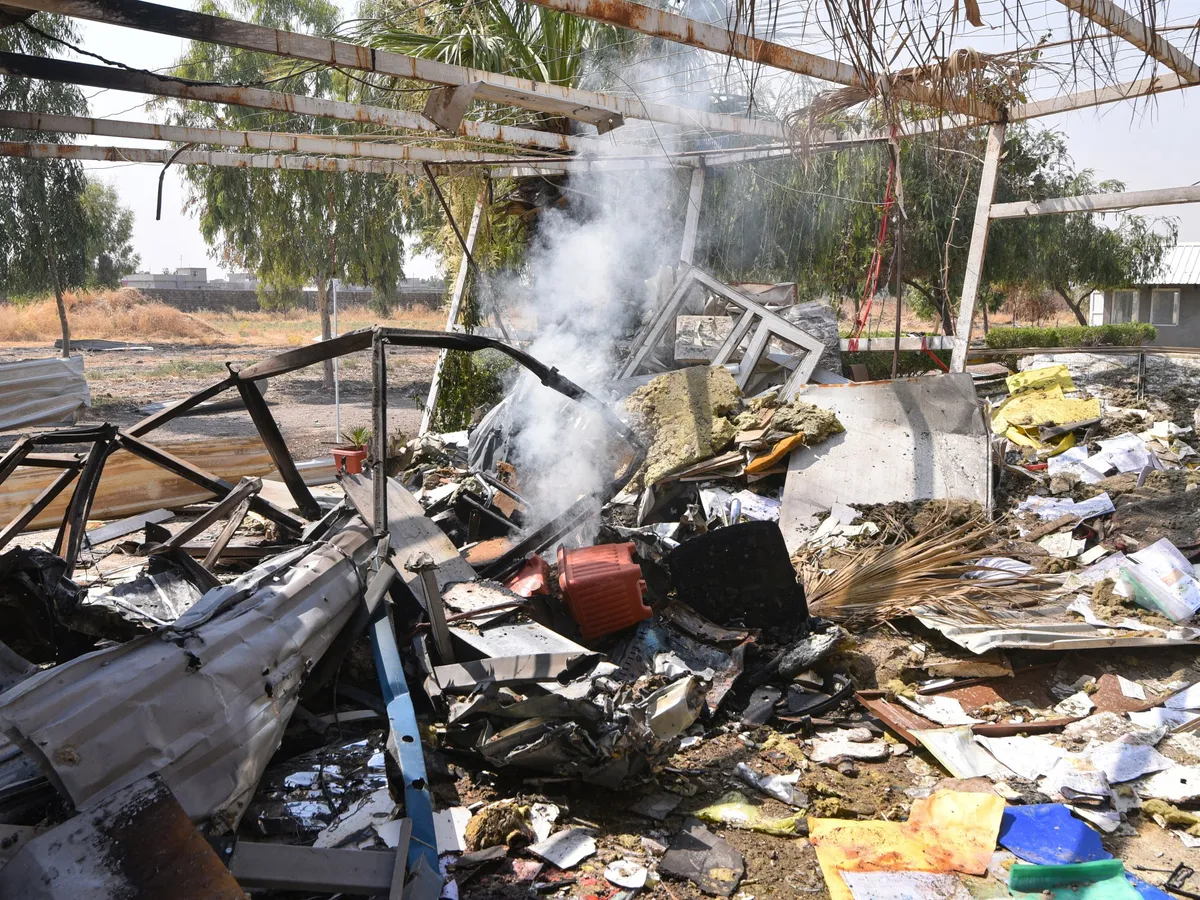
EXPLAINERThe US says it intercepts an Iranian ‘surprise attack’ on US forces as fears rise of wider war.US and Saudi Arabia strike 'Iran-aligned' groups in IraqPublished On 29 Jul 2026Iran has fired several ballistic missiles at United States military installations in Jordan, and the US has confirmed it has intercepted a “surprise attack” on its forces in the Middle East.Also on Wednesday morning, the US and Saudi Arabia launched attacks on Iran-backed groups in Iraq.It is unclear whether Iran’s attack on Jordan happened before or after the US-Saudi attack on Iraq. A statement from the US military’s Central Command (CENTCOM) did not clarify which incident happened first.Here is a closer look at what happened, and whether this means the war is spreading:What happened?Early on Wednesday, Iran’s Islamic Revolutionary Guard Corps (IRGC) said it had fired multiple ballistic missiles at US military installations in Jordan. The US confirmed it had intercepted a “surprise” attack.CENTCOM, the IRGC and Jordanian authorities have yet to reveal exactly which military sites and assets were targeted in Jordan.Also on Wednesday, Saudi Arabia’s Ministry of Defence said its armed forces, in coordination with CENTCOM, had conducted attacks against Iran-backed groups in Iraq after drone attacks on Saudi petroleum facilities. CENTCOM confirmed it had carried out strikes with Saudi Arabian forces against “Iran-aligned” groups in Iraq which it claimed had attacked US forces and Saudi energy infrastructure on the orders of the IRGC.Iraq’s Popular Mobilisation Forces (PMF) said the US-Saudi attacks killed at least 20 of its fighters and wounded 32 in seven provinces. The PMF is an umbrella group for armed groups in Iraq, some of which are loyal to Iran.The attacks hit PMF positions in the provinces of Baghdad, Wasit, Nineveh, Basra, Kirkuk, Karbala and Diyala, the state-sanctioned umbrella group of mostly Shia groups said in a statement.The PMF said the casualty figures were preliminary and could rise once field assessments were completed.Iraqi Prime Minister Ali al-Zaidi called an emergency meeting of the Ministerial Council for National Security on Wednesday after the US-Saudi attacks.Why did the US and Saudi Arabia attack Iraq?The US and Saudi Arabia justified their attacks on Iraq by claiming Iran was responsible for recent drone attacks on Saudi oil facilities apparently launched from Iraqi territory.The US and Saudi Arabia said Iran-aligned-groups" class="entity-link entity-organization" data-entity-id="174035" data-entity-type="organization">Iran-aligned groups in Iraq carried out “30 IRGC-directed” drone attacks in 72 hours.The accusation prompted a warning by an unnamed Iranian defence official via the state broadcaster, the Islamic Republic of Iran Broadcasting (IRIB), that blaming Iran for such attacks was a “major miscalculation”.Al-Zaidi has already ordered Iraqi security agencies to investigate the drone attacks and is expected to travel to Saudi Arabia on Thursday.However, the Islamic Resistance in Iraq, a self-described armed resistance group backed by Iran, denied any role in the attacks on Saudi Arabia.It said Saudi claims were “fabrications” and “any foolish Saudi action will be met with a harsh response”.Why did Iran attack Jordan?Iran’s latest attack on Jordan follows its pattern of targeting US military assets and infrastructure in Gulf countries, which it has been doing since the start of the US-Israeli war on Iran on February 28.While it has not been revealed which military sites and assets were targeted in Jordan, the country is known to host about 4,000 US soldiers who are stationed there, according to a 2026 US Congressional Research Service report.Some of these service members are based at the Muwaffaq Salti Air Base in northeastern Jordan. The King Faisal Air Base is a Jordanian base at which US soldiers also maintain a presence while Tower 22 is a remote US military logistics outpost in northeastern Jordan near the borders with Syria and Iraq.On Wednesday, Iran said it had struck US assets in Jordan in response to “aggressive actions” by the US military, according to an IRGC statement carried by the IRNA news agency.Could the war spread?Fearing that the conflict could spread, Middle Eastern and other countries are trying to de-escalate the situation.The conflict has already spilled over to the Red Sea, where Yemen’s Iran-backed Houthis have announced a blockade and targeted Saudi‑flagged ships, and to the Caspian Sea, where Ukraine said on Saturday that it had hit vessels carrying Iranian‑linked military cargo.Experts fear, therefore, that the war is increasingly overlapping with other conflicts, including the one in Ukraine, and risks dragging Saudi Arabia and other regional powers deeper into the fighting.Pakistan’s ambassador to the United Nations, Asim Iftikhar Ahmad, expressed concern over the escalating tensions in the Middle East and urged all sides to “uphold their commitments” under the memorandum of understanding (MoU) signed by Iran and the US last month, which supposedly cleared the way for 60 days of negotiations but has already been broken by bouts of fighting.Addressing the UN Security Council on Tuesday, Ahmad also condemned attacks on Saudi Arabia and on commercial ships, stating that Pakistan, which has been mediating US-Iran talks, is “deeply concerned over attempts to drag” the kingdom into the wider conflict. He expressed support for Saudi security, sovereignty and territorial integrity.Saudi Foreign Minister Faisal bin Farhan Al Saud spoke by phone on Wednesday with his counterparts in Qatar, Kuwait and Bahrain, during which the ministers “stressed the importance of continuing efforts to de-escalate tensions”, according to his office.The ministers also stressed the importance of safeguarding “freedom of navigation in the Strait of Hormuz and the Bab al-Mandeb Strait” to help mitigate the security and economic fallout of the crisis.They condemned attacks by Iran and “its affiliated militias in Iraq and Yemen” and emphasised continued coordination and stronger joint action through the Gulf Cooperation Council.The European Union’s foreign policy chief, Kaja Kallas, said on Wednesday that she had discussed the situation in the Gulf as well as Iran’s support for Russia during a phone call with Iranian Foreign Minister Abbas Araghchi.“In the Gulf, the reprieve from fighting can buy mediators time to find a way back to diplomacy and prevent a return to full-scale war,” Kallas said in a post on X.
SRCAl Jazeera
LANGEN
LEANCenter
WORDS995
ENT10
WED · 2026-07-29 · 11:34 GMTBRIEF NSR-2026-0729-97136
NSR-2026-0729-97136News Report·EN·Conflict
Iran hits US in Jordan, US-Saudi strikes on Iraq: Is war spreading?
Iran fired ballistic missiles at US military installations in Jordan, which the US confirmed it intercepted. Simultaneously, the US and Saudi Arabia launched strikes against Iran-aligned groups in Iraq, citing drone attacks on Saudi oil facilities allegedly orchestrated by Iran.
Sarah ShamimAl JazeeraFiled 2026-07-29 · 11:34 GMTLean · CenterRead · 4 min
Al JazeeraFIG 01
Reading time
4min
Word count
995words
Sources cited
5cited
Entities identified
10entities
Quality score
100%
§ 01
Briefing Summary
AI-generatedNEWSAR · AI
Iran fired ballistic missiles at US military installations in Jordan, which the US confirmed it intercepted. Simultaneously, the US and Saudi Arabia launched strikes against Iran-aligned groups in Iraq, citing drone attacks on Saudi oil facilities allegedly orchestrated by Iran. These US-Saudi strikes resulted in at least 20 reported deaths among Iraqi fighters. Iran stated its Jordan attack was in response to US "aggressive actions," while the Islamic Resistance in Iraq denied involvement in the Saudi drone attacks. These events raise concerns about the potential spread of conflict in the Middle East, with existing spillover into the Red and Caspian Seas.
Confidence 0.90Sources 5Claims 5Entities 10
§ 02
Article analysis
Model · rule-basedFraming
Conflict
National Security
Tone
Mixed Tone
AI-assessed
CalmNeutralAlarmist
Factuality
0.70 / 1.00
Factual
LowHigh
Sources cited
5
Well sourced
FewMany
§ 03
Key claims
5 extracted01
US and Saudi Arabia launched attacks on Iran-backed groups in Iraq.
factualUS and Saudi Arabia
Confidence
0.95
02
The US confirmed it intercepted a 'surprise attack' on its forces in the Middle East.
factualUS military's Central Command (CENTCOM)
Confidence
0.95
03
Iran fired ballistic missiles at US military installations in Jordan.
factualIran's Islamic Revolutionary Guard Corps (IRGC)
Confidence
0.90
04
US and Saudi Arabia claim Iran was responsible for recent drone attacks on Saudi oil facilities launched from Iraq.
factualUS and Saudi Arabia
Confidence
0.85
05
Iraq's Popular Mobilisation Forces (PMF) reported at least 20 fighters killed and 32 wounded in US-Saudi attacks.
statisticIraq's Popular Mobilisation Forces (PMF)
Confidence
0.80
§ 04
Full report
4 min read · 995 words§ 05
Entities
10 identifiedKey playerOppositionContextPositiveNeutralNegative
People1
Organizations4
§ 06
Keywords & salience
10 termswider war
1.00
iran-aligned groups
0.90
us forces
0.80
us-saudi strikes
0.70
ballistic missiles
0.70
iraq
0.60
middle east
0.60
drone attacks
0.50
jordan
0.50
irgc
0.40
§ 07
Topic connections
Interactive graph Network visualization showing 51 related topics
View Full Graph Person Organization Location Event|Click node to navigate|Edge numbers = shared articles