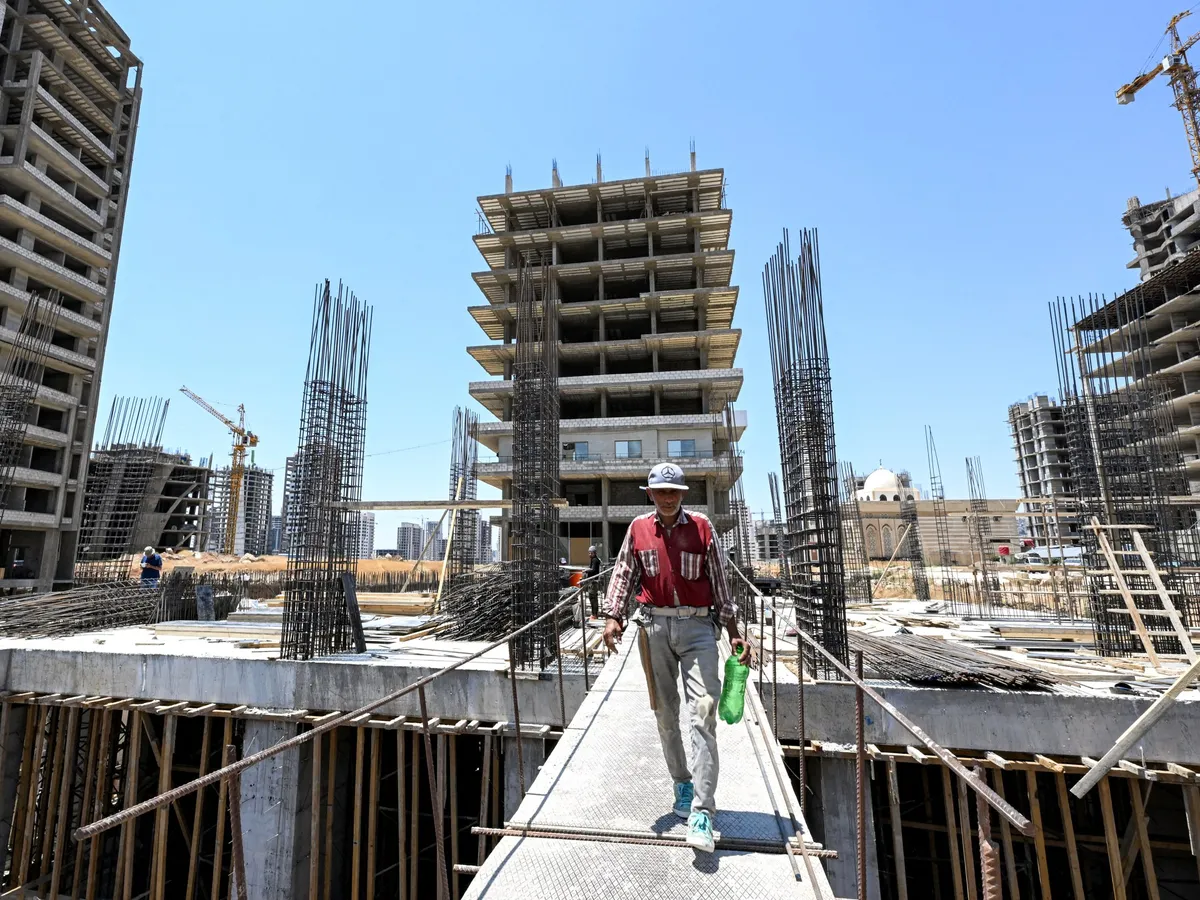
Families like the Tasabehjis aim to rebuild Syria, fostering community and hope despite economic and social challenges.A worker walks at a construction site in Marota City, a new mixed-use development project near the Umayyad Square in Damascus on July 22, 2026 [AFP]Published On 30 Jul 2026Damascus, Syria – When the al-Assad regime fell in December 2024, Yasseen Tasabehji and his family did not originally plan on returning to Syria.Tasabehji, now 33, his four siblings and his parents had moved to Mississauga, a suburb of Toronto in Canada, in 2010, a year before the start of the Syrian uprising and subsequent war. They’d built what Tasabehji describes as a “quite good” life and didn’t plan on ever returning.Recommended Stories list of 3 itemslist 1 of 3Why Saudi Arabia holds the key to Palestinian statehoodlist 2 of 3Fragile peace in Syria’s Set Zaynab as sectarian challenges persistlist 3 of 3Iran hits US in Jordan, US-Saudi strikes on Iraq: Is war spreading?end of listDuring the war years, his mother returned once to visit family, but the rest of the family did not.“The Syrian file was just closed for all of us,” Tasabehji told Al Jazeera. “We had the feeling that we would never go back.”Then, in late 2024, a rebel operation took Aleppo from the al-Assad regime and carried on to Hama and Homs. Within a matter of days, the al-Assad family had fled to Moscow and the Syrian opposition were celebrating the liberation of Damascus.For Tasabehji and his family, a “Pandora’s box opened”, he said. “It coincided with a time in our lives when we were thinking, ‘OK, what’s next? What do we want to do?’ We were looking for a sense of purpose, a sense of fulfilment.”Tasabehji said he and his siblings all had good jobs, as well as friends and family. But they still felt a calling. “We felt like this might be it. We might be able to do something here.”The family visited in April 2025 with the idea of possibly opening a climbing gym – a couple of the siblings are serious climbers. After a monthlong trip to see family in Damascus, the siblings packed their bags back in Canada and moved to Syria permanently in July.“We saw a country that needs everything, and we felt like any addition will make a huge difference,” Tasabehji told Al Jazeera, sitting comfortably inside the family’s climbing gym – they decided to follow through with the idea – in Damascus’s Mezzeh neighbourhood. The family are already trying to give back, running a number of programmes at the climbing gym to help young Syrians build self-esteem and form a community.As he spoke, Tasebehji’s sister was teaching a class of young children and his father, who is still based in Canada with their mother, but is now also considering making a permanent move, sat against a climbing wall.“We saw how young people have no options, no healthy communities, no health activities, no place to just gather and feel good. And everybody wanted to leave,” he said. “It became a goal of ours to make Syria more attractive to young people, so that they can see a future here.”Returning homeTasabehji and his siblings are just a few of the 1.5 million Syrians who have returned to the country since the country’s former President Bashar al-Assad fled Damascus.Many were refugees in places like Turkiye or Lebanon, while others were working in Europe or the Gulf and decided they wanted to return to their country. There is optimism among many returnees, despite economic difficulties and rising energy costs, and now, hope to rebuild their homes and their lives.Still, returnees face some uphill struggles. The World Bank estimates that Syria’s reconstruction costs will amount to at least $216bn. Syria’s new government, led by President Ahmed al-Sharaa, has worked hard to return the battered country to the international fold by successfully lobbying for the removal of economy-hindering sanctions.And not all Syrians have returned to the country with the plan that it will be their final destination. Tariq Azeez, the International Rescue Committee’s policy, advocacy and communications coordinator, told Al Jazeera that about 400,000 Syrians have returned from Lebanon due to Israel’s war.“Some will move back to Lebanon if the situation there improves,” Azeez said.The economic situation in Syria has made it difficult for many returnees to reintegrate or rebuild their lives. Many are already struggling financially and may consider relocating abroad again if the opportunity arises.And conditions in Syria are still difficult – 15.6 million Syrians, two-thirds of the country’s population, are currently in need of humanitarian assistance.Potential problemsBut returning to Syria also comes with potential social pitfalls.Millions of Syrians have spent the war years abroad, in neighbouring countries, Europe, North America, or the Gulf. Others were displaced internally in Syria, forced to leave their homes because of the destruction wrought by the war, or for political reasons.Now, as Syria tries to not only rebuild its infrastructure but also its society, thousands of Syrians are returning to areas they used to live in after a wide variety of lived experiences.“Civilians are learning how to live with each other again,” IRC’s Azeez said, adding that some are returning with different norms or different politics. “It could be an accident waiting to happen.”Azeez said that violence was not the only threat, but also a disparity in access to services could lead to a breakdown in trust between communities.Institutionally, Syria still has a lot to do. Investments, particularly from regional and international allies, have been widely promised, but action is slow.Azeez said that for Syria to remain stable, returns need to be gradual and sequenced, as Syria isn’t equipped to receive large waves of returnees all at once. As the country’s buildings and cities are reconstructed, so too must its social contract and harmony be rebuilt.Back at the climbing gym, Tasabehji said that on returning to Syria, he noticed there were social and sectarian divides in the country. The issues are much bigger than one climbing gym can solve, even with the family’s impressive credentials and plans to build a well-adjusted community.Still, they are playing their part to build a better Syria for those still in the country or those deciding to come back to their homeland. And part of that is by creating a welcoming space that attracts Syrians from across the identity spectrum.“We’re trying to really introduce people to each other so that they can live together,” Tasabehji said, “and build the future of this country.”
SRCAl Jazeera
LANGEN
LEANCenter
WORDS1 077
ENT12
THU · 2026-07-30 · 09:43 GMTBRIEF NSR-2026-0730-97471
NSR-2026-0730-97471News Report·EN·Human Interest
From Toronto to Damascus: Syrians return home aiming to rebuild country
Following the fall of the al-Assad regime in December 2024, Syrians like the Tasabehji family, who had previously relocated to Canada, are returning to their homeland with the goal of rebuilding. The family, motivated by a desire for purpose and fulfillment, opened a climbing gym in Damascus, aiming to create community and provide opportunities for young Syrians.
Justin SalhaniAl JazeeraFiled 2026-07-30 · 09:43 GMTLean · CenterRead · 5 min
Al JazeeraFIG 01
Reading time
5min
Word count
1 077words
Sources cited
1cited
Entities identified
12entities
Quality score
100%
§ 01
Briefing Summary
AI-generatedNEWSAR · AI
Following the fall of the al-Assad regime in December 2024, Syrians like the Tasabehji family, who had previously relocated to Canada, are returning to their homeland with the goal of rebuilding. The family, motivated by a desire for purpose and fulfillment, opened a climbing gym in Damascus, aiming to create community and provide opportunities for young Syrians. They are among an estimated 1.5 million Syrians who have returned since the regime's collapse, seeking to contribute to the country's reconstruction despite significant economic challenges, including an estimated $216 billion reconstruction cost and ongoing humanitarian needs for millions. While some returnees face difficulties reintegrating due to the economic situation, and some may leave again if conditions change, many are driven by hope to rebuild their lives and foster a more attractive future for Syria.
Confidence 0.90Sources 1Claims 5Entities 12
§ 02
Article analysis
Model · rule-basedFraming
Human Interest
Conflict
Tone
Measured
AI-assessed
CalmNeutralAlarmist
Factuality
0.40 / 1.00
Mixed
LowHigh
Sources cited
1
Limited
FewMany
§ 03
Key claims
5 extracted01
The climbing gym runs programs to help young Syrians build self-esteem and form a community.
factualarticle
Confidence
1.00
02
The Tasabehji family opened a climbing gym in Damascus's Mezzeh neighbourhood.
factualarticle
Confidence
1.00
03
Yasseen Tasabehji and his family moved to Mississauga, Canada, in 2010.
factualYasseen Tasabehji
Confidence
1.00
04
Syrian al-Assad regime fell in December 2024.
factualarticle
Confidence
0.90
05
Young people in Syria have no options, no healthy communities, and no healthy activities.
factualYasseen Tasabehji
Confidence
0.80
§ 04
Full report
5 min read · 1 077 words§ 05
Entities
12 identifiedKey playerOppositionContextPositiveNeutralNegative
Organizations1
Locations8
§ 06
Keywords & salience
9 termsrebuilding syria
1.00
syrian diaspora
1.00
syrian uprising
0.90
al-assad regime
0.80
post-war reconstruction
0.80
damascus
0.70
community and hope
0.60
economic and social challenges
0.50
syrian opposition
0.40
§ 07
Topic connections
Interactive graph No topic relationship data available yet. This graph will appear once topic relationships have been computed.