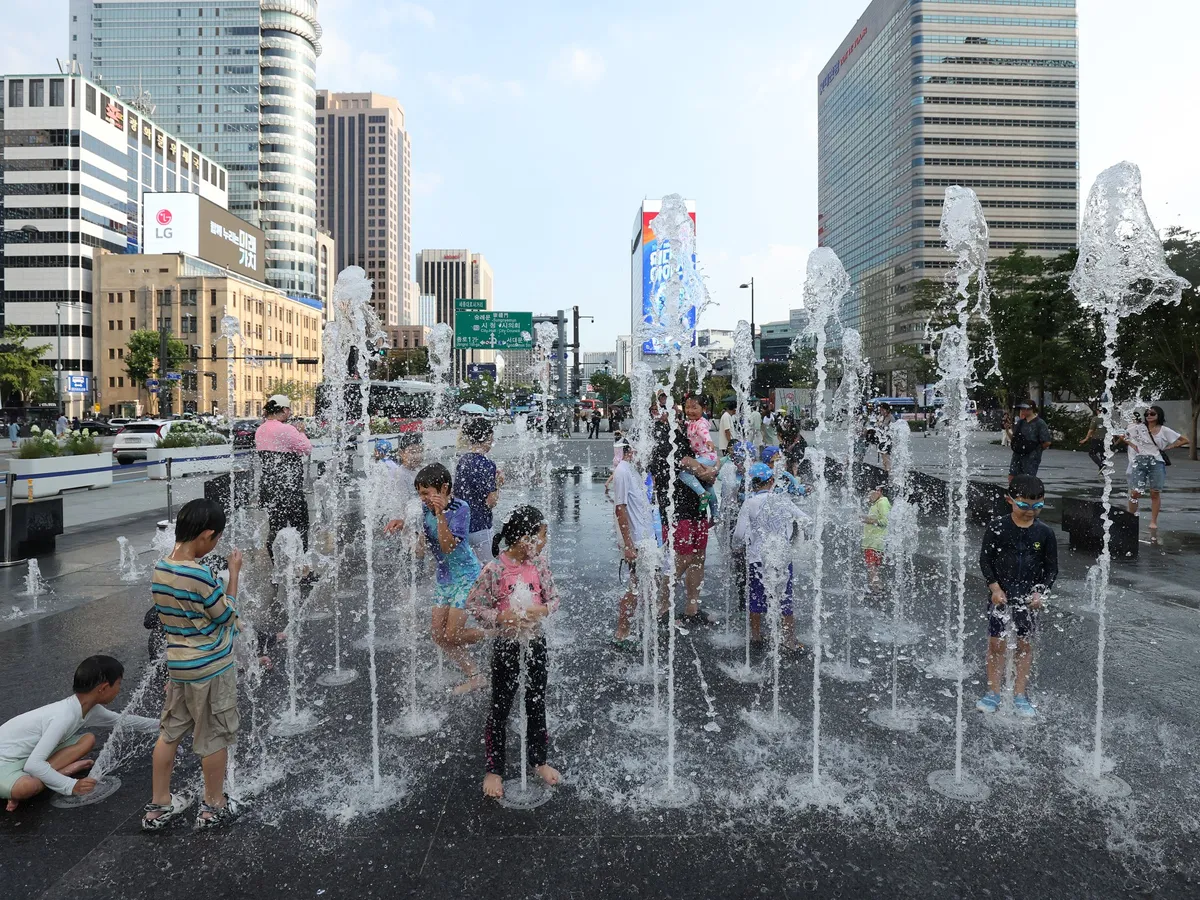
Scientists say the Climate Crisis driven by human activity is making heatwaves more frequent.South Korea has recorded its highest temperature since national weather records began more than a century ago, as an intense Heatwave grips the country, the latest in a year of climate extremes that have caused Droughts, Wildfires, Floods and Powerful Storms around the globe.The southeastern city of Yangsan reached 42.5 degrees Celsius (108.5F) at 1:26pm local time (04:26 GMT) on Sunday, according to the Korea Meteorological Administration (KMA). It was the fifth consecutive day that temperatures in Yangsan exceeded 40C (104F).Recommended Stories list of 3 itemslist 1 of 3Three dead including female bomber in Moscow restaurant attacklist 2 of 3Gaza students overcome Israel’s genocide to mark Tawjihi resultslist 3 of 3At least three dead in Idaho shopping mall mass shootingend of listHeat warnings remain in effect across much of South Korea, with temperatures climbing into the upper 30s in many cities. More than 20 localities were under emergency Heatwave alerts on Sunday, a warning category introduced this year in response to increasingly severe summer temperatures.The emergency alert is issued when forecasts predict either a perceived temperature of at least 38C (100.4F) or an actual temperature of 39C (102.2F) or higher for a single day.KMA data shows the average annual number of Heatwave days has more than doubled over the past five years to 19, compared with an average of eight days in the 1970s. The agency defines a Heatwave day as one in which the maximum temperature reaches at least 33C (91.4F), while a tropical night occurs when overnight temperatures do not fall below 25C (77F).Scientists say Climate Change driven by human activity is making heatwaves and other extreme weather events more frequent, longer-lasting and more intense.
SRCAl Jazeera
LANGEN
LEANCenter
WORDS290
ENT10
SUN · 2026-08-02 · 12:34 GMTBRIEF NSR-2026-0802-98363
NSR-2026-0802-98363News Report·EN·Environmental
South Korea has hottest day on record amid extreme weather globally
South Korea has recorded its highest temperature on record, reaching 42.5 degrees Celsius (108.5F) in Yangsan on Sunday, amid a severe heatwave. This event is part of a global pattern of extreme weather, including droughts, wildfires, floods, and storms, which scientists attribute to the climate crisis driven by human activity.
Al Jazeera StaffAl JazeeraFiled 2026-08-02 · 12:34 GMTLean · CenterRead · 2 min
Al JazeeraFIG 01
Reading time
2min
Word count
290words
Sources cited
2cited
Entities identified
10entities
Quality score
100%
§ 01
Briefing Summary
AI-generatedNEWSAR · AI
South Korea has recorded its highest temperature on record, reaching 42.5 degrees Celsius (108.5F) in Yangsan on Sunday, amid a severe heatwave. This event is part of a global pattern of extreme weather, including droughts, wildfires, floods, and storms, which scientists attribute to the climate crisis driven by human activity. The Korea Meteorological Administration (KMA) reported that Yangsan experienced five consecutive days above 40C. Heat warnings are in effect across much of the country, with over 20 localities under emergency alerts, a category introduced this year due to increasingly severe summer temperatures. The KMA notes that the average annual number of heatwave days has more than doubled in the past five years compared to the 1970s, with scientists emphasizing that climate change is intensifying these events.
Confidence 0.90Sources 2Claims 5Entities 10
§ 02
Article analysis
Model · rule-basedFraming
Environmental
Public Health
Tone
Measured
AI-assessed
CalmNeutralAlarmist
Factuality
0.80 / 1.00
Factual
LowHigh
Sources cited
2
Limited
FewMany
§ 03
Key claims
5 extracted01
An emergency heatwave alert is issued when temperatures are predicted to reach at least 38C perceived or 39C actual.
factualKMA
Confidence
1.00
02
The average annual number of heatwave days in South Korea has more than doubled in the past five years.
statisticKMA
Confidence
1.00
03
South Korea recorded its highest temperature on record at 42.5 degrees Celsius in Yangsan.
statisticKorea Meteorological Administration
Confidence
1.00
04
Extreme weather events like droughts, wildfires, floods, and storms have occurred globally this year.
factual
Confidence
0.90
05
The climate crisis, driven by human activity, is making heatwaves more frequent and intense.
factualScientists
Confidence
0.90
§ 04
Full report
2 min read · 290 words§ 05
Entities
10 identifiedKey playerOppositionContextPositiveNeutralNegative
§ 06
Keywords & salience
10 termsheatwave
1.00
extreme weather
1.00
climate crisis
1.00
south korea
0.90
record temperature
0.80
climate change
0.70
human activity
0.70
emergency heatwave alerts
0.60
korea meteorological administration
0.50
tropical night
0.40
§ 07
Topic connections
Interactive graph Network visualization showing 51 related topics
View Full Graph Person Organization Location Event|Click node to navigate|Edge numbers = shared articles