Israel says it has serious concerns with Hamas disarmament deal 1 of 2 | A Palestinian woman inspects a destroyed building following an Israeli airstrike in Deir al-Balah, central Gaza Strip, Sunday, July 19, 2026. (AP Photo/Abdel Kareem Hana) 2 of 2 | Tents sheltering displaced Palestinians stand near a landfill in Deir al-Balah, in the central Gaza Strip, Thursday, July 23, 2026. (AP Photo/Abdel Kareem Hana) By SAM MEDNICK Updated 5:57 PM MESZ, August 2, 2026 Add AP News on Google Add AP News as your preferred source to see more of our stories on Google. Share Share Facebook Copy Link copied Print Email X LinkedIn Bluesky Flipboard Pinterest Reddit TEL AVIV, Israel (AP) — Israel has shared “serious security concerns” with the White House regarding the proposed disarmament deal with Hamas, an Israeli official said Sunday in what were some of the first public comments since U.S. President Donald Trump announced the agreement. Doron Spielman, spokesperson for the Israeli Prime Minister’s office, told The Associated Press that Israel’s intelligence assessment is that Hamas remains committed to rebuilding its military rather than genuinely demilitarizing. He said the Israeli military would not withdraw from Gaza — where it controls more than 60% of the territory — before Hamas disarms. “Our assessment is that if we redeploy before Hamas is truly disarmed, it will quickly expand its presence throughout Gaza, rebuild its terrorist infrastructure, once again threaten Israeli communities, and seek to carry out another Oct. 7-style attack,” he said, referring to the Hamas militant attack on Israel in 2023 that triggered the war in the Gaza Strip. “Disarming means physically giving up the weapons. Nothing less,” Spielman said. His comments come days after Hamas said that it would begin disarming as part of the U.S.-brokered ceasefire signed nine months ago to end the nearly three-year-long conflict. It marks a potential breakthrough in ending the conflict, but many hurdles, conditions and long timelines remain. Hamas says it has agreed to disarm but the process is littered with obstacles Trump’s 20-point ceasefire plan calls on the militant group to surrender its weapons and destroy its vast network of tunnels. It also envisions Israeli forces withdrawing from Gaza, the arrival of a new technocratic Palestinian government, deployment of an international security force and the rebuilding of the battered Palestinian enclave. Hamas says it will disarm if Israel halts strikes and withdraws from Gaza, but obstacles remain 4 MIN READ 114 Trump announces a deal for Hamas to disarm in Gaza, but many hurdles and uncertainty remain 6 MIN READ 225 A high-stakes test for Trump’s Gaza ceasefire board as Hamas disarmament looms 6 MIN READ 225 Hamas disarming has been a sticking point and has deadlocked negotiations for months. In announcing the deal on social media on Thursday, Trump said it would be carried out in “carefully structured phases.” A copy of the agreement obtained and verified by the AP said that all weapons held by the Hamas-run police will be transferred to the U.S.-backed Palestinian technocratic committee, known as the National Committee for the Administration of Gaza, upon its arrival in the enclave. It’s not clear when that would happen since it is contingent on other steps. A process to decommission and store heavy weapons and to dismantle military production sites and tunnels will begin after the arrival of the Palestinian committee and the deployment of international forces. The process will be linked to a phased Israeli withdrawal, according to the agreement. The areas Israel controls in Gaza have been mostly destroyed and depopulated. Most of the territory’s 2 million Palestinians are in the other part, where hundreds of thousands live in squalid tent camps and destroyed neighborhoods. Israel appears unlikely to pull back significant forces or make other concessions ahead of its October elections. Prime Minister Benjamin Netanyahu faces a tough reelection battle, with his far-right coalition partners urging him to keep up the pressure on Hamas and leave forces in Gaza, and opponents accusing him of failing to prevent the Oct. 7, 2023, attack. Hamas-led militants attacked Israeli communities then, killing around 1,200 people, mostly civilians, and taking 251 others hostage. Israel responded with a punishing military offensive that has killed more than 73,000 people, according to the Gaza Health Ministry. The ministry, which was part of the recently dissolved Hamas-run government, maintains detailed records viewed as generally reliable by U.N. agencies and international organizations. It does not distinguish between civilians and militants but says women and children make up around half of all fatalities. While Spielman said Israel greatly appreciates Trump’s commitment to its security and to finding a durable resolution, the government’s position on disarmament is based on detailed intelligence saying that Hamas continues to rearm, recruit fighters, and rebuild its military capabilities. It’s unclear what exactly Israel conveyed to the White House. Two people with knowledge of the deal told the AP that Israel had communicated its issues with it to former British Prime Minister Tony Blair, who’s part of the Trump-led Board of Peace. One of them said that among the points Israel wanted was freedom to conduct military operations in Gaza. They spoke anonymously because they were not authorized to speak to the media. Since the ceasefire was signed last October, Israel has continued striking Gaza, saying it’s targeting Hamas and its infrastructure. Overnight Saturday and into Sunday evening, Israeli strikes killed at least 17, including children, local hospitals said. A strike on a residential apartment in southern Gaza killed three family members, including their 4-year-old child, according to Nasser hospital, where the bodies arrived. The Israeli military said the overnight strikes and those on Sunday afternoon had targeted Hamas military operatives. SAM MEDNICK Mednick is an AP correspondent for Israel and the Palestinian Territories. She focuses on conflict, humanitarian crises and human rights abuses. Mednick formerly covered West & Central Africa and South Sudan. twitter
SRCAssociated Press (AP)
LANGEN
LEANCenter
WORDS981
ENT12
SUN · 2026-08-02 · 14:23 GMTBRIEF NSR-2026-0802-98416
NSR-2026-0802-98416News Report·EN·National Security
Israel says it has serious concerns with Hamas disarmament deal
Israel has expressed "serious security concerns" to the White House regarding the proposed Hamas disarmament deal, according to an Israeli official. Israel's intelligence assessment indicates Hamas is focused on rebuilding its military rather than demilitarizing, and the Israeli military will not withdraw from Gaza until Hamas disarms.
Associated Press (AP)Filed 2026-08-02 · 14:23 GMTLean · CenterRead · 4 min
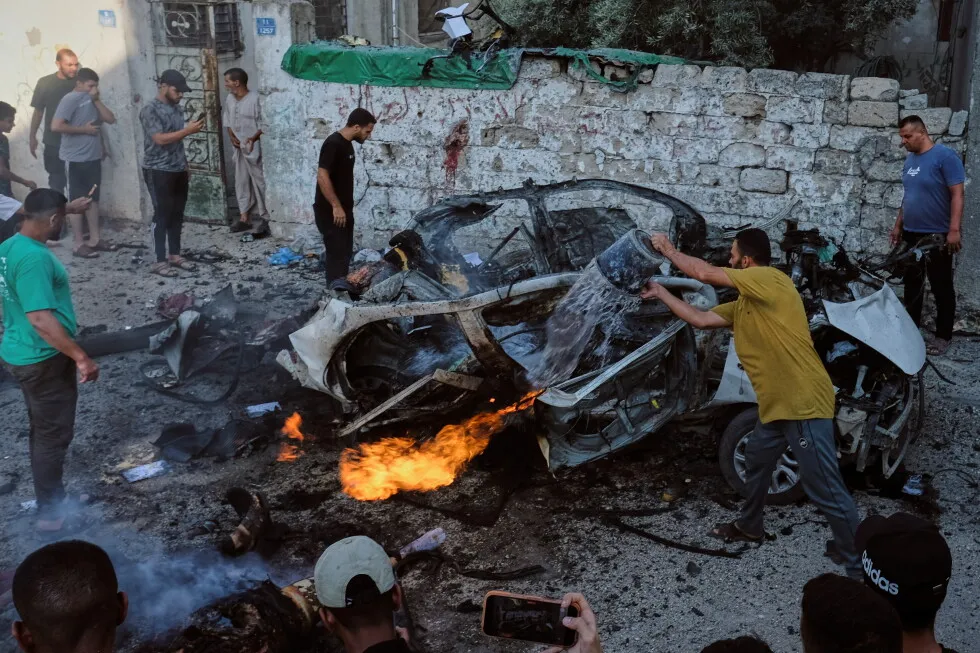
Associated Press (AP)FIG 01
Reading time
4min
Word count
981words
Sources cited
2cited
Entities identified
12entities
Quality score
100%
§ 01
Briefing Summary
AI-generatedNEWSAR · AI
Israel has expressed "serious security concerns" to the White House regarding the proposed Hamas disarmament deal, according to an Israeli official. Israel's intelligence assessment indicates Hamas is focused on rebuilding its military rather than demilitarizing, and the Israeli military will not withdraw from Gaza until Hamas disarms. The official stated that redeployment before disarmament would allow Hamas to re-establish its infrastructure and threaten Israel. Hamas has agreed to disarm as part of a U.S.-brokered ceasefire, but the process faces significant obstacles. The deal, announced by U.S. President Donald Trump, outlines a phased approach involving Hamas surrendering weapons, Israeli withdrawal, a new Palestinian government, and international forces. Israel's concerns are reportedly based on intelligence suggesting Hamas continues to rearm.
Confidence 0.90Sources 2Claims 5Entities 12
§ 02
Article analysis
Model · rule-basedFraming
National Security
Diplomatic
Tone
Measured
AI-assessed
CalmNeutralAlarmist
Factuality
0.70 / 1.00
Factual
LowHigh
Sources cited
2
Limited
FewMany
§ 03
Key claims
5 extracted01
Israel has shared "serious security concerns" with the White House regarding the proposed Hamas disarmament deal.
quoteIsraeli official
Confidence
1.00
02
Trump's 20-point ceasefire plan calls on Hamas to surrender its weapons and destroy its tunnels, and envisions Israeli withdrawal.
factualArticle
Confidence
0.90
03
The Israeli military will not withdraw from Gaza before Hamas disarms.
factualDoron Spielman, spokesperson for the Israeli Prime Minister’s office
Confidence
0.90
04
Israel's intelligence assessment is that Hamas remains committed to rebuilding its military rather than genuinely demilitarizing.
factualDoron Spielman, spokesperson for the Israeli Prime Minister’s office
Confidence
0.90
05
Hamas has agreed to disarm as part of the U.S.-brokered ceasefire signed nine months ago.
factualHamas
Confidence
0.80
§ 04
Full report
4 min read · 981 words§ 05
Entities
12 identifiedKey playerOppositionContextPositiveNeutralNegative
Organizations3
Locations4
§ 06
Keywords & salience
10 termshamas disarmament deal
1.00
security concerns
0.90
military rebuilding
0.80
israeli withdrawal
0.70
gaza conflict
0.60
demilitarization
0.50
ceasefire plan
0.50
palestinian government
0.40
international security force
0.40
oct. 7 attack
0.40
§ 07
Topic connections
Interactive graph Network visualization showing 51 related topics
View Full Graph Person Organization Location Event|Click node to navigate|Edge numbers = shared articles