For much of the war, some ships carrying oil from Saudi Arabia had instead passed through an alternative shipping lane in the Red Sea, between the kingdom and west Africa.But a recent spate of attacks by Yemen's Houthi fighters on Saudi tankers using the alternative waterway has further heightened the risks.The Iranian-backed Houthi militia announced what it called a blockade on Saudi Arabia's Red Sea ports on 20 July and the UK Maritime Trade Operations agency has reported several attacks on ships in the past week."Not only is the ongoing situation in the Strait of Hormuz constraining oil flows, but now a big factor that was helping to balance the market is now also under threat. It's a problem stacked on top of a problem," Wright said.Tim Wilkins, the managing director of Intertanko, a trade body representing tanker owners, said the industry was "facing a broadening, deteriorating, and increasingly complex security situation"."We now have the high-risk area going up to Saudi Arabian waters and extending into parts of the Red Sea. So that's having another impact on the market, on freedom of navigation as well."The number of commodity vessels that passed through the Bab el-Mandeb strait was 28 on Saturday and six of them had their transponders turned off, according to Kpler data, indicating that they were trying to avoid detection.
SRCBBC News - World
LANGEN
LEANCenter
WORDS221
ENT12
MON · 2026-08-03 · 15:57 GMTBRIEF NSR-2026-0803-98745
NSR-2026-0803-98745News Report·EN·Economic Impact
Threat to oil tankers in Middle East worst since start of Iran war, analysts say
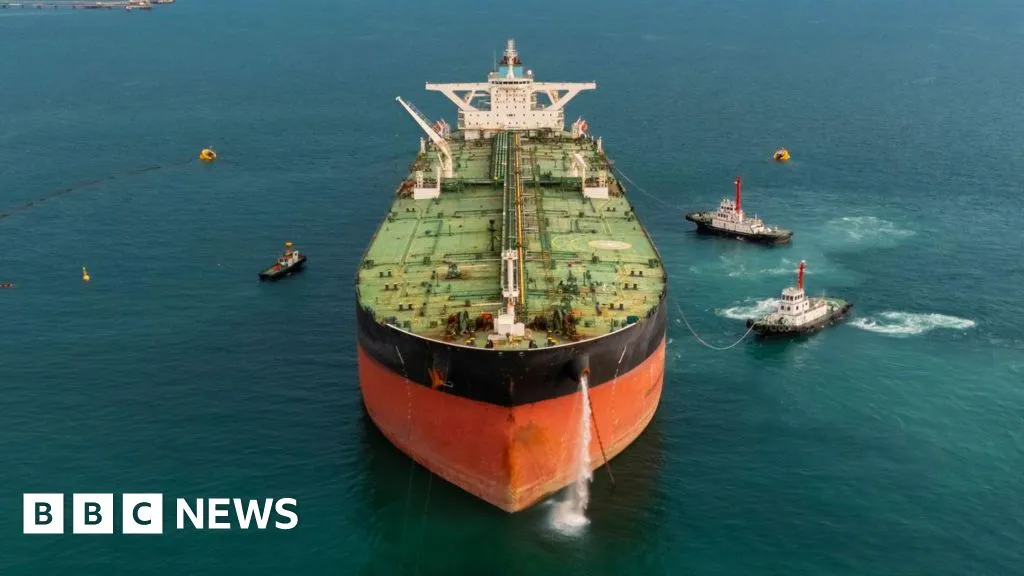
Analysts report that the threat to oil tankers in the Middle East is at its worst since the start of the Iran war, due to recent attacks on alternative shipping routes. Yemen's Houthi fighters, who announced a blockade on Saudi Arabia's Red Sea ports on July 20th, have targeted Saudi tankers in the Red Sea, a route previously used to bypass risks in the Strait of Hormuz.
2 hours agoShareSaveAdd as preferred on GoogleAlex DanielBusiness reporterBBC News - WorldFiled 2026-08-03 · 15:57 GMTLean · CenterRead · 1 min
BBC News - WorldFIG 01
Reading time
1min
Word count
221words
Sources cited
2cited
Entities identified
12entities
Quality score
100%
§ 01
Briefing Summary
AI-generatedNEWSAR · AI
Analysts report that the threat to oil tankers in the Middle East is at its worst since the start of the Iran war, due to recent attacks on alternative shipping routes. Yemen's Houthi fighters, who announced a blockade on Saudi Arabia's Red Sea ports on July 20th, have targeted Saudi tankers in the Red Sea, a route previously used to bypass risks in the Strait of Hormuz. This escalation has broadened the high-risk area into Saudi waters and parts of the Red Sea, impacting oil flows and freedom of navigation. The UK Maritime Trade Operations agency has reported multiple ship attacks in the past week, with some commodity vessels in the Bab el-Mandeb strait reportedly turning off transponders to avoid detection.
Confidence 0.90Sources 2Claims 5Entities 12
§ 02
Article analysis
Model · rule-basedFraming
Economic Impact
Conflict
Tone
Mixed Tone
AI-assessed
CalmNeutralAlarmist
Factuality
0.70 / 1.00
Factual
LowHigh
Sources cited
2
Limited
FewMany
§ 03
Key claims
5 extracted01
The Iranian-backed Houthi militia announced a blockade on Saudi Arabia's Red Sea ports on 20 July.
factualUK Maritime Trade Operations agency
Confidence
0.95
02
Houthi fighters have attacked Saudi tankers using an alternative Red Sea shipping lane.
factualarticle
Confidence
0.95
03
28 commodity vessels passed through Bab el-Mandeb strait on Saturday, 6 had transponders turned off.
statisticKpler data
Confidence
0.90
04
Threat to oil tankers in Middle East is worst since start of Iran war.
quoteanalysts
Confidence
0.90
05
The security situation is broadening, deteriorating, and increasingly complex.
quoteTim Wilkins (Intertanko)
Confidence
0.85
§ 04
Full report
1 min read · 221 words§ 05
Entities
12 identifiedKey playerOppositionContextPositiveNeutralNegative
Organizations3
Locations6
§ 06
Keywords & salience
9 termsoil tankers
1.00
red sea
0.90
houthi fighters
0.90
strait of hormuz
0.80
freedom of navigation
0.70
security situation
0.60
iran war
0.50
saudi arabia
0.50
bab el-mandeb strait
0.40
§ 07
Topic connections
Interactive graph Network visualization showing 51 related topics
View Full Graph Person Organization Location Event|Click node to navigate|Edge numbers = shared articles