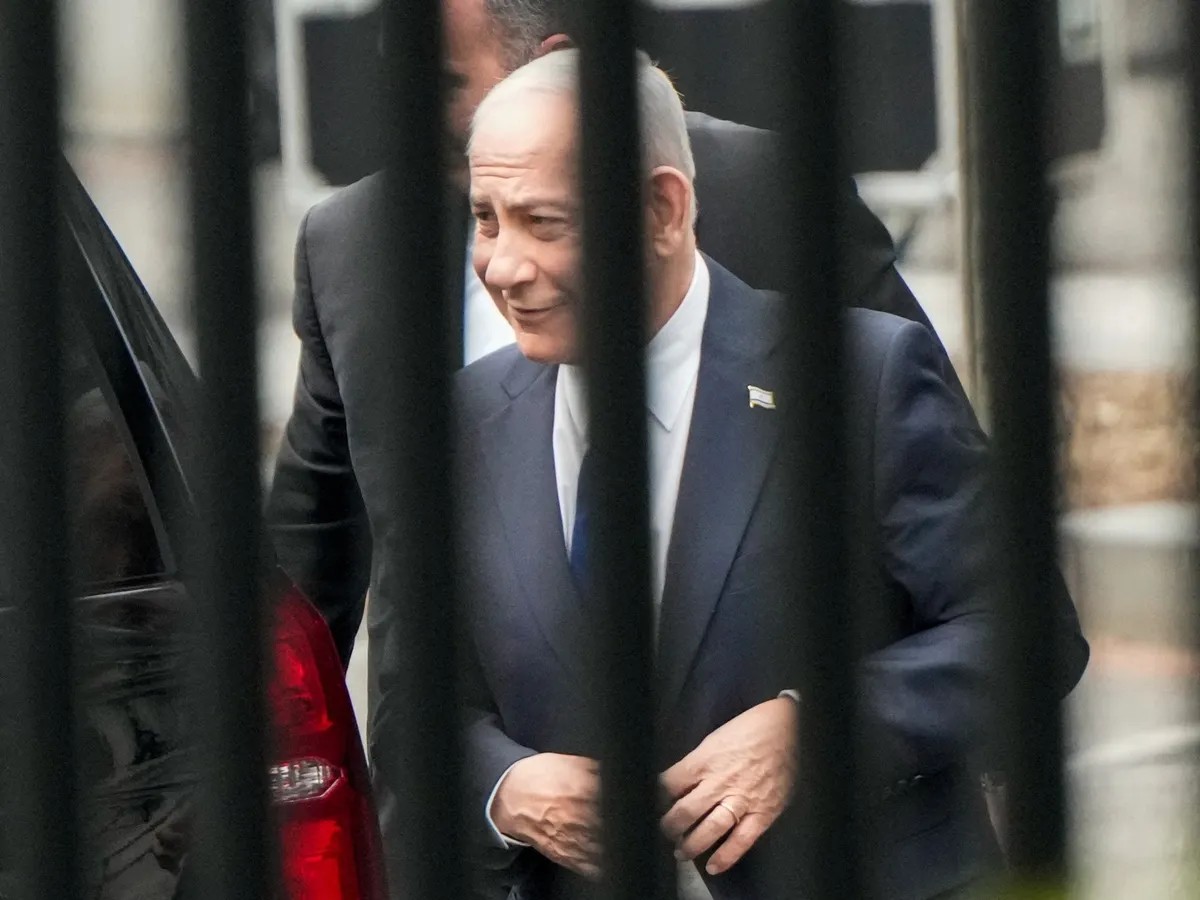
Experts question Netanyahu’s strategy, labelling US war on Iran a strategic failure with global economic impacts.Israeli Prime Minister Benjamin Netanyahu arrives at the White House in Washington, DC, the US [Elizabeth Frantz/Reuters]Published On 6 Aug 2026Israeli Prime Minister Benjamin Netanyahu – facing a crucial election later this year – has hinted that he may be considering taking unilateral action to prolong a costly war with Iran, even as Washington and Tehran appear to be close to an interim deal to open the Strait of Hormuz.“We heard today the commander of Iran’s Islamic Revolutionary Guard Corps, Ahmad Vahidi, declare that Iran intends to continue developing a nuclear weapon,” Netanyahu claimed in an assertion, even though no official statement from Vahidi on the matter has been released by the Iranian government or official media.Recommended Stories list of 4 itemslist 1 of 4Israel defies Trump’s peace plan as it escalates deadly attacks on Gazalist 2 of 4Can Netanyahu survive Israel’s most consequential election?list 3 of 4Board of Peace says no Israeli withdrawal from Gaza before Hamas disarmslist 4 of 4Israel election pressure fuels settlement push as West Bank violence surgesend of listStill, Netanyahu saw the opportunity to once again frame Iran’s nuclear threat as existential.“As Israel’s prime minister, I am determined to prevent Iran from obtaining a nuclear weapon,” Netanyahu told attendees at a state ceremony in West Jerusalem.Describing the United States as “Israel’s greatest ally”, Netanyahu nevertheless added that he was prepared to do “whatever is necessary” to guarantee Israel’s security.Israel has officially struck Iran only once since April’s initial ceasefire between the US and Iran took effect, even after it later broke down and the two sides resumed hostilities in the Israel-war-on-Iran" class="entity-link entity-event" data-entity-id="38678" data-entity-type="event">US-Israel war on Iran.But observers – including US President Donald Trump – believe that Netanyahu wants to keep the US engaged in the fight against Iran, which began in late February with a joint US-Israeli attack that killed Iranian Supreme Leader Ali Khamenei.Addressing reports that Netanyahu planned to bring fresh intelligence to Washington alleging that Iran was stockpiling uranium at its Pickaxe Mountain facility near Natanz in central Iran, Trump told reporters: “I don’t need Bibi to tell me that. Bibi is telling me that because he wants me to stay involved.”He then sharpened his criticism of the Israeli prime minister, adding: “Why don’t you just tell it to me? Why do you have to announce it to the world?”Fight aloneWith the US and Israel unable so far to topple the Iranian state or force concessions on the Strait of Hormuz, many analysts believe that the war has been unsuccessful.Iran’s blockade of the Strait of Hormuz – formerly a free waterway – has paralysed much of the world’s economy.Global oil prices have increased, with shortages in the supplies of liquified gas, fertiliser exports, sulphur supplies, and petrochemical feedstocks all threatening to ripple through international supply lines.“The war against Iran is a strategic catastrophe,” said Ahron Bregman, an Israeli security analyst and senior teaching fellow in the Department for War Studies at King’s College London. “None of the original aims has been achieved… Trump is desperate for an exit. Almost at any price. He only cares about opening the [strait].”But in Israel, the focus is less on the world’s economy, and more on the perceived danger posed by Iran and its allied groups across the region.Netanyahu has consistently pursued a hawkish line on Iran, a power he has repeatedly claimed is on the brink of crossing the threshold to nuclear weapons capability.He is also thought to have been among the loudest voices that pushed for Trump to withdraw in 2018 from a nuclear deal agreed to by previous US President Barack Obama.“Israel’s strategy is clear,” said Kobi Michael, a senior researcher at Israel’s Misgav Institute for National Security. “Iran remains close to achieving nuclear capacity and has shown it’s able to continue producing ballistic missiles and supplying its proxy forces in the region.”The war on Iran was currently a fiasco from Israel’s perspective, Michael added, with both the US and Iran insisting that they had won.Michael, however, framed the current negotiations as “useless”, and unlikely to produce lasting security in the region, reflecting the sentiment in the Israeli security establishment.Israel, Michael said, was prepared to fight alone if necessary.“Israel can only have one strategy,” Michael said, “to strike directly at the head of the octopus that threatens global civilisation and to do that alone, if necessary.”That might inflame tensions with the US, Michael added, concluding, “I can’t see any other option.”InconceivableHowever, while some in Israel were confident of the country’s ability to strike unilaterally at Iran in defiance of US wishes, others expressed caution, suggesting that Netanyahu’s talk of preventing Iran from obtaining a nuclear weapon might simply be little more than rhetoric ahead of an election that could conceivably jeopardise both his legacy and, as a result of his long-running corruption trial, his personal freedom.The US relationship is important to the Israeli electorate, but relations between Netanyahu and Trump appear to be frostier than normal.Beyond friction over Israel’s reluctance to accept terms apparently imposed on it in Gaza by the Trump-sponsored Board of Peace, there have also been widespread reports of tensions over Israeli strikes in Lebanon that have repeatedly threatened to derail US negotiations with Iran. Those attacks, however, have stopped far short of the unilateral strikes on Iran hinted at by Netanyahu on Wednesday.“Israel launching unilateral action against Iran is inconceivable,” the US author and former diplomat Aaron David Miller said. “Something like that might be possible if Iran or Hezbollah struck Israel directly, but talk of Israel striking Iran now, when US negotiations are so close to a conclusion, is impossible.”Relations between the two allies were entering a unique phase, he said. While the US had never cooperated so closely with an ally militarily since its relationship with the United Kingdom during World War II, diplomatic ties had rarely been so fraught.“Trump’s leaked, expletive-laden criticism of Netanyahu; his direct negotiations with Hamas over Gaza; his lifting of sanctions on Syria despite Israel’s objections; and his negotiations with Iran without Israel’s involvement all point to a changing relationship,” Miller said. “What that might mean for future US military assistance to Israel – including defence cooperation, intelligence sharing, research and development, and diplomatic support in international forums – remains to be seen.”However, he added: “Let me be clear. Netanyahu had a hell of a role in how this war started. He’s not going to have a role in how it shifts to its next phase.”
SRCAl Jazeera
LANGEN
LEANCenter
WORDS1 086
ENT12
THU · 2026-08-06 · 17:11 GMTBRIEF NSR-2026-0806-99832
NSR-2026-0806-99832Analysis·EN·Political Strategy
Is Israel’s Netanyahu preparing to fight Iran alone?
Israeli Prime Minister Benjamin Netanyahu is reportedly considering unilateral action against Iran, even as the US and Iran approach a potential interim deal regarding the Strait of Hormuz. Netanyahu has framed Iran's nuclear program as an existential threat and stated his determination to prevent Iran from obtaining nuclear weapons, asserting Israel will do "whatever is necessary" for its security.
Simon Speakman CordallAl JazeeraFiled 2026-08-06 · 17:11 GMTLean · CenterRead · 5 min
Al JazeeraFIG 01
Reading time
5min
Word count
1 086words
Sources cited
3cited
Entities identified
12entities
Quality score
100%
§ 01
Briefing Summary
AI-generatedNEWSAR · AI
Israeli Prime Minister Benjamin Netanyahu is reportedly considering unilateral action against Iran, even as the US and Iran approach a potential interim deal regarding the Strait of Hormuz. Netanyahu has framed Iran's nuclear program as an existential threat and stated his determination to prevent Iran from obtaining nuclear weapons, asserting Israel will do "whatever is necessary" for its security. Analysts view the ongoing US-Israel war on Iran as a strategic failure, with Iran's blockade of the Strait of Hormuz causing global economic impacts. Some Israeli security experts believe Israel may need to act alone if necessary, despite potential tensions with the US. US President Donald Trump has expressed skepticism about Netanyahu's intelligence claims, suggesting they are aimed at keeping the US involved in the conflict.
Confidence 0.90Sources 3Claims 4Entities 12
§ 02
Article analysis
Model · rule-basedFraming
Political Strategy
Conflict
Tone
Mixed Tone
AI-assessed
CalmNeutralAlarmist
Factuality
0.40 / 1.00
Mixed
LowHigh
Sources cited
3
Well sourced
FewMany
§ 03
Key claims
4 extracted01
Trump believes Netanyahu wants to keep the US engaged in the fight against Iran.
quoteDonald Trump
Confidence
0.90
02
Netanyahu claimed Iran intends to continue developing a nuclear weapon.
quoteBenjamin Netanyahu
Confidence
0.90
03
Netanyahu may be considering unilateral action to prolong a costly war with Iran.
factualarticle
Confidence
0.70
04
Iran’s blockade of the Strait of Hormuz has paralysed much of the world’s economy.
factualarticle
Confidence
0.60
§ 04
Full report
5 min read · 1 086 words§ 05
Entities
12 identifiedKey playerOppositionContextPositiveNeutralNegative
People4
Organizations1
Locations5
§ 06
Keywords & salience
8 termsiran nuclear program
1.00
netanyahu
1.00
israel iran conflict
0.90
unilateral action
0.80
us israel relations
0.70
strait of hormuz
0.60
election pressure
0.50
strategic failure
0.40
§ 07
Topic connections
Interactive graph Network visualization showing 51 related topics
View Full Graph Person Organization Location Event|Click node to navigate|Edge numbers = shared articles