Iran has used the war to gain leverage over the Strait of Hormuz. Now Saudi Arabia, Turkiye and Pakistan are building a new security arrangement that would limit how far Tehran can push its advantage.Former White House deputy national security adviser.Published On 10 Aug 2026At dinner on the 44th floor of the Waldorf Astoria in Doha this week, no missiles crossed the skyline. No warning alerts interrupted the conversation. Traffic moved smoothly below, and the city lights glittered.This is what normal now looks like in Doha, Qatar. The city functions despite reduced energy exports, Iranian attacks and a war changing how Gulf governments defend themselves.More than five months into the conflict, the military tempo has slowed. The central dispute now is over who sets the rules in the Gulf.On Friday, a US official said Iran and Oman could soon reach an agreement to reopen the Strait of Hormuz. Washington said it would lift its blockade of Iranian ports once commercial shipping resumed without impediments. Less than a day later, Iran’s Islamic Revolutionary Guard Corps rejected Washington’s account. Reopening Hormuz, its spokesman said, depends on the United States accepting Iran’s conditions, not on an agreement with Oman.Oman has narrowed the dispute to a route through Hormuz. It has not settled who controls the territorial waters.Washington wants commercial vessels to move through an international waterway without Iranian permission or tolls. Tehran wants a settlement that preserves the leverage it gained by restricting passage. Negotiators have agreed on coordinates for a route through Hormuz, but Iran still seeks to control incoming traffic and impose transit fees, both of which Washington rejects.The deal also has to work for the companies that move the ships. Owners need a guarantee that their vessels will not be attacked, detained or stranded in territorial waters. Insurers have to provide coverage. Iran’s demand for transit payments creates another problem: US persons and US-owned or controlled companies cannot pay Iran for safe passage without running afoul of US sanctions.
SRCAl Jazeera
LANGEN
LEANCenter
WORDS329
ENT12
MON · 2026-08-10 · 14:00 GMTBRIEF NSR-2026-0810-100915
NSR-2026-0810-100915Analysis·EN·Political Strategy
Iran changed the rules in Hormuz. The Gulf is changing the rules for Iran
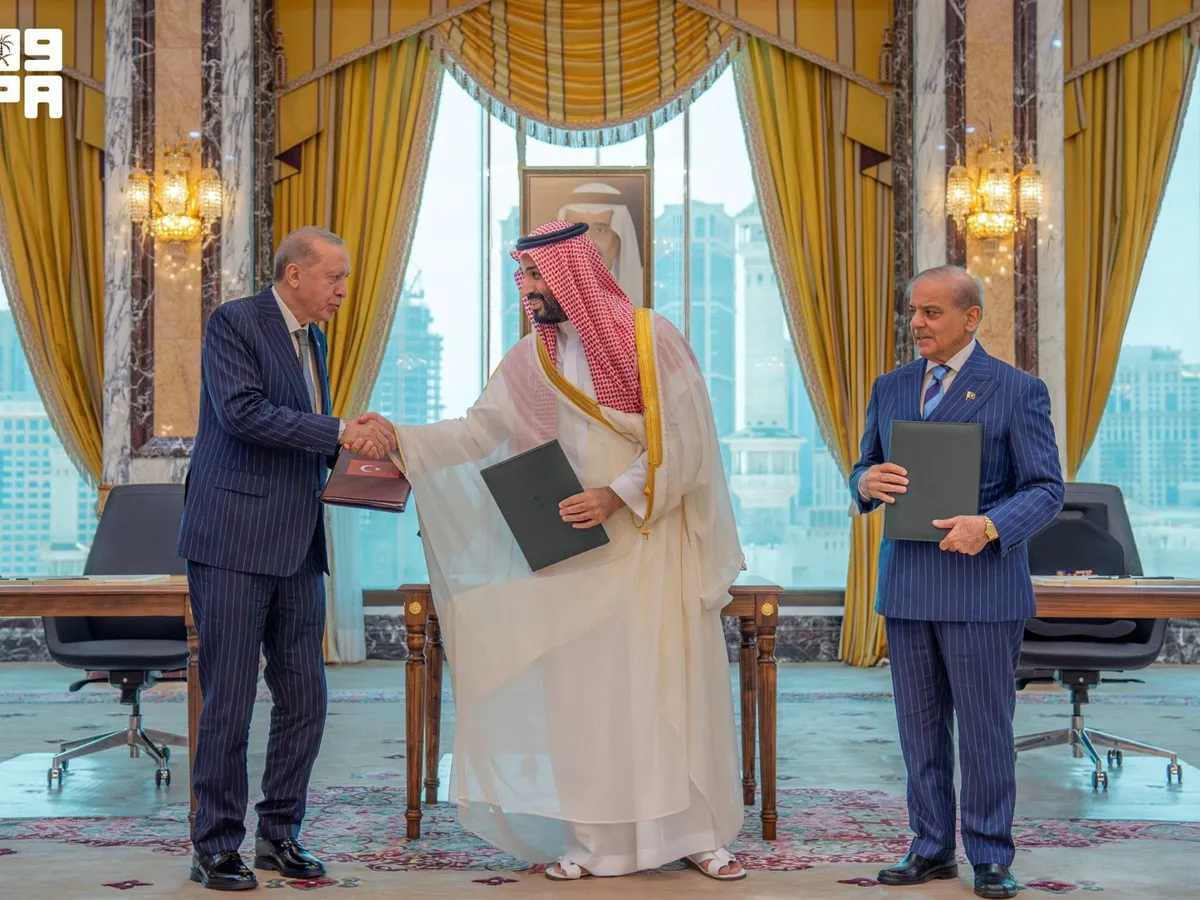
Iran has leveraged the ongoing conflict to gain influence over the Strait of Hormuz. In response, Saudi Arabia, Turkiye, and Pakistan are developing a new regional security framework to counter Tehran's increased leverage.
Mark PfeifleAl JazeeraFiled 2026-08-10 · 14:00 GMTLean · CenterRead · 2 min
Al JazeeraFIG 01
Reading time
2min
Word count
329words
Sources cited
2cited
Entities identified
12entities
Quality score
100%
§ 01
Briefing Summary
AI-generatedNEWSAR · AI
Iran has leveraged the ongoing conflict to gain influence over the Strait of Hormuz. In response, Saudi Arabia, Turkiye, and Pakistan are developing a new regional security framework to counter Tehran's increased leverage. While Iran seeks to control passage and impose transit fees through Hormuz, the United States rejects these conditions, aiming for unimpeded commercial shipping. Negotiations between Iran and Oman regarding the Strait's reopening are ongoing, but disagreements persist over territorial water control and transit payments, which pose challenges for international shipping companies due to US sanctions. The central issue remains who will dictate the rules governing the Gulf.
Confidence 0.90Sources 2Claims 5Entities 12
§ 02
Article analysis
Model · rule-basedFraming
Political Strategy
Conflict
Tone
Measured
AI-assessed
CalmNeutralAlarmist
Factuality
0.60 / 1.00
Mixed
LowHigh
Sources cited
2
Limited
FewMany
§ 03
Key claims
5 extracted01
Iran still seeks to control incoming traffic and impose transit fees, which Washington rejects.
factual
Confidence
0.90
02
Iran's Islamic Revolutionary Guard Corps rejected Washington’s account, stating reopening Hormuz depends on Iran’s conditions, not an agreement with Oman.
quoteIran’s Islamic Revolutionary Guard Corps spokesman
Confidence
0.80
03
Iran has used the war to gain leverage over the Strait of Hormuz.
factual
Confidence
0.80
04
Saudi Arabia, Turkiye and Pakistan are building a new security arrangement that would limit how far Tehran can push its advantage.
factual
Confidence
0.70
05
Iran and Oman could soon reach an agreement to reopen the Strait of Hormuz, with Washington lifting its blockade of Iranian ports once commercial shipping resumed without impediments.
quoteUS official
Confidence
0.60
§ 04
Full report
2 min read · 329 words§ 05
Entities
12 identifiedKey playerOppositionContextPositiveNeutralNegative
Organizations1
Locations10
§ 06
Keywords & salience
10 termsiran
1.00
strait of hormuz
1.00
gulf security
0.90
tehran
0.80
transit fees
0.70
us sanctions
0.60
commercial shipping
0.50
oman
0.50
saudi arabia
0.40
turkiye
0.40
§ 07
Topic connections
Interactive graph Network visualization showing 51 related topics
View Full Graph Person Organization Location Event|Click node to navigate|Edge numbers = shared articles