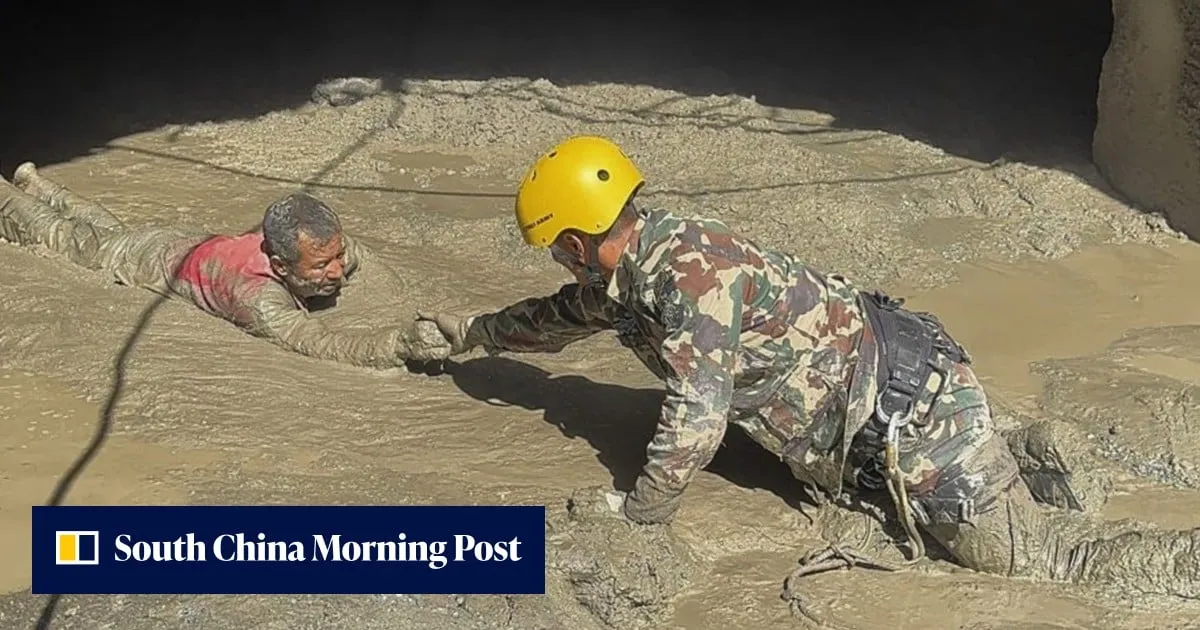
There could be over 100 survivors stuck inside the tunnels, and the breakthrough raises hopes that rescue teams will be able to reach them2-MIN READ2-MIN1ListenPublished: 1:38am, 30 Aug 2026Nepali army rescuers broke through to a hydropower tunnel on Saturday and began pumping air and sending a camera inside, raising hopes of reaching workers trapped since devastating floods struck the site three days earlier.Nepal’s government says more than 100 workers may still be alive and trapped inside tunnels at hydropower projects, with rescue efforts focused on the Trishuli 3A and 3B sites.Those trapped are among 933 hydropower workers missing since a wall of mud and debris swept down on Wednesday morning, according to the National Disaster Risk Reduction and Management Authority.The US Geological Survey said the disaster on the China-Nepal border was caused by a glacial collapse, with nearly 3,000 people missing and 682 confirmed dead.At Trishuli 3A, army rescue teams using drills broke through on Saturday evening into the upper part of a mud-swamped tunnel.Race against time to save Nepal hydropower workers trapped in tunnel“We have already started sending air through the small opening, and we will now begin excavation work and send the rescue team inside,” Nepali Home Minister Sudan Gurung said in a statement.
SRCSouth China Morning Post
LANGEN
LEANCenter-Right
WORDS206
ENT10
SAT · 2026-08-29 · 17:38 GMTBRIEF NSR-2026-0829-107209
NSR-2026-0829-107209News Report·EN·Human Interest
Nepal floods: rescuers send air pipe into tunnel with trapped workers
Nepali army rescuers have broken into a hydropower tunnel where workers have been trapped since devastating floods struck three days prior. On Saturday, rescuers began pumping air and sending a camera into the tunnel, raising hopes of reaching those inside.
Agence France-PresseSouth China Morning PostFiled 2026-08-29 · 17:38 GMTLean · Center-RightRead · 1 min
South China Morning PostFIG 01
Reading time
1min
Word count
206words
Sources cited
3cited
Entities identified
10entities
Quality score
100%
§ 01
Briefing Summary
AI-generatedNEWSAR · AI
Nepali army rescuers have broken into a hydropower tunnel where workers have been trapped since devastating floods struck three days prior. On Saturday, rescuers began pumping air and sending a camera into the tunnel, raising hopes of reaching those inside. The government estimates over 100 workers may still be alive and trapped at hydropower projects, with rescue efforts concentrated on the Trishuli 3A and 3B sites. These workers are among 933 hydropower personnel missing after a wall of mud and debris swept down on Wednesday morning, caused by a glacial collapse on the China-Nepal border. At the Trishuli 3A site, drills successfully created an opening into the upper part of the mud-filled tunnel, and excavation work is set to begin.
Confidence 0.90Sources 3Claims 5Entities 10
§ 02
Article analysis
Model · rule-basedFraming
Human Interest
Environmental
Tone
Measured
AI-assessed
CalmNeutralAlarmist
Factuality
0.80 / 1.00
Factual
LowHigh
Sources cited
3
Well sourced
FewMany
§ 03
Key claims
5 extracted01
We have already started sending air through the small opening, and we will now begin excavation work and send the rescue team inside.
quoteNepali Home Minister Sudan Gurung
Confidence
1.00
02
The disaster on the China-Nepal border was caused by a glacial collapse.
factualUS Geological Survey
Confidence
1.00
03
933 hydropower workers missing since a wall of mud and debris swept down on Wednesday morning.
statisticNational Disaster Risk Reduction and Management Authority
Confidence
1.00
04
Nepali army rescuers broke through to a hydropower tunnel on Saturday, pumping air and sending a camera inside.
factual
Confidence
1.00
05
More than 100 workers may still be alive and trapped inside tunnels at hydropower projects.
statisticNepal's government
Confidence
0.90
§ 04
Full report
1 min read · 206 words§ 05
Entities
10 identifiedKey playerOppositionContextPositiveNeutralNegative
Organizations2
Locations4
§ 06
Keywords & salience
8 termstunnel rescue
1.00
nepal floods
1.00
trapped workers
0.90
hydropower projects
0.80
glacial collapse
0.70
mud and debris
0.60
rescue efforts
0.50
air pipe
0.40
§ 07
Topic connections
Interactive graph Network visualization showing 51 related topics
View Full Graph Person Organization Location Event|Click node to navigate|Edge numbers = shared articles