EXPLAINERThe 1,200km (745 mile) pipeline has been temporarily closed, affecting up to 5 percent of global oil supply.This handout satellite image released by Vantor shows a view of a pumping station along the general route of Saudi Arabia's East-West pipeline in al-Mesabaah, southeast of Medina, on September 13, 2026, following an attack and resulting fires [Photo by Satellite image ©2026 Vantor/AFP]Published On 14 Sep 2026In another blow to global oil markets, drones struck Saudi Arabia’s East-West oil pipeline last Thursday, prompting the kingdom to suspend operations.The 1,200km (746-mile) pipeline, which carries roughly 4 to 5 million barrels of oil per day (bpd), links the country’s major oil-producing fields in the east with the Red Sea port of Yanbu, allowing Saudi Arabia to bypass the Strait of Hormuz, which has largely been closed since the outbreak of the Iran" class="entity-link entity-event" data-entity-id="38678" data-entity-type="event">US-Israel war on Iran in February.Saudi Arabia’s Ministry of Energy said the shutdown was a “precautionary” measure after the attack caused damage and injuries in the Riyadh and Medina regions.The closure comes as the Iran" class="entity-link entity-event" data-entity-id="38678" data-entity-type="event">US-Israel war on Iran has sharply reduced oil flows through the Strait of Hormuz and Houthi forces in Yemen have intensified attacks around the Red Sea and Bab al-Mandeb.With oil flows through the Strait of Hormuz severely disrupted, Saudi Arabia has relied more heavily on the East-West pipeline. What does its closure mean for an already tight global oil market?How bad is the damage?The extent of the damage is not yet clear, and estimates of how quickly the pipeline can return to normal operations vary. Sources familiar with the incident told the Reuters news agency that repairs could take five to six weeks, while another source said operations could restart sooner.Saudi officials said drones hit the pipeline in two areas around Riyadh and Medina. The Ministry of Foreign Affairs said the attack caused injuries and damage to infrastructure.According to Saudi authorities, the launch of the drones was traced to Maysan province in southeastern Iraq, close to the Iranian border and an area where Iran-aligned armed groups have established a longstanding presence.The attack follows a strike in March near the Saudi-Aramco-ExxonMobil refinery in Yanbu that temporarily disrupted crude loadings from the Red Sea port. That incident had little lasting impact on operations, with shipments recovering within days, but it demonstrated that the kingdom’s western oil infrastructure was not immune to attacks.What is the East-West pipeline?The East-West pipeline, also known as the Petroline, is a 1,200km (745-mile) long oil pipeline built in 1981 that carries crude oil from the kingdom’s eastern oil fields near Abqaiq across the Arabian Peninsula to the Red Sea port of Yanbu, bypassing the Strait of Hormuz.It has a maximum capacity of seven million bpd, although actual flows have been lower in recent months – about two million bpd in August according to Kpler – the lowest monthly level since January as Houthi attacks made the Red Sea route difficult to use.Saudi Arabia increased the amount of crude sent west during the first five months of the conflict, taking flows to roughly 4-5 million bpd. That represents about 4 to 5 percent of global supply and allowed the world’s second largest oil exporter to bypass the Strait of Hormuz when shipping conditions deteriorated.Why is it important?The pipeline’s closure comes at a critical point for the global oil market.Before the war, the Strait of Hormuz supplied more than a fifth of oil globally – about 20 million bpd. According to Reuters, industry estimates now put the flow at about 6-9 million bpd through the strait, a dramatic reduction in the volume.Saudi Arabia has responded by moving more crude towards the Red Sea. However, the flow and export of that oil depends on the pipeline, storage facilities and tankers transiting safely – all of which have been made vulnerable since the Iran war began in February.According to sources close to Reuters, if the pipeline remains shut, Yanbu has enough available stocks to sustain exports for about five to seven days, while Egyptian facilities in Ain Sukhna and Sidi Kerir, which store Saudi oil, could provide additional supplies for several days.While this gives Saudi Arabia some buffer, it comes as global inventories have already been falling. The International Energy Agency said Saudi oil supply reached a more than three-decade low in August, with disruptions in Hormuz and the Red Sea. It says world oil supplies will decline by some 5.7 million bpd this year, equivalent to 6 percent of global supply.Oil prices have so far been cushioned by stockpiles and releases from strategic reserves, with Brent crude trading about $70-$90 in recent months. But the longer regional disruptions continue, the more those reserves will be depleted and the higher prices will rise.In June, the IEA said continued drawdowns could hit critical levels with experts saying that if inventories approach exceptionally low levels, Brent could potentially rise to $150 a barrel.If damage to the pipeline proves extensive, and attacks continue to threaten Yanbu and shipping routes beyond it, Saudi Arabia could find that its ability to compensate for lost Gulf exports is itself becoming constrained.Gavekal Research noted that if Yanbu, which processes more than one million bpd, goes offline because of threats from Houthi drones, “this would be a disaster for the world at a time when global refining capacity is already critically tight.”
SRCAl Jazeera
LANGEN
LEANCenter
WORDS883
ENT12
MON · 2026-09-14 · 13:15 GMTBRIEF NSR-2026-0914-111171
NSR-2026-0914-111171News Report·EN·Economic Impact
Why Saudi Arabia’s East-West pipeline matters for global oil
Saudi Arabia's East-West oil pipeline, a crucial artery bypassing the Strait of Hormuz, has been temporarily closed following drone attacks. The 1,200km pipeline, which transports approximately 4 to 5 million barrels of oil per day, links eastern oil fields to the Red Sea port of Yanbu.
Al Jazeera StaffAl JazeeraFiled 2026-09-14 · 13:15 GMTLean · CenterRead · 4 min
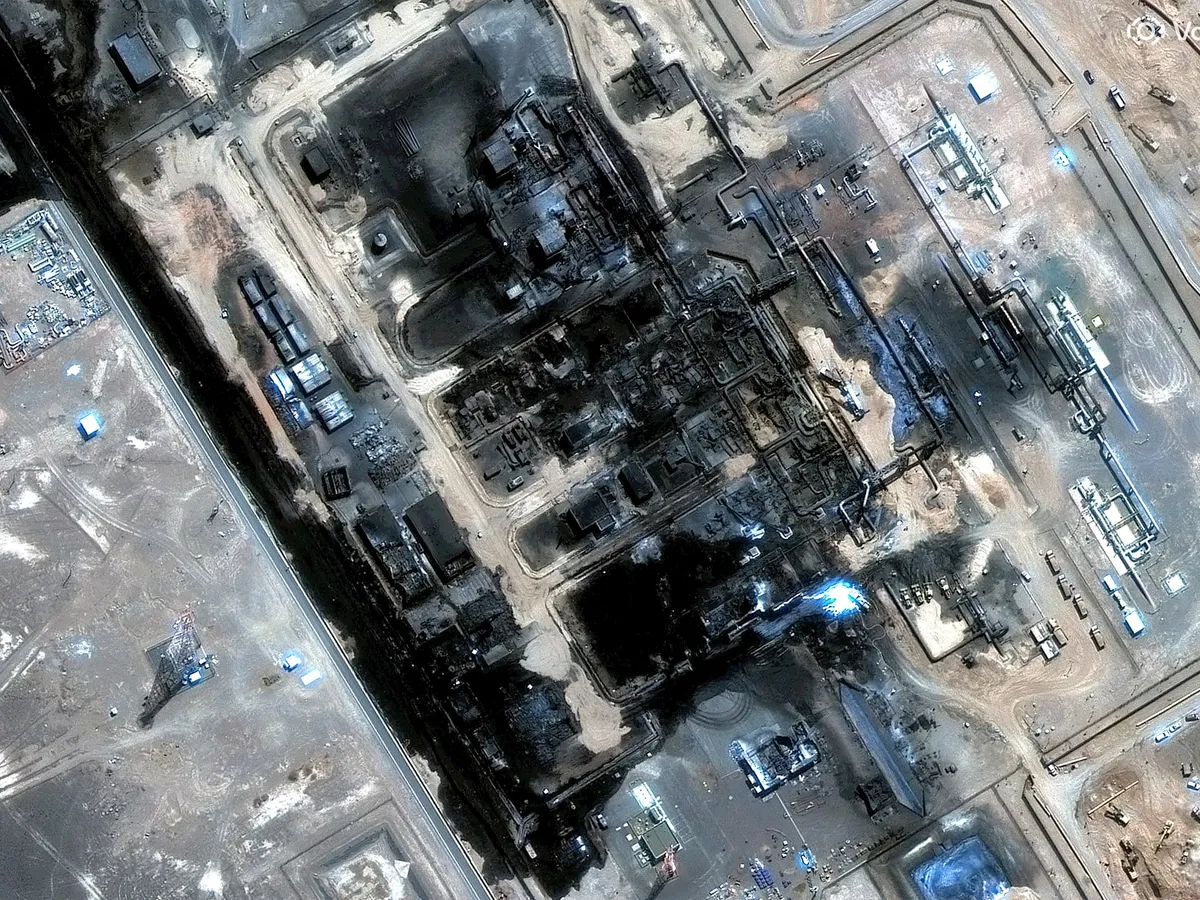
Al JazeeraFIG 01
Reading time
4min
Word count
883words
Sources cited
3cited
Entities identified
12entities
Quality score
100%
§ 01
Briefing Summary
AI-generatedNEWSAR · AI
Saudi Arabia's East-West oil pipeline, a crucial artery bypassing the Strait of Hormuz, has been temporarily closed following drone attacks. The 1,200km pipeline, which transports approximately 4 to 5 million barrels of oil per day, links eastern oil fields to the Red Sea port of Yanbu. This shutdown, described as a precautionary measure due to damage and injuries, impacts up to 5% of global oil supply. The closure exacerbates existing disruptions to oil flows through the Strait of Hormuz, which have been severely reduced due to the US-Israel war on Iran. While Saudi Arabia has some buffer from existing stocks, the prolonged closure could further deplete global inventories and potentially lead to higher oil prices.
Confidence 0.90Sources 3Claims 5Entities 12
§ 02
Article analysis
Model · rule-basedFraming
Economic Impact
Conflict
Tone
Mixed Tone
AI-assessed
CalmNeutralAlarmist
Factuality
0.70 / 1.00
Factual
LowHigh
Sources cited
3
Well sourced
FewMany
§ 03
Key claims
5 extracted01
The 1,200km pipeline links eastern oil fields to the Red Sea port of Yanbu, bypassing the Strait of Hormuz.
factual
Confidence
1.00
02
The attack caused damage and injuries in the Riyadh and Medina regions.
factualSaudi Arabia's Ministry of Energy
Confidence
0.90
03
Saudi Arabia's East-West oil pipeline was temporarily closed following a drone attack, affecting up to 5 percent of global oil supply.
factualSaudi Arabia's Ministry of Energy
Confidence
0.90
04
The launch of the drones was traced to Maysan province in southeastern Iraq.
factualSaudi authorities
Confidence
0.80
05
Repairs to the pipeline could take five to six weeks, according to sources familiar with the incident.
factualReuters news agency sources
Confidence
0.70
§ 04
Full report
4 min read · 883 words§ 05
Entities
12 identifiedKey playerOppositionContextPositiveNeutralNegative
Organizations3
Locations8
§ 06
Keywords & salience
9 termseast-west pipeline
1.00
global oil supply
0.90
strait of hormuz
0.80
us-israel war on iran
0.70
drone attack
0.60
oil flows
0.60
red sea
0.50
saudi arabia
0.50
pipeline closure
0.40
§ 07
Topic connections
Interactive graph Network visualization showing 11 related topics
View Full Graph Person Organization Location Event|Click node to navigate|Edge numbers = shared articles