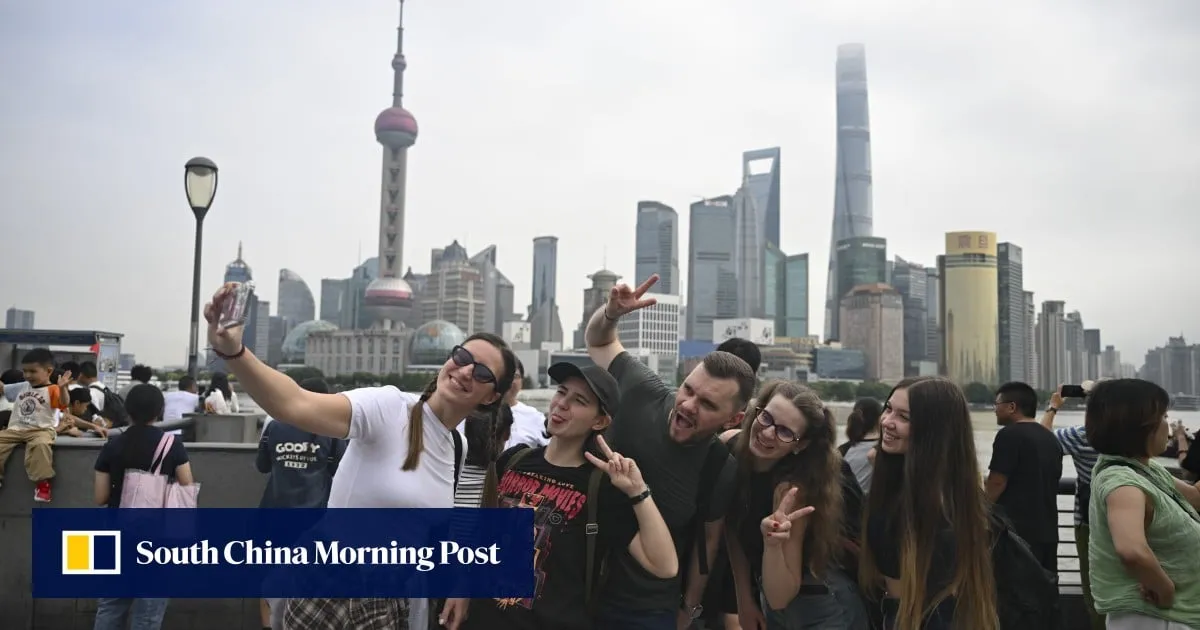
China is gearing up to harness the extended Lunar New Year holiday to attract more spending by international tourists, as the country looks to shake off a recent economic slowdown and pivot towards consumption-driven growth.In a rare joint initiative by nine central government departments, Beijing announced plans earlier this month to turn the holiday – which this year began on Sunday and runs through February 23 – into a “consumption feast that links regions and engages everyone”.The move comes as China strives to find new growth drivers and revive sluggish domestic demand, after retail sales growth slowed to 3.7 per cent year on year in 2025 and deflationary pressure continued to weigh on the economy.The plan aims to drive up spending by tapping into China’s recent boom in inbound tourism, with proposals to increase capacity on international flights based on market demand and make it easier to use foreign bank cards and payment apps on the mainland.It also encouraged local governments to release multilingual guides introducing Lunar New Year folk customs to help tourists experience China’s cultural heritage and holiday traditions.Other parts of the plan focus on driving more domestic spending over the holiday using shopping vouchers, consumption subsidies and the country’s vast trade-in programme for consumer goods.The Lunar New Year, also known as the Spring Festival, is one of China’s most important holidays and has long been a crucial period for consumption, as hundreds of millions of workers enjoy a rare week-long break. This year’s holiday holds extra promise as it will last for an unusually long nine days.
SRCSouth China Morning Post
LANGEN
LEANCenter-Right
WORDS260
ENT4
WED · 2026-02-18 · 13:00 GMTBRIEF NSR-2026-0218-17278
NSR-2026-0218-17278News Report·EN·Economic Impact
China targets foreign tourists for Lunar New Year ‘consumption feast’
To stimulate its economy, China is targeting international tourists during the extended Lunar New Year holiday (February 10-23) to boost consumption. A joint initiative by nine government departments aims to transform the holiday into a “consumption feast.” This effort seeks to revive sluggish domestic demand following slow retail sales growth and deflationary pressure.
Mandy ZuoSouth China Morning PostFiled 2026-02-18 · 13:00 GMTLean · Center-RightRead · 2 min
South China Morning PostFIG 01
Reading time
2min
Word count
260words
Sources cited
0cited
Entities identified
4entities
Quality score
100%
§ 01
Briefing Summary
AI-generatedNEWSAR · AI
To stimulate its economy, China is targeting international tourists during the extended Lunar New Year holiday (February 10-23) to boost consumption. A joint initiative by nine government departments aims to transform the holiday into a “consumption feast.” This effort seeks to revive sluggish domestic demand following slow retail sales growth and deflationary pressure. Plans include increasing international flight capacity, improving foreign payment options, and providing multilingual guides to promote cultural tourism. The initiative also focuses on boosting domestic spending through shopping vouchers and trade-in programs. The Lunar New Year, a key consumption period, is expected to drive economic growth with its unusually long nine-day holiday.
Confidence 0.90Claims 5Entities 4
§ 02
Article analysis
Model · rule-basedFraming
Economic Impact
Political Strategy
Tone
Measured
AI-assessed
CalmNeutralAlarmist
Factuality
0.80 / 1.00
Factual
LowHigh
Sources cited
0
No named sources
FewMany
§ 03
Key claims
5 extracted01
This year’s Lunar New Year holiday will last for an unusually long nine days.
factual
Confidence
1.00
02
The plan aims to drive up spending by tapping into China’s recent boom in inbound tourism.
factual
Confidence
1.00
03
Retail sales growth slowed to 3.7 per cent year on year in 2025.
statistic
Confidence
1.00
04
Nine central government departments jointly announced plans to turn the holiday into a “consumption feast”.
factualBeijing
Confidence
1.00
05
China is using the Lunar New Year holiday to attract more spending by international tourists.
factual
Confidence
1.00
§ 04
Full report
2 min read · 260 words§ 05
Entities
4 identifiedKey playerOppositionContextPositiveNeutralNegative
§ 06
Keywords & salience
8 termslunar new year
1.00
consumption
0.80
tourism
0.80
economic growth
0.70
international tourists
0.60
domestic demand
0.60
spending
0.50
cultural heritage
0.40
§ 07
Topic connections
Interactive graph Network visualization showing 51 related topics
View Full Graph Person Organization Location Event|Click node to navigate|Edge numbers = shared articles