A Supreme Court ruling that gutted the legal foundation for much of US President Donald Trump’s tariff regime has left Asian trading partners scratching their heads about the future of trade deals struck with Washington over the past 12 months.America’s apex court ruled on Friday that the International Emergency Economic Powers Act (IEEPA) – which Trump had used to impose sweeping “reciprocal” tariffs since his “Liberation Day” proclamation last April – did not grant the president the power to levy such duties.Trump responded within hours by invoking Section 122 of the 1974 Trade Act to impose a blanket 15 per cent tariff on all US imports: the maximum permitted under that statute, which allows the president to act unilaterally for up to 150 days without congressional approval.Shipping cranes stand above container ships at the Port of Los Angeles in the US on Friday. Photo: Getty Images/AFPBut this whiplash-inducing pivot has left several Asian nations questioning whether the trade deals they hammered out with Washington over the past year are even worth the paper they were written on.Indonesia, Malaysia, Vietnam, Cambodia, Bangladesh and Pakistan are among the countries who had accepted US import tariffs of between 19 to 20 per cent in exchange for relief from threatened steeper duties.“My sense is that Asian partners will be reluctant to request renegotiation of their trade deals, fearing that they might end up worse off,” said Wendy Cutler, senior vice-president at the Asia Society Policy Institute and a former acting deputy US Trade Representative.India hits pauseThe caution has been most visible in India. New Delhi has postponed a trade delegation to Washington set for this week that had been expected to finalise an interim agreement announced earlier this month.
SRCSouth China Morning Post
LANGEN
LEANCenter-Right
WORDS285
ENT12
MON · 2026-02-23 · 04:49 GMTBRIEF NSR-2026-0223-18448
NSR-2026-0223-18448News Report·EN·Economic Impact
Asia’s US trade deals in doubt after Trump’s Supreme Court tariff defeat
A recent Supreme Court ruling weakened the legal basis for tariffs imposed by former President Trump under the International Emergency Economic Powers Act (IEEPA). In response, Trump invoked Section 122 of the 1974 Trade Act to impose a 15% tariff on all US imports.
Biman MukherjiSouth China Morning PostFiled 2026-02-23 · 04:49 GMTLean · Center-RightRead · 2 min
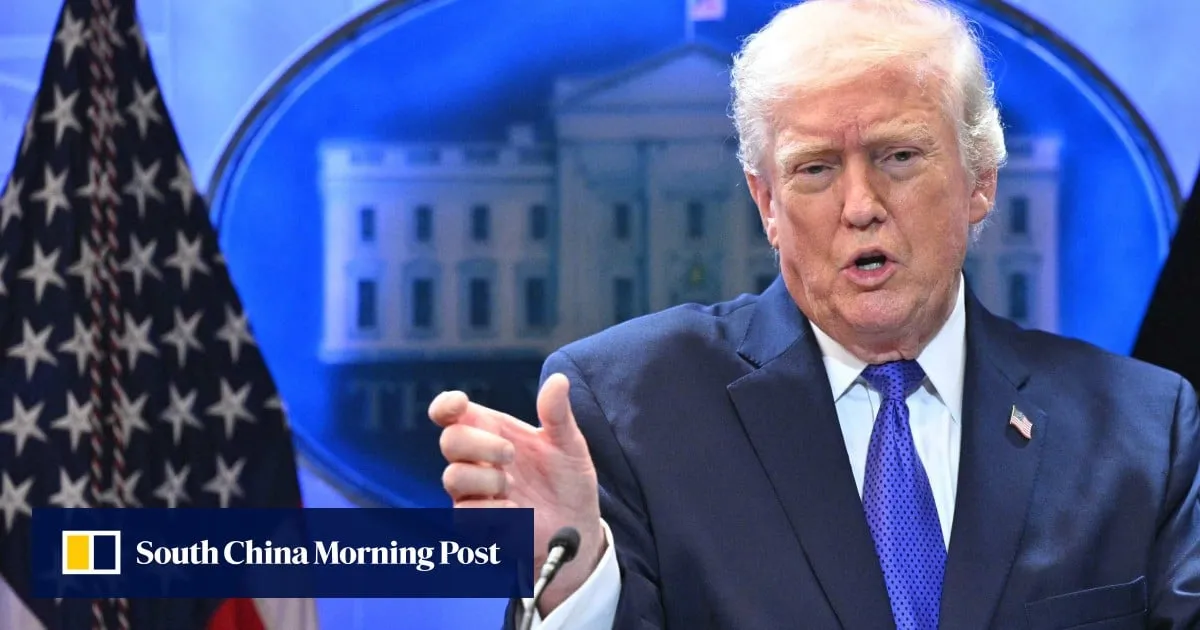
South China Morning PostFIG 01
Reading time
2min
Word count
285words
Sources cited
1cited
Entities identified
12entities
Quality score
100%
§ 01
Briefing Summary
AI-generatedNEWSAR · AI
A recent Supreme Court ruling weakened the legal basis for tariffs imposed by former President Trump under the International Emergency Economic Powers Act (IEEPA). In response, Trump invoked Section 122 of the 1974 Trade Act to impose a 15% tariff on all US imports. This action has caused uncertainty among Asian nations, including Indonesia, Malaysia, Vietnam, Cambodia, Bangladesh, and Pakistan, which had previously agreed to specific US import tariffs in exchange for relief from potentially higher duties. These countries are now questioning the stability and value of trade deals negotiated with the US over the past year. India has already postponed a trade delegation to Washington, signaling a cautious approach to further trade negotiations.
Confidence 0.90Sources 1Claims 5Entities 12
§ 02
Article analysis
Model · rule-basedFraming
Economic Impact
Legal & Judicial
Tone
Measured
AI-assessed
CalmNeutralAlarmist
Factuality
0.70 / 1.00
Factual
LowHigh
Sources cited
1
Limited
FewMany
§ 03
Key claims
5 extracted01
New Delhi has postponed a trade delegation to Washington.
factual
Confidence
1.00
02
Indonesia, Malaysia, Vietnam, Cambodia, Bangladesh and Pakistan accepted US import tariffs of 19-20%.
factual
Confidence
1.00
03
Trump invoked Section 122 of the 1974 Trade Act to impose a blanket 15 per cent tariff on all US imports.
factual
Confidence
1.00
04
A Supreme Court ruling gutted the legal foundation for much of US President Donald Trump’s tariff regime.
factual
Confidence
1.00
05
Asian partners will be reluctant to request renegotiation of their trade deals.
quoteWendy Cutler, Asia Society Policy Institute
Confidence
0.80
§ 04
Full report
2 min read · 285 words§ 05
Entities
12 identifiedKey playerOppositionContextPositiveNeutralNegative
Organizations1
Locations8
§ 06
Keywords & salience
9 termsus trade deals
0.90
tariffs
0.80
supreme court ruling
0.70
trade agreements
0.70
asian trading partners
0.60
international emergency economic powers act
0.60
section 122 of the 1974 trade act
0.50
trade delegation
0.40
us imports
0.40
§ 07
Topic connections
Interactive graph Network visualization showing 51 related topics
View Full Graph Person Organization Location Event|Click node to navigate|Edge numbers = shared articles