EXPLAINERMilitary operations by the US and Israel in Iran mark the most intense escalation since the June 2025 war despite several rounds of indirect US-Iran talks.A plume of smoke rises after an explosion on February 28, 2026 in Tehran, Iran [Getty Images]Published On 28 Feb 2026The United States and Israel have launched strikes on Iran despite ongoing talks between Washington and Tehran over Iran’s nuclear programme.Iran responded to Saturday’s attacks with missile and air strikes across the region, including in Israel, Bahrain, Saudi Arabia, Qatar, the United Arab Emirates and Iraq.Recommended Stories list of 3 itemslist 1 of 3Trump says “major combat operations” in Iran have begunlist 2 of 3Sirens sound across Israel after the country launched an attack on Iranlist 3 of 3Trump talks of ‘annihilation’, ‘elimination’ as US, Israel attack Iranend of listIsraeli officials said their strikes targeted Iran’s military and nuclear-related infrastructure, while airspace across Israel was closed and emergency measures imposed. Several other countries in the region also announced the closure of their airspace.Meanwhile, President Donald Trump said Washington has begun a “major combat operation” in Iran, aimed at “eliminating threats from the Iranian regime”.“This regime will soon learn that no one should challenge the strength and might of the United States Armed Forces,” he said.The strikes came just two days after high-stakes US–Iran nuclear negotiations in Geneva, mediated by Oman, ended without a breakthrough. The US-Israel attack marks the most serious escalation since the brief but intense June 2025 war.Here is a timeline of the events, including attacks and diplomatic overtures leading up to Saturday’s strikes by the US and Israel, and Iran’s fierce response.June 13, 2025 — Israel launches major air strikes against Iranian nuclear and military facilities, amid ongoing talks between the US and Tehran. Iran responds within hours with large-scale missile and drone attacks on Israeli cities.June 22 – The US strikes Iranian nuclear facilities at Natanz, Fordow and Isfahan, with Trump claiming the attacks degraded Tehran’s nuclear programme. Iranian officials said their programme was set back but not destroyed.June 23 – In retaliation, Iran fires missiles towards Al Udeid airbase in Qatar, housing US soldiers. The missiles are intercepted, and no casualties are reported.June 24 – After 12 days of fighting, a US-brokered ceasefire takes effect between Iran and Israel, ending all hostilities. Iran says at least 610 of its citizens were killed in the war, while Israel claimed 28 were killed on its side.July 2 – Iranian President Masoud Pezeshkian signs legislation halting cooperation with the International Atomic Energy Agency (IAEA), barring its inspectors from accessing Iran’s nuclear facilities unless specifically authorised by the country’s Supreme National Security Council.July 22 – Abbas Araghchi, Iran’s foreign minister, says Tehran will not give up its uranium enrichment programme, despite a temporary halt due to “serious and severe” damages.August 12 – Iranian police arrest as many as 21,000 people related to the 12-day war with Israel, according to state media.August 22 – Iran agrees to resume nuclear talks later in the month with the United Kingdom, France and Germany, despite the threat of revived sanctions.August 28 – The three European countries trigger a mechanism reinstating the United Nations’ sanctions on the Islamic republic for the first time in a decade.November 1 – Oman urges both the US and Iran to go back to the negotiating table as Iran reiterates it will not stop enriching uranium.November 7 – Trump says Iran has requested that Washington remove its crippling sanctions on Tehran, and that he is willing to talk about the issue.December 28 – Protests break out in major cities, including Tehran, over soaring prices after the rial plunges against the US dollar.January 8, 2026 – The internet is shut down across Iran following the outbreak of antigovernment protests, which have now spread beyond cities. The blackout lasts for more than two weeks.January 13 – Trump tells Iranians to “keep protesting” , claiming that “help is on the way”, and that the US may be preparing for military intervention against Tehran. The US begins to bolster its military presence off Iran.February 6 – Iran and the US begin indirect nuclear negotiations in Geneva, mediated by Oman, with the aim of reaching a deal to curb Tehran’s nuclear programme.February 17 – High-level US–Iran nuclear talks resume in Geneva, again with Omani mediation.(Al Jazeera)February 22 – Oman confirms another round of discussions in Geneva, describing a “positive push” but admits that significant differences remain.February 26 – A third round of nuclear talks concludes in Geneva, with mediator Oman saying “significant progress” was made and more discussions would be held the following week in Vienna.February 27 – Oman’s foreign minister says Iran has agreed to degrade its current stockpiles of nuclear material to “the lowest level possible” — effectively to unrefined levels. US President Donald Trump says he prefers diplomacy but warns that “all options” remain available if diplomacy fails.February 28 – Israel launches coordinated strikes on Iranian targets, including sites in and around Tehran. Iran retaliates by launching air and missile strikes across the region, including Qatar, United Arab Emirates, Saudi Arabia, Bahrain and Kuwait.
SRCAl Jazeera
LANGEN
LEANCenter
WORDS848
ENT12
SAT · 2026-02-28 · 11:31 GMTBRIEF NSR-2026-0228-20078
NSR-2026-0228-20078News Report·EN·Conflict
US, Israel bomb Iran: A timeline of talks and threats leading up to attacks
In February 2026, the US and Israel launched military strikes on Iran, escalating tensions despite recent US-Iran nuclear talks in Geneva. Israel targeted Iranian military and nuclear infrastructure, prompting Iran to respond with missile and air strikes across the region, including Israel and several Gulf states.
Al Jazeera StaffAl JazeeraFiled 2026-02-28 · 11:31 GMTLean · CenterRead · 4 min
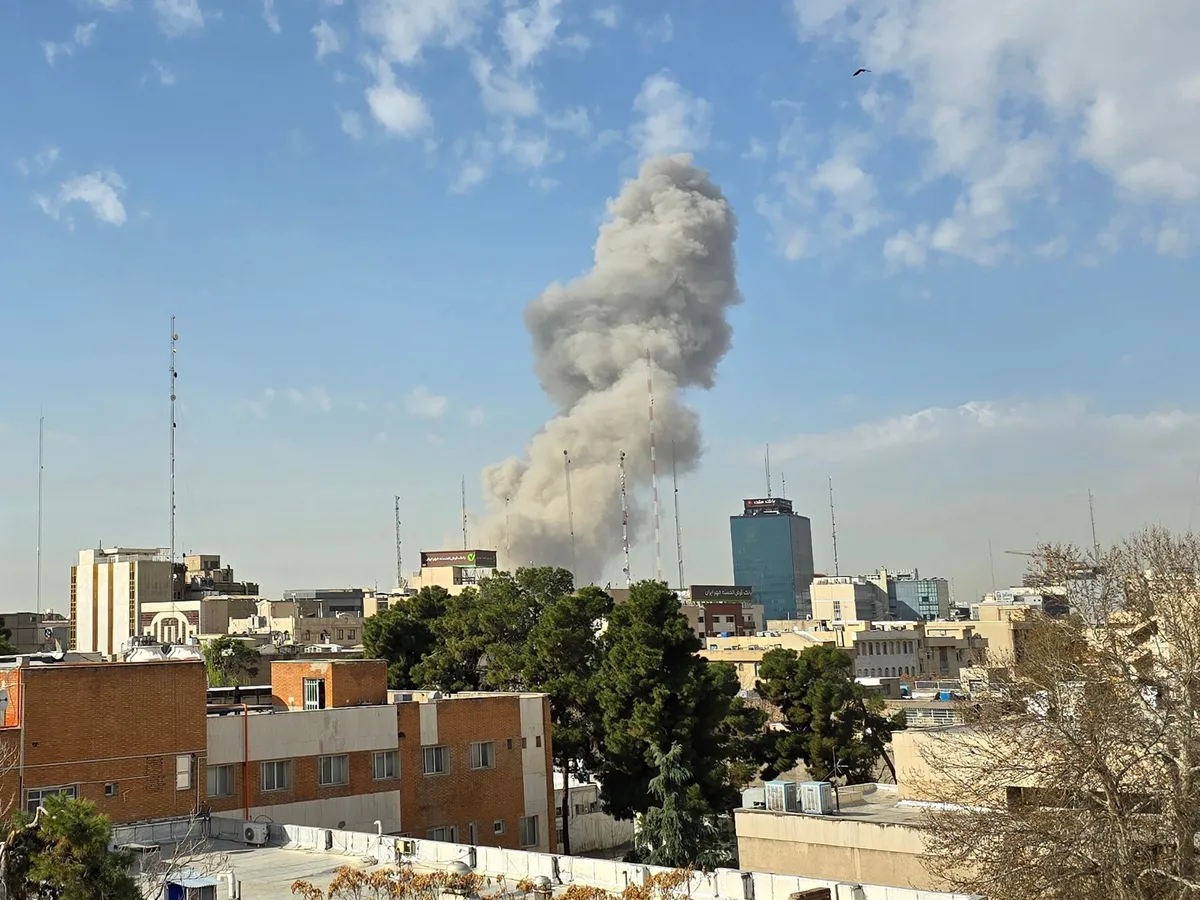
Al JazeeraFIG 01
Reading time
4min
Word count
848words
Sources cited
3cited
Entities identified
12entities
Quality score
100%
§ 01
Briefing Summary
AI-generatedNEWSAR · AI
In February 2026, the US and Israel launched military strikes on Iran, escalating tensions despite recent US-Iran nuclear talks in Geneva. Israel targeted Iranian military and nuclear infrastructure, prompting Iran to respond with missile and air strikes across the region, including Israel and several Gulf states. President Trump declared a "major combat operation" aimed at eliminating threats from Iran. This escalation follows a period of heightened conflict that began in June 2025 with Israeli air strikes on Iranian nuclear facilities, which led to retaliatory attacks by Iran and subsequent US strikes. A US-brokered ceasefire had previously ended 12 days of fighting in June 2025.
Confidence 0.90Sources 3Claims 5Entities 12
§ 02
Article analysis
Model · rule-basedFraming
Conflict
National Security
Tone
Mixed Tone
AI-assessed
CalmNeutralAlarmist
Factuality
0.70 / 1.00
Factual
LowHigh
Sources cited
3
Well sourced
FewMany
§ 03
Key claims
5 extracted01
A US-brokered ceasefire took effect between Iran and Israel, ending all hostilities after 12 days of fighting.
factualArticle
Confidence
1.00
02
President Donald Trump said Washington has begun a “major combat operation” in Iran.
quoteDonald Trump
Confidence
1.00
03
Iran responded with missile and air strikes across the region, including in Israel, Bahrain, Saudi Arabia, Qatar, UAE and Iraq.
factualArticle
Confidence
1.00
04
US and Israel launched strikes on Iran despite ongoing talks over Iran’s nuclear programme.
factualArticle
Confidence
1.00
05
The US-Israel attack marks the most serious escalation since the brief but intense June 2025 war.
factualArticle
Confidence
0.90
§ 04
Full report
4 min read · 848 words§ 05
Entities
12 identifiedKey playerOppositionContextPositiveNeutralNegative
Locations10
§ 06
Keywords & salience
10 termsiran
0.90
us-iran conflict
0.90
israel
0.80
military strikes
0.80
nuclear programme
0.70
us-iran talks
0.70
missile strikes
0.60
escalation
0.60
combat operations
0.50
airspace closure
0.40
§ 07
Topic connections
Interactive graph Network visualization showing 51 related topics
View Full Graph Person Organization Location Event|Click node to navigate|Edge numbers = shared articles