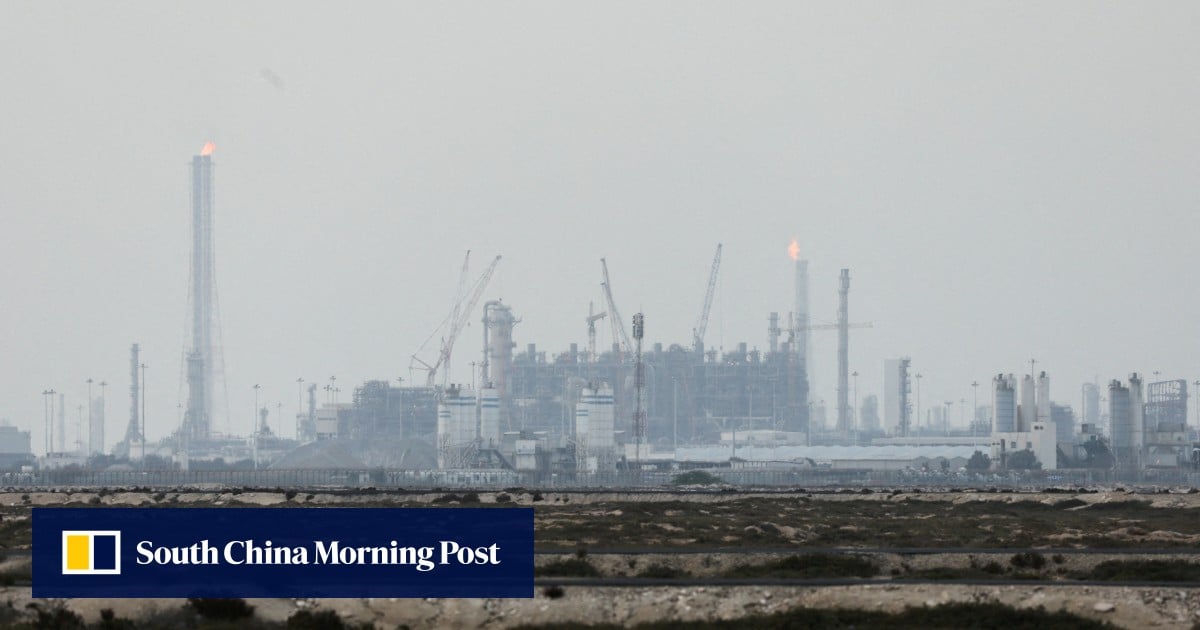
Asia is bracing itself for another energy shock after a disruption to Qatar’s liquefied natural gas (LNG) output sent regional gas prices to their highest level in about three years, exposing what observers say is a dangerous reliance on Middle Eastern fuel supplies.The increase follows Iran’s drone strikes on Qatar in retaliation for Israeli and US attacks in a widening conflict, alongside a blockade of shipping through the Strait of Hormuz – a key artery for global oil and gas trade.Spot LNG prices in Asia were hovering around US$23.80 per million British thermal units on Friday, Bloomberg reported.Analysts say the turmoil highlights how Asia’s heavy dependence on imported fossil fuels leaves the region vulnerable to geopolitical shocks and underscores the need to accelerate the shift to renewable energy.Qatar – one of the world’s largest LNG exporters – halted production on Monday at its Ras Laffan plant.A man opens the bonnet of a liquefied natural gas truck to check the engine at the manufacturing facility in Pune, India. The halt in Qatar’s LNG output has sent buyers across Asia searching for replacement cargoes. Photo: ReutersThe halt has sent buyers across Asia searching for replacement cargoes, with some industries already cutting consumption as fuel costs surge.
SRCSouth China Morning Post
LANGEN
LEANCenter-Right
WORDS204
ENT10
FRI · 2026-03-06 · 09:30 GMTBRIEF NSR-2026-0306-22003
NSR-2026-0306-22003News Report·EN·Economic Impact
Qatar’s LNG halt exposes Asia’s energy vulnerability
A disruption to Qatar's LNG output, reportedly due to Iranian drone strikes and a blockade of the Strait of Hormuz, has triggered a surge in Asian gas prices to a three-year high. Qatar, a major LNG exporter, halted production at its Ras Laffan plant on Monday, prompting Asian buyers to seek replacement cargoes and some industries to reduce consumption.
Biman MukherjiSouth China Morning PostFiled 2026-03-06 · 09:30 GMTLean · Center-RightRead · 1 min
South China Morning PostFIG 01
Reading time
1min
Word count
204words
Sources cited
1cited
Entities identified
10entities
Quality score
100%
§ 01
Briefing Summary
AI-generatedNEWSAR · AI
A disruption to Qatar's LNG output, reportedly due to Iranian drone strikes and a blockade of the Strait of Hormuz, has triggered a surge in Asian gas prices to a three-year high. Qatar, a major LNG exporter, halted production at its Ras Laffan plant on Monday, prompting Asian buyers to seek replacement cargoes and some industries to reduce consumption. The incident highlights Asia's vulnerability due to its heavy reliance on imported fossil fuels, particularly from the Middle East. Analysts suggest this disruption underscores the need for the region to accelerate its transition to renewable energy sources. The rising spot LNG prices in Asia reached approximately US$23.80 per million British thermal units on Friday.
Confidence 0.90Sources 1Claims 5Entities 10
§ 02
Article analysis
Model · rule-basedFraming
Economic Impact
National Security
Tone
Mixed Tone
AI-assessed
CalmNeutralAlarmist
Factuality
0.70 / 1.00
Factual
LowHigh
Sources cited
1
Limited
FewMany
§ 03
Key claims
5 extracted01
The halt in Qatar’s LNG output has sent buyers across Asia searching for replacement cargoes.
factual
Confidence
1.00
02
Qatar halted production on Monday at its Ras Laffan plant.
factual
Confidence
1.00
03
Spot LNG prices in Asia were hovering around US$23.80 per million British thermal units on Friday.
statisticBloomberg
Confidence
1.00
04
A disruption to Qatar’s liquefied natural gas (LNG) output sent regional gas prices to their highest level in about three years.
factual
Confidence
1.00
05
Asia’s heavy dependence on imported fossil fuels leaves the region vulnerable to geopolitical shocks.
predictionAnalysts
Confidence
0.80
§ 04
Full report
1 min read · 204 words§ 05
Entities
10 identifiedKey playerOppositionContextPositiveNeutralNegative
Organizations2
§ 06
Keywords & salience
10 termsenergy vulnerability
0.90
lng
0.90
qatar
0.80
energy shock
0.80
asia
0.80
geopolitical shocks
0.70
fuel supplies
0.70
gas prices
0.70
strait of hormuz
0.60
renewable energy
0.60
§ 07
Topic connections
Interactive graph Network visualization showing 51 related topics
View Full Graph Person Organization Location Event|Click node to navigate|Edge numbers = shared articles