Analysts say Israel’s actions in Lebanon, including relentless bombardment and mass displacement, are an effort to reshape the country.A man inspects damaged buildings after an Israeli strike on Beirut's southern suburbs, following an escalation between Hezbollah and Israel amid the US-Israeli conflict with Iran, Lebanon, March 7, 2026 [Stringer/Reuters]Published On 8 Mar 2026Beirut, Lebanon – In the past week, the Israeli military has created a mass displacement crisis, killed around 400 people, rained bombs down across Lebanon, including the capital Beirut, and pushed its troops even further into the southern part of the embattled country.Israel is defining a new reality in Lebanon, analysts told Al Jazeera, with potential long-term consequences that could reshape the country in ways unlike the 2024 war, and the 2006 conflict before that, which also featured forced mass exoduses and displacement, widespread killing, and what experts called the urbicide of Beirut’s southern suburbs.Israel may “redraw the demographic map” of Lebanon to try and pressure Hezbollah and sever the connection between the group and its support base, according to Michael Young, a Lebanese analyst and writer.Once the war is over…On February 28, Israel and the United States assassinated Iran’s Supreme Leader Ali Khamenei, launching a sustained war on Iran, now in its second week. Two days later, Hezbollah fired attacks at Israeli military sites for the first time in more than a year as retaliation for Khamenei’s killing.In that same period, Israel had violated the November 2024 ceasefire with Lebanon on a near-daily basis with attacks, purportedly targeting Hezbollah, that killed hundreds of civilians and destroyed civilian infrastructure.Israel responded to that attack on Monday by declaring the truce over. Over the next few days, it issued threats to all residents of south Lebanon to move north of the Litani River and all residents of Beirut’s southern suburbs – including the area known as Dahiyeh – to leave as well.Many in Lebanon said the ceasefire – which Israel violated more than 10,000 times, according to United Nations peacekeepers – was always one-sided. Now, even that is well and truly over, as Hezbollah is attacking Israeli military sites daily and has engaged in battles in the eastern Bekaa Valley and south Lebanon in recent days.A Lebanese Army source told Al Jazeera that the Israeli military has pushed a few kilometres (miles) into unpopulated areas across southern Lebanon. This is in addition to the five points Israel has occupied since the 2024 ceasefire.(Al Jazeera)There are fears among the population that the Israelis may not choose to withdraw this time, though some analysts say they don’t think Israel has much to gain by holding onto the land.“In the long run, it is not in Israel’s interest, strategically speaking,” Lebanese political analyst Rabih Dandachli told Al Jazeera. “I don’t think they stay on the land. The presence of an occupation in this way will create another resistance like Hezbollah.”Israel has already been harried out of southern Lebanon by Hezbollah in 2000, after an 18-year occupation that began with its invasion in 1982, ostensibly to destroy the Palestine Liberation Organization (PLO) presence in the country. That invasion killed around 19,000 Lebanese and Palestinians.Still, analysts believe Israel’s actions in this war are part of its efforts to reshape the region under its hegemony, defanging any real or perceived threat. Those effects would also impact Lebanon’s relationship with Israel and the power and status of Hezbollah.“Today, Israel’s actions in Lebanon are tied to the political conditions they want to impose on Lebanon once this war is over,” Young said.Analysts said those conditions could include imposing a peace deal, in line with Israel’s Abraham Accords, or an economic zone that Israeli Prime Minister Benjamin Netanyahu has touted regularly.Young said the intention could be to “demilitarise the area north of the Litani” to the Awali River, near Sidon, similar to what Israel has demanded in Syria, insisting the area south of Damascus be demilitarised. He recalled the 1976 Red Lines Agreement, a secret agreement between Israel and Syria, negotiated by the Americans, that decided Syria would not go south of the Awali.More than half a million people in Lebanon have been registered as displaced since Israel began its renewed intensive attacks.Social affairs minister Haneen Sayed told a press briefing on Sunday that the total number of people who had registered on a website affiliated with the ministry reached 517,000, including 117,228 in government shelters.Israel ‘creating large pockets of internal displacement’For years prior to the 2023-2024 war, Hezbollah was the most powerful force in Lebanon. But the group was badly weakened in that conflict. Israel killed the majority of its military leadership, including its longtime Secretary General Hassan Nasrallah.Since then, the Lebanese government has promised to disarm the group and recently declared the group’s military activities illegal. When asked if the Lebanese Army is arresting Hezbollah members carrying weapons, an army source told Al Jazeera the Lebanese Armed Forces (LAF) is arresting anyone and everyone carrying non-state-sanctioned arms.With the group at its weakest point in more than 40 years, Israel is now using mass displacement to reshape how Hezbollah exists in relation to its Shia community support base. On March 5, Israel ordered all residents of south Lebanon to move north of the Litani River. The next day, it ordered all residents of the southern suburbs of Beirut to leave the area as well. Hezbollah draws most of its support from those two regions, plus the eastern Bekaa Valley, where Baalbek has been a longtime stronghold.“This is something new – the emptying of the whole of Dahiyeh – it’s a new phenomenon,” Young said. In 2024, Dahiyeh was bombarded heavily on a nightly basis for nearly two months. At the start of that bombing campaign, tens of thousands fled Dahiyeh for the sea front. But this time, Young said, Israel’s tactics were not clear. However, if Israeli officials go through with certain stated promises, Young said it could be an effort to cut the link between Hezbollah and its base among the populace.Days into the US-Israel war on Iran and Lebanon becoming a fierce front, far-right Israeli Finance Minister Bezalel Smotrich threatened to turn the southern suburbs of Lebanon’s capital into another Gaza Strip.In a video shared online on Thursday, Smotrich warned that the Dahiyeh area would soon look “like Khan Younis”, a city in southern Gaza that has been decimated in Israel’s genocidal war against Palestinians in the enclave. Should Israel continue with their heavy bombing of Dahiyeh to the point that it becomes unlivable, similar to Khan Younis, then it would signal an Israeli effort to dismantle the group from its support base.“Today it seems a policy decision and part of a broader strategy to break Hezbollah’s link with its own society, with Beirut, with a semiautonomous area within the capital, and with the rest of Lebanese society,” Young said.Analysts said the threats to evacuate place massive stress on the party, as well as the Lebanese state, as well as impacting the lives of tens of thousands of everyday citizens.“By forcing populations out of southern Lebanon, parts of the Bekaa, and the southern suburbs, Israel is effectively reshaping demographic patterns and creating large pockets of internal displacement,” Imad Salamey, a political scientist at the Lebanese American University in Beirut, told Al Jazeera. “This redistribution strains host communities and state institutions while raising the economic and social costs of the war for Lebanon.”
SRCAl Jazeera
LANGEN
LEANCenter
WORDS1 226
ENT10
SUN · 2026-03-08 · 16:36 GMTBRIEF NSR-2026-0308-22610
NSR-2026-0308-22610News Report·EN·Conflict
Is Israel reshaping Lebanon, trying to separate Hezbollah from its people?
Following the assassination of Iran's Supreme Leader in late February 2026, escalating conflict between Israel and Hezbollah has led to significant actions by Israel in Lebanon. These actions, occurring in March 2026, include bombardment of Beirut and southern Lebanon, mass displacement of residents, and a push of troops into southern Lebanon.
Justin SalhaniAl JazeeraFiled 2026-03-08 · 16:36 GMTLean · CenterRead · 5 min
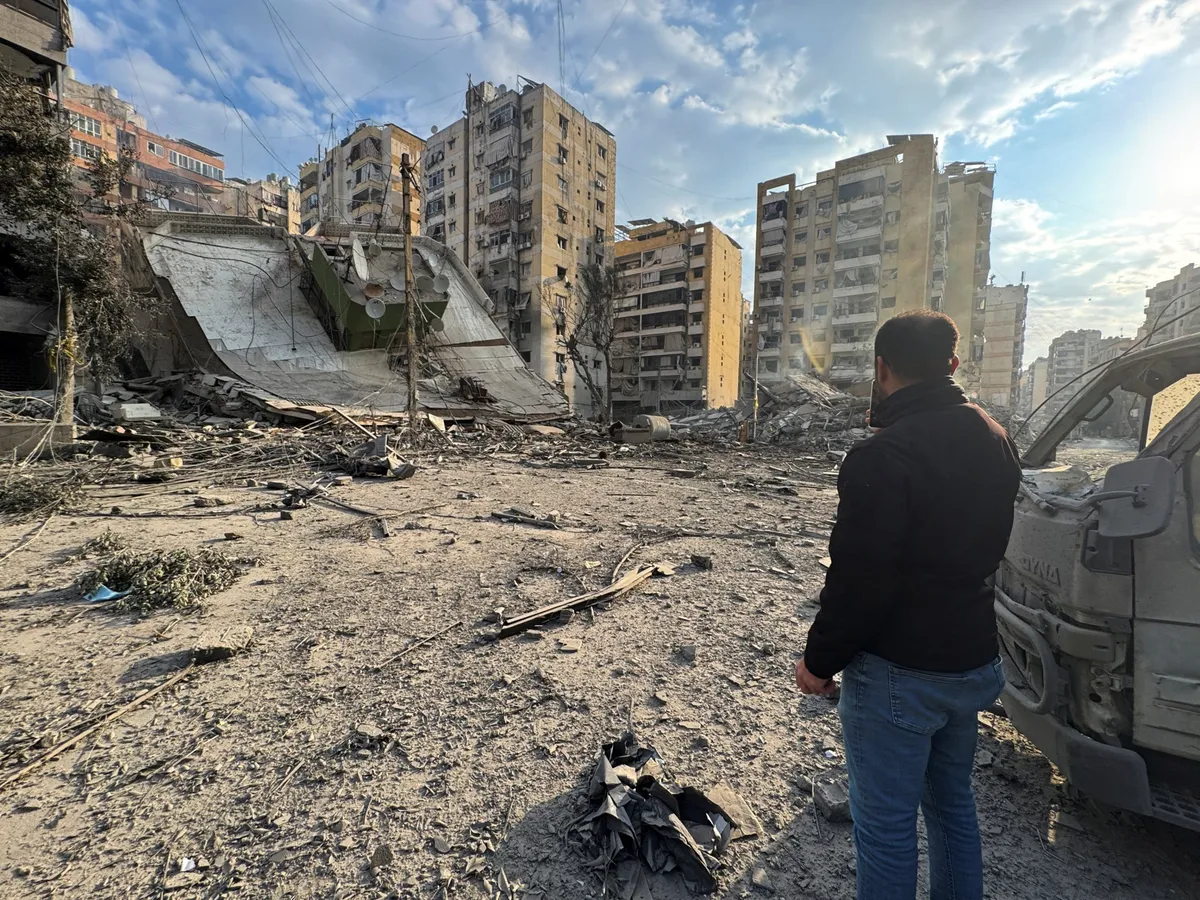
Al JazeeraFIG 01
Reading time
5min
Word count
1 226words
Sources cited
3cited
Entities identified
10entities
Quality score
100%
§ 01
Briefing Summary
AI-generatedNEWSAR · AI
Following the assassination of Iran's Supreme Leader in late February 2026, escalating conflict between Israel and Hezbollah has led to significant actions by Israel in Lebanon. These actions, occurring in March 2026, include bombardment of Beirut and southern Lebanon, mass displacement of residents, and a push of troops into southern Lebanon. Analysts suggest Israel's strategy aims to reshape Lebanon, potentially redrawing its demographic map to pressure Hezbollah and separate the group from its support base. This follows a broken ceasefire, which Israel allegedly violated frequently, and Hezbollah's retaliatory attacks on Israeli military sites. The conflict has resulted in hundreds of deaths and widespread destruction of civilian infrastructure.
Confidence 0.90Sources 3Claims 5Entities 10
§ 02
Article analysis
Model · rule-basedFraming
Conflict
Political Strategy
Tone
Mixed Tone
AI-assessed
CalmNeutralAlarmist
Factuality
0.60 / 1.00
Mixed
LowHigh
Sources cited
3
Well sourced
FewMany
§ 03
Key claims
5 extracted01
On February 28, Israel and the United States assassinated Iran’s Supreme Leader Ali Khamenei.
factualAl Jazeera
Confidence
0.90
02
Israeli military has created a mass displacement crisis and killed around 400 people in Lebanon in the past week.
factualAl Jazeera
Confidence
0.90
03
Israel violated the November 2024 ceasefire with Lebanon on a near-daily basis with attacks.
factualAl Jazeera
Confidence
0.80
04
The Israeli military has pushed a few kilometres into unpopulated areas across southern Lebanon.
factualLebanese Army source
Confidence
0.70
05
Israel may redraw the demographic map of Lebanon to pressure Hezbollah.
predictionMichael Young, Lebanese analyst and writer
Confidence
0.60
§ 04
Full report
5 min read · 1 226 words§ 05
Entities
10 identifiedKey playerOppositionContextPositiveNeutralNegative
§ 06
Keywords & salience
9 termsisrael
1.00
lebanon
1.00
hezbollah
0.90
mass displacement
0.80
conflict
0.70
military action
0.70
beirut
0.60
ceasefire
0.50
iran
0.40
§ 07
Topic connections
Interactive graph Network visualization showing 51 related topics
View Full Graph Person Organization Location Event|Click node to navigate|Edge numbers = shared articles