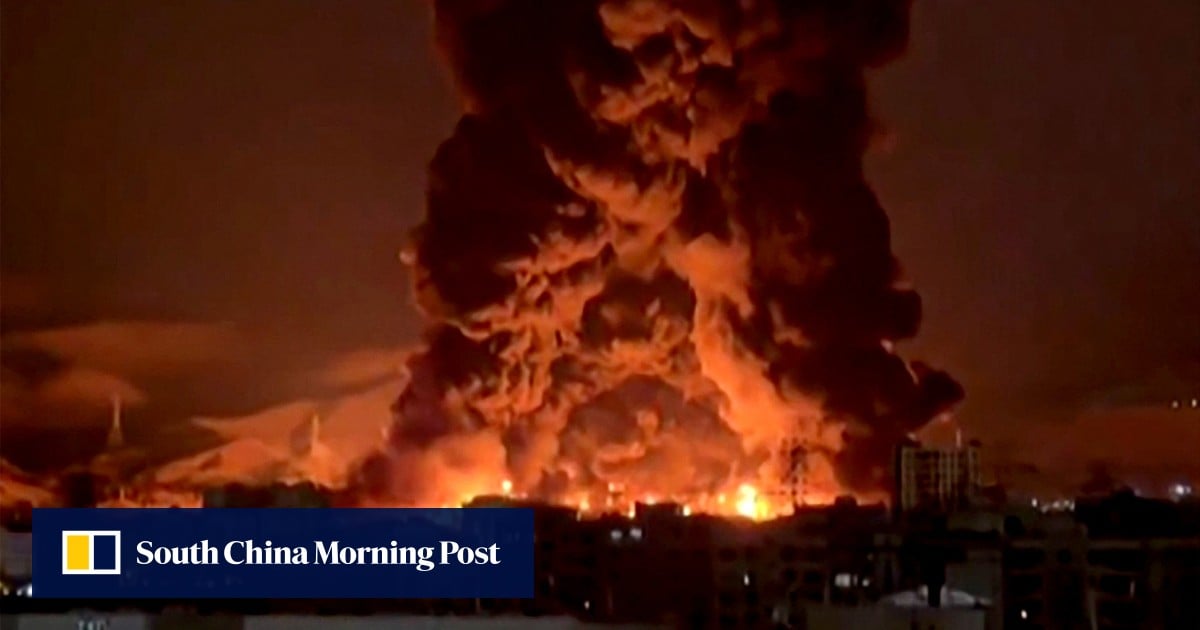
US President Donald Trump says the war on Iran may not last much longer. But across Asia, government actions are racing to shield themselves from the fallout – revealing a region gripped by anxiety that an energy shock could revive the spectre of stagflation.Under mounting economic pressure and record oil market volatility, Trump said on Monday that the US-Israeli war on Iran could be over “very soon”, though not within the coming week.The most exposed Asian economies – including South Korea and Japan – are heavily dependent on the Middle East for about 50 per cent of their energy imports, and some are moving to cushion themselves from turbulence.China, the world’s second-largest oil consumer, has announced its sharpest rise in retail petrol and diesel prices since 2022, while ordering state-owned oil majors to secure stable supplies of refined products and comply with official price controls.Beijing has spent years building up strategic oil reserves without disclosing their exact size, but Reuters reported on Thursday that analysts estimated the stockpiles at about 900 million barrels – just under three months of imports.Japan and South Korea are also preparing defensive measures. With oil reserves covering 254 days, Tokyo had instructed national storage sites to prepare for a possible release, local news agency Kyodo News reported on Sunday.Tokyo previously released oil during the Gulf War in the early 1990s and again following the earthquake and tsunami in northeast Japan in 2011, according to the report.
SRCSouth China Morning Post
LANGEN
LEANCenter-Right
WORDS241
ENT12
WED · 2026-03-11 · 02:00 GMTBRIEF NSR-2026-0311-23357
NSR-2026-0311-23357News Report·EN·Economic Impact
The US-Israeli war on Iran threatens global energy. How is Asia preparing?
Amidst escalating tensions between the US-Israeli alliance and Iran, Asian economies are bracing for potential energy shocks. Countries like South Korea and Japan, heavily reliant on Middle Eastern energy imports, are particularly vulnerable.
Carol YangSouth China Morning PostFiled 2026-03-11 · 02:00 GMTLean · Center-RightRead · 1 min
South China Morning PostFIG 01
Reading time
1min
Word count
241words
Sources cited
2cited
Entities identified
12entities
Quality score
100%
§ 01
Briefing Summary
AI-generatedNEWSAR · AI
Amidst escalating tensions between the US-Israeli alliance and Iran, Asian economies are bracing for potential energy shocks. Countries like South Korea and Japan, heavily reliant on Middle Eastern energy imports, are particularly vulnerable. China, the world's second-largest oil consumer, has raised fuel prices and instructed state-owned oil companies to secure stable supplies, while also maintaining substantial strategic oil reserves. Japan, with significant oil reserves, has instructed national storage sites to prepare for a possible release, a measure previously taken during the Gulf War and after the 2011 earthquake. These actions across Asia reflect concerns that a disruption in energy supplies could trigger economic instability.
Confidence 0.90Sources 2Claims 5Entities 12
§ 02
Article analysis
Model · rule-basedFraming
Economic Impact
Conflict
Tone
Mixed Tone
AI-assessed
CalmNeutralAlarmist
Factuality
0.70 / 1.00
Factual
LowHigh
Sources cited
2
Limited
FewMany
§ 03
Key claims
5 extracted01
China has announced its sharpest rise in retail petrol and diesel prices since 2022.
factual
Confidence
1.00
02
Tokyo had instructed national storage sites to prepare for a possible release.
factualKyodo News
Confidence
0.90
03
South Korea and Japan are heavily dependent on the Middle East for about 50 per cent of their energy imports.
factual
Confidence
0.90
04
US-Israeli war on Iran could be over “very soon”, though not within the coming week.
quoteDonald Trump
Confidence
0.80
05
Analysts estimated China's stockpiles at about 900 million barrels.
statisticReuters
Confidence
0.70
§ 04
Full report
1 min read · 241 words§ 05
Entities
12 identifiedKey playerOppositionContext
DT
Donald Trump person · Key Player
90
I
Iran location · Opposition
80
A
Asia location · Context
80
C
China location
70
J
Japan location
70
US
United States location · Key Player
70
SK
South Korea location
60
I
Israel location · Key Player
60
ME
Middle East location · Context
60
GW
Gulf War event · Context
40
KN
Kyodo News organization
30
R
Reuters organization
30
§ 06
Keywords & salience
9 termsus-israeli war on iran
0.90
global energy
0.80
energy shock
0.70
oil market volatility
0.70
oil reserves
0.60
asia
0.60
energy imports
0.50
stagflation
0.50
price controls
0.40
§ 07
Topic connections
Interactive graph Network visualization showing 51 related topics
View Full Graph Person Organization Location Event|Click node to navigate|Edge numbers = shared articles