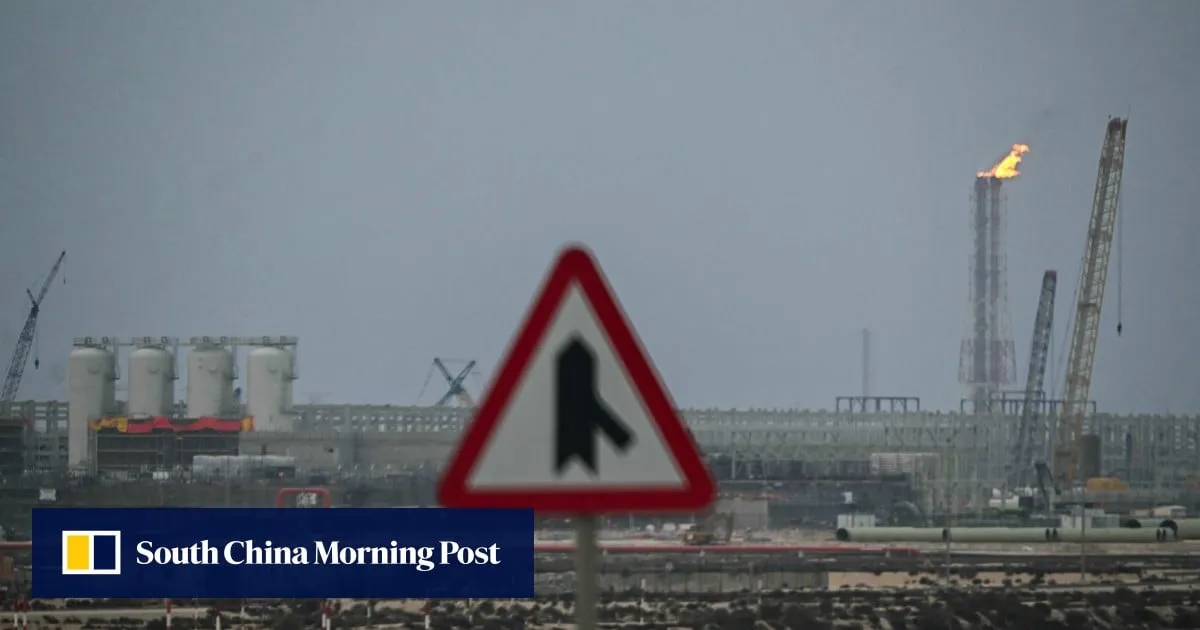
With the US-Israel war on Iran entering its third week, the world faces the risk of a more severe oil shock as military strikes expand to major energy infrastructure, heightening fears of a prolonged conflict.In this explainer, the South China Morning Post examines the latest developments and factors driving oil price volatility and assesses the potential impact on the global economy.Energy infrastructure: what is the latest?An Israeli air strike hit energy facilities on Wednesday at Iran’s South Pars natural gas field, the world’s largest, which it shares with Qatar.In retaliation, Tehran struck the world’s largest liquefied natural gas facility in Qatar with a ballistic missile and threatened vital energy infrastructure in Saudi Arabia and the United Arab Emirates.International oil prices surged on the news, with the value of benchmark Brent futures moving between US$113 and US$115 as of press time on Thursday after a previous close of US$107.38.At the same time, the Iran-controlled Strait of Hormuz – a critical waterway for energy flows – is effectively closed.US Vice-President J.D. Vance warned on Wednesday that consumers face a “rough road ahead” as global oil prices soar.
SRCSouth China Morning Post
LANGEN
LEANCenter-Right
WORDS185
ENT10
THU · 2026-03-19 · 12:00 GMTBRIEF NSR-2026-0319-26054
NSR-2026-0319-26054News Report·EN·Economic Impact
If the Iran war takes oil above US$120 a barrel, how bad could the shock get?
The South China Morning Post reports that escalating conflict between the US-Israel alliance and Iran is threatening global energy infrastructure and causing oil price volatility. Recent events include strikes on Iran's South Pars natural gas field and retaliation against Qatar's LNG facility, alongside threats to Saudi Arabia and the UAE.
Kandy WongSouth China Morning PostFiled 2026-03-19 · 12:00 GMTLean · Center-RightRead · 1 min
South China Morning PostFIG 01
Reading time
1min
Word count
185words
Sources cited
1cited
Entities identified
10entities
Quality score
100%
§ 01
Briefing Summary
AI-generatedNEWSAR · AI
The South China Morning Post reports that escalating conflict between the US-Israel alliance and Iran is threatening global energy infrastructure and causing oil price volatility. Recent events include strikes on Iran's South Pars natural gas field and retaliation against Qatar's LNG facility, alongside threats to Saudi Arabia and the UAE. The Strait of Hormuz, a vital energy waterway, is reportedly closed. As a result, international oil prices have surged, with Brent futures reaching between $113 and $115. US officials warn of potential economic hardship for consumers due to rising oil prices. The article examines these developments and their potential impact on the global economy.
Confidence 0.90Sources 1Claims 5Entities 10
§ 02
Article analysis
Model · rule-basedFraming
Economic Impact
Conflict
Tone
Mixed Tone
AI-assessed
CalmNeutralAlarmist
Factuality
0.70 / 1.00
Factual
LowHigh
Sources cited
1
Limited
FewMany
§ 03
Key claims
5 extracted01
International oil prices surged on the news, with Brent futures moving between US$113 and US$115.
statisticSouth China Morning Post
Confidence
0.90
02
Tehran struck the world’s largest liquefied natural gas facility in Qatar with a ballistic missile.
factualSouth China Morning Post
Confidence
0.90
03
An Israeli air strike hit energy facilities on Wednesday at Iran’s South Pars natural gas field.
factualSouth China Morning Post
Confidence
0.90
04
The Iran-controlled Strait of Hormuz is effectively closed.
factualSouth China Morning Post
Confidence
0.80
05
Consumers face a “rough road ahead” as global oil prices soar.
quoteUS Vice-President J.D. Vance
Confidence
0.70
§ 04
Full report
1 min read · 185 words§ 05
Entities
10 identifiedKey playerOppositionContextPositiveNeutralNegative
People1
Organizations1
§ 06
Keywords & salience
8 termsoil shock
0.90
iran war
0.80
oil prices
0.80
energy infrastructure
0.70
strait of hormuz
0.60
global economy
0.50
natural gas
0.50
military strikes
0.40
§ 07
Topic connections
Interactive graph Network visualization showing 51 related topics
View Full Graph Person Organization Location Event|Click node to navigate|Edge numbers = shared articles