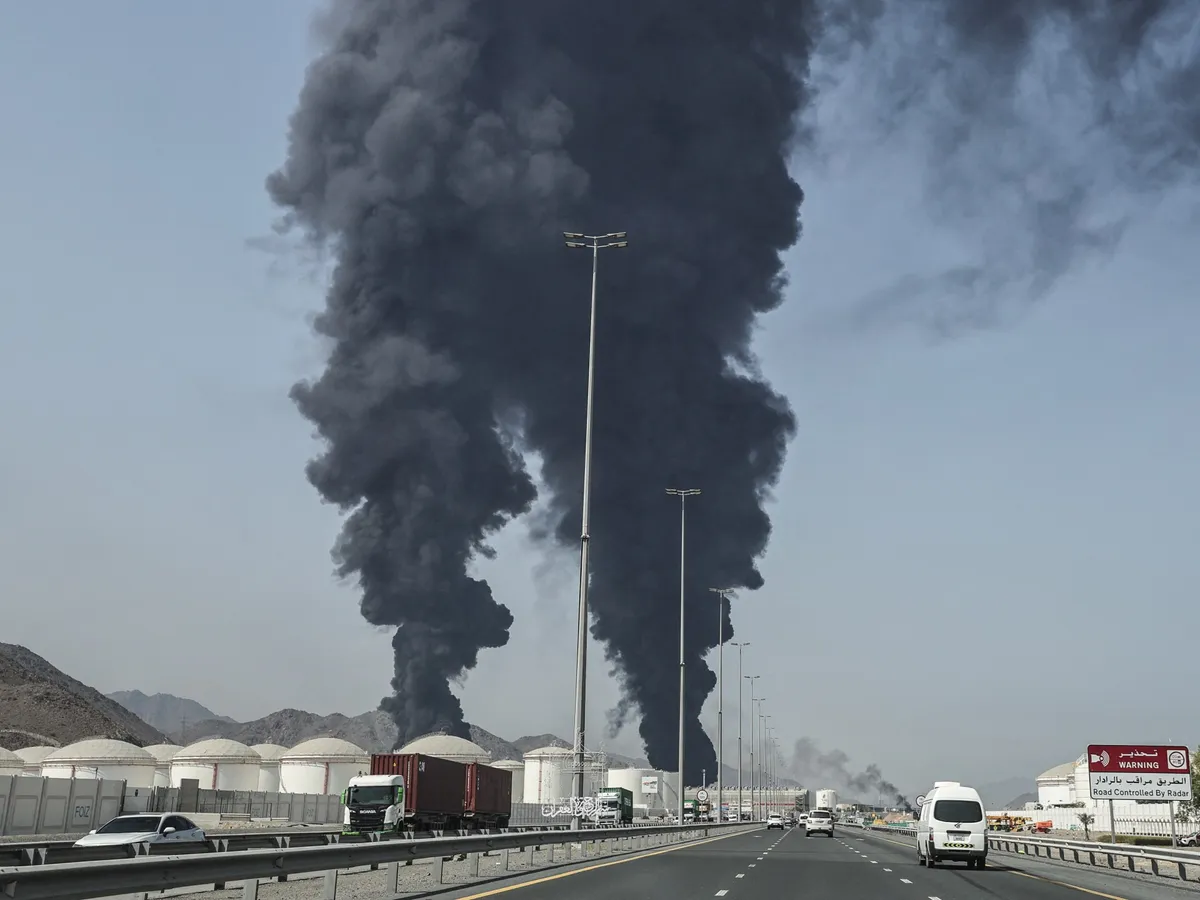
EXPLAINERExperts say while Gulf States need support in face of Iranian attacks, it is less clear what their allies can provide.European leaders call for end to 'reckless attacks' on Middle East energy facilitiesPublished On 20 Mar 2026Gulf countries are coming increasingly under attack from Iranian strikes as the United States-Israeli war on Iran continues to escalate.On Friday, Saudi Arabia intercepted multiple waves of Iranian drones and Kuwait Petroleum Corporation said its Mina al-Ahmadi refinery had been targeted by several early-morning drone attacks, leading to some units being shut down.Gulf countries have repeatedly insisted that their defences are sufficient to repel these Iranian strikes. However, they also have military partnerships and agreements in place with other countries which could potentially provide more assistance as tensions escalate.In this explainer, we look at what these partnerships are, how they are helping the Gulf and whether they could do more.What military partnerships do the Gulf countries have?The Gulf countries have a handful of military partnerships of different kinds.QatarQatar is home to the largest military base hosting US assets and troops in the region – Al Udeid.The 24-hectare (60-acre) base, located in the desert outside the capital Doha, was established in 1996 and is the forward headquarters for US Central Command, which directs US military operations in a huge swath of regional territory stretching from Egypt in the west to Kazakhstan in the east.It houses the Qatar Emiri Air Force, the US Air Force, the United Kingdom’s Royal Air Force, as well as other foreign forces.Qatar is the second largest Foreign Military Sales (FMS) partner to the US after Saudi Arabia. FMS is the official, government‑run channel the US uses to sell weapons, equipment and services to other governments.In January, the US State Department said that “recent and significant” sales to Qatar included the Patriot long-range missile system, the National Advanced Surface to Air Missile System, early warning systems, radars and attack helicopters.On September 9, 2025, Israel struck a residential area of Qatar’s capital, Doha, targeting senior leaders of Hamas including negotiators for a ceasefire in Israel’s genocidal war in Gaza.On September 29, US President Donald Trump signed an executive order reaffirming support for Qatar, saying: “The United States shall regard any armed attack on the territory, sovereignty, or critical infrastructure of the State of Qatar as a threat to the peace and security of the United States.”On Wednesday, Israel struck Iran’s critical South Pars gasfield. Soon after, Iran retaliated, hitting a major gas facility at Qatar’s Ras Laffan plant.In response, Trump wrote in a Truth Social post guaranteeing that Israel would not attack the South Pars field again unless Iran again “unwisely” attacked Qatar.Trump added that, if it did, the US “with or without the help or consent of Israel, will massively blow up the entirety of the South Pars Gas Field at an amount of strength and power that Iran has never seen or witnessed before”.There is also a Turkish military base in Qatar as the two countries collaborate via defence cooperation agreements and joint training.In recent years, Qatar has also strengthened ties with the United Kingdom through joint training and exercises and with France from which it buys weapons.Earlier this month, UK Prime Minister Keir Starmer said he would send four additional Typhoon fighter jets to Qatar to help with defence.Despite initially stating that the UK would not permit the US to use UK bases for strikes on Iran, Starmer partially relented on March 1 when he granted a US request to use UK bases for “defensive” strikes on Iranian capabilities.Nevertheless, Starmer has stated that the UK will not send its own assets or troops or otherwise become involved in the ongoing war.Saudi ArabiaSaudi Arabia hosts US military assets and personnel at the Prince Sultan Air Base (PSAB), located near Al Kharj, southeast of Riyadh.Saudi Arabia is also the largest Foreign Military Sales (FMS) partner of the US.There is no formal mutual‑defence treaty between the US and Saudi Arabia, similar to NATO’s Article 5. Instead, there are defence cooperation agreements between Riyadh and Washington.Pakistan and Saudi Arabia have had a decades-long security partnership. This was strengthened in September 2025, when the two countries signed a formal mutual defence pact.The extent to which Pakistan, which shares a 900km (559-mile) border with Iran in its southwest, can and will intervene is unclear, however.On March 3, Pakistan’s Deputy Prime Minister and Foreign Minister Ishaq Dar told a news conference he had personally reminded Iranian Foreign Minister Abbas Araghchi of Pakistan’s defence obligations to Saudi Arabia.“We have a defence pact with Saudi Arabia, and the whole world knows about it,” Dar said. “I told the Iranian leadership to take care of our pact with Saudi Arabia.”An estimated 1,500 to 2,000 Pakistani troops are stationed in Saudi Arabia.United Arab EmiratesThe UAE also hosts US assets and personnel at its Al-Dhafra airbase, including advanced aircraft such as F-22 Raptor stealth fighters and various surveillance planes, drones and airborne warning and control systems (AWACS).On Thursday, the US announced an $8.4bn arms deal with the UAE, for the Gulf nation to buy drones, missiles, radar systems and F-16 aircraft.Recently, the UAE has bolstered its military partnership with India. In January this year, the president of the UAE, Sheikh Mohamed bin Zayed Al Nahyan, visited India.During this meeting, India and the UAE reaffirmed the India-UAE Comprehensive Strategic Partnership. Established in 2017, this is a bilateral agreement focused on defence cooperation, energy security and technology exchange.The UAE and India do not have a mutual defence-style agreement in place, however.OmanThe US has long-term access agreements for key air and naval facilities in Oman, notably the Port of Duqm and Port of Salalah, both of which have been subject to Iranian strikes over the past three weeks.The UK and Oman also have a defence cooperation agreement and conduct regular joint exercises.Pakistan and Oman also have military ties where they hold regular joint naval exercises.However, there are no mutual defence commitments in place.BahrainThe US operates the Naval Support Activity (NSA) in Bahrain. Home to the US Navy’s Fifth Fleet, the base provides security to ships, aircraft, detachments and remote sites in the region.Bahrain and the UK also have a comprehensive security pact. Earlier this month, Starmer held talks with King Hamad bin Isa Al Khalifa of Bahrain and confirmed that the UK would send aircraft to bolster Bahrain’s security.KuwaitKuwait hosts Camp Arifjan, a major US Army installation that functions as the main logistics, supply and command hub for US military operations across the Middle East, especially within the US Central Command (CENTCOM) area of responsibility.On Thursday, the US announced an $8bn arms deal with Kuwait – for air and missile defence radar systems.In 2023, Kuwait signed an agreement on military cooperation with Pakistan, focusing on joint training and military exercises.These are not mutual defence agreements, however.What could these partners be doing to better assist Gulf countries?Experts say military allies of Gulf nations could provide naval escorts to ships transiting the Strait of Hormuz. One-fifth of the world’s oil and gas supplies are shipped through this route in peacetime from Gulf producers.
SRCAl Jazeera
LANGEN
LEANCenter
WORDS1 176
ENT11
FRI · 2026-03-20 · 13:45 GMTBRIEF NSR-2026-0320-26366
NSR-2026-0320-26366News Report·EN·National Security
Who are the Gulf’s military allies, and how are they helping in Iran war?
As the US-Israeli war on Iran escalates in March 2026, Gulf countries are increasingly targeted by Iranian strikes, including drone attacks on Saudi Arabia and Kuwait. While Gulf states maintain their defenses are sufficient, they also have military partnerships that could provide assistance.
Sarah ShamimAl JazeeraFiled 2026-03-20 · 13:45 GMTLean · CenterRead · 5 min
Al JazeeraFIG 01
Reading time
5min
Word count
1 176words
Sources cited
1cited
Entities identified
11entities
Quality score
100%
§ 01
Briefing Summary
AI-generatedNEWSAR · AI
As the US-Israeli war on Iran escalates in March 2026, Gulf countries are increasingly targeted by Iranian strikes, including drone attacks on Saudi Arabia and Kuwait. While Gulf states maintain their defenses are sufficient, they also have military partnerships that could provide assistance. Qatar hosts the largest US military base in the region, Al Udeid, serving as the forward headquarters for US Central Command. Qatar is also the second-largest Foreign Military Sales partner to the US, having recently purchased missile systems, early warning systems, and attack helicopters. In September 2025, Israel struck a residential area in Qatar's capital, Doha, targeting Hamas leaders. The US has reaffirmed its support for Qatar, stating that an attack on its territory would be viewed as an attack on the US.
Confidence 0.90Sources 1Claims 5Entities 11
§ 02
Article analysis
Model · rule-basedFraming
National Security
Diplomatic
Tone
Mixed Tone
AI-assessed
CalmNeutralAlarmist
Factuality
0.80 / 1.00
Factual
LowHigh
Sources cited
1
Limited
FewMany
§ 03
Key claims
5 extracted01
Qatar is the second largest Foreign Military Sales (FMS) partner to the US after Saudi Arabia.
factual
Confidence
1.00
02
Qatar is home to the largest military base hosting US assets and troops in the region – Al Udeid.
factual
Confidence
1.00
03
On September 9, 2025, Israel struck a residential area of Qatar’s capital, Doha, targeting senior leaders of Hamas.
factual
Confidence
0.90
04
Gulf countries are coming increasingly under attack from Iranian strikes as the United States-Israeli war on Iran continues to escalate.
factual
Confidence
0.90
05
Experts say while Gulf states need support in face of Iranian attacks, it is less clear what their allies can provide.
quoteExperts
Confidence
0.80
§ 04
Full report
5 min read · 1 176 words§ 05
Entities
11 identifiedKey playerOppositionContextPositiveNeutralNegative
People1
§ 06
Keywords & salience
9 termsgulf states
0.90
iran war
0.90
military partnerships
0.80
iranian strikes
0.80
qatar
0.70
us military
0.70
al udeid
0.60
foreign military sales
0.50
drone attacks
0.50
§ 07
Topic connections
Interactive graph Network visualization showing 51 related topics
View Full Graph Person Organization Location Event|Click node to navigate|Edge numbers = shared articles