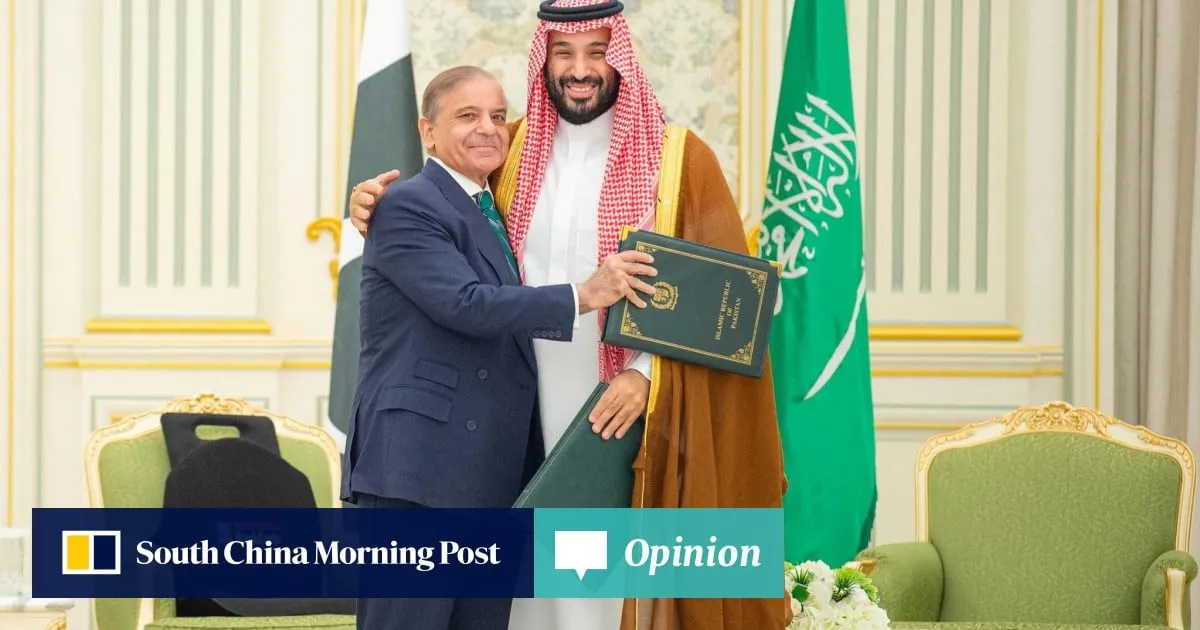
When the late Japanese prime minister Shinzo Abe gave his landmark speech in the Indian parliament in August 2007 referring to the “confluence of the two seas”, he gave birth to the concept of the Indo-Pacific as a strategic space connecting East and South Asia. But the latest conflict in the Middle East illustrates how South Asia’s interconnectedness increasingly lies to its west.Some of these connections are deeply rooted in history: South Asia is home to the world’s largest Muslim population and the Middle East is the birthplace of Islam. Other connections are more recent, such as South Asia’s heavy dependence on energy imports and remittances from the Gulf.About 10 million Indians live and work in the region, accounting for close to 40 per cent of the country’s remittance inflows. For other South Asian countries, this interdependency is even starker. As much as half of Nepal’s remittances come from the Middle East, which is significant when over a quarter of the country’s gross domestic product comes from remittances.The dependency is even more notable in the energy space. All South Asian countries are heavily dependent on commodities transiting the Strait of Hormuz. For India, that’s over 80 per cent of its liquefied petroleum gas (LPG) imports, 55 per cent of its liquefied natural gas (LNG) imports, half of its oil imports and almost a quarter of its fertiliser imports before the conflict started.These economic and cultural connections are being supplemented by a broader strategic and security interconnectedness. This is reflected in Pakistan’s strategic mutual defence agreement with Saudi Arabia last year and membership of the US-led “Board of Peace” earlier this year.The US sinking of an Iranian frigate, the IRIS Dena, in the Indian Ocean soon after the vessel had taken part in an international fleet review hosted by India illustrates how the conflict in the Middle East has spilled into South Asia. The recent attempted Iranian missile strikes on the UK-US military base on Diego Garcia in the Indian Ocean have reaffirmed this point.
SRCSouth China Morning Post
LANGEN
LEANCenter-Right
WORDS334
ENT12
MON · 2026-03-23 · 21:30 GMTBRIEF NSR-2026-0323-31451
NSR-2026-0323-31451Analysis·EN·National Security
Why Middle East volatility presents an enhanced risk for South Asia
South Asia's interconnectedness with the Middle East presents increased risks due to the region's volatility. Millions of South Asians live and work in the Middle East, contributing significantly to remittance inflows, especially for countries like Nepal.
Chietigj BajpaeeSouth China Morning PostFiled 2026-03-23 · 21:30 GMTLean · Center-RightRead · 2 min
South China Morning PostFIG 01
Reading time
2min
Word count
334words
Sources cited
1cited
Entities identified
12entities
Quality score
100%
§ 01
Briefing Summary
AI-generatedNEWSAR · AI
South Asia's interconnectedness with the Middle East presents increased risks due to the region's volatility. Millions of South Asians live and work in the Middle East, contributing significantly to remittance inflows, especially for countries like Nepal. South Asian nations heavily rely on Middle Eastern energy imports, with commodities passing through the Strait of Hormuz. Beyond economic ties, strategic and security connections are growing, exemplified by Pakistan's defense agreement with Saudi Arabia. Recent events, such as the US sinking an Iranian frigate in the Indian Ocean and attempted Iranian missile strikes on Diego Garcia, demonstrate the Middle East conflict's potential to spill over into South Asia.
Confidence 0.90Sources 1Claims 5Entities 12
§ 02
Article analysis
Model · rule-basedFraming
National Security
Economic Impact
Tone
Measured
AI-assessed
CalmNeutralAlarmist
Factuality
0.70 / 1.00
Factual
LowHigh
Sources cited
1
Limited
FewMany
§ 03
Key claims
5 extracted01
Pakistan has a strategic mutual defence agreement with Saudi Arabia.
factual
Confidence
1.00
02
All South Asian countries are heavily dependent on commodities transiting the Strait of Hormuz.
factual
Confidence
1.00
03
As much as half of Nepal’s remittances come from the Middle East.
statistic
Confidence
1.00
04
About 10 million Indians live and work in the region, accounting for close to 40 per cent of the country’s remittance inflows.
statistic
Confidence
1.00
05
South Asia is home to the world’s largest Muslim population and the Middle East is the birthplace of Islam.
factual
Confidence
1.00
§ 04
Full report
2 min read · 334 words§ 05
Entities
12 identifiedKey playerOppositionContextPositiveNeutralNegative
Organizations1
§ 06
Keywords & salience
10 termssouth asia
1.00
middle east volatility
1.00
interconnectedness
0.80
energy imports
0.70
remittances
0.70
indian ocean
0.60
strategic space
0.60
security interconnectedness
0.50
strait of hormuz
0.50
indo-pacific
0.40
§ 07
Topic connections
Interactive graph Network visualization showing 17 related topics
View Full Graph Person Organization Location Event|Click node to navigate|Edge numbers = shared articles