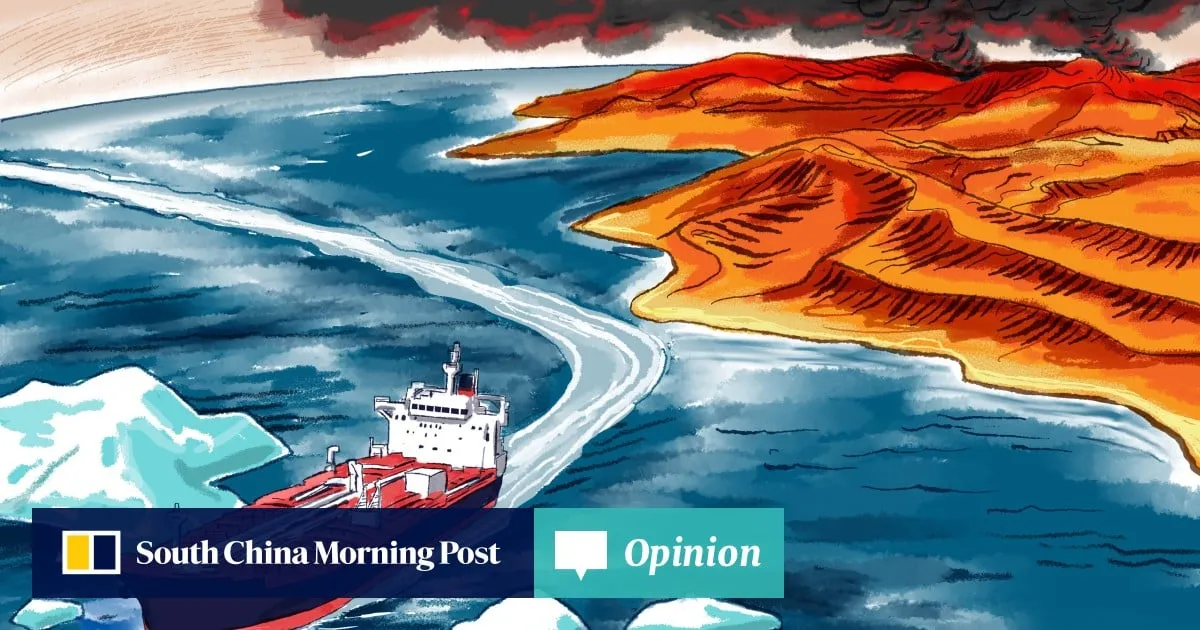
Gulf exporters are scrambling to bypass the Strait of Hormuz after Iran choked off most of the maritime traffic in one of the world’s most critical energy corridors. Saudi Arabia and the United Arab Emirates rushed to divert exports through overland pipelines; officials warned that even naval escorts could not guarantee safe passage. About a fifth of the world’s oil and liquefied natural gas (LNG) trade passed through this narrow waterway.The immediate shock was felt in the Gulf. The strategic aftershock is being felt much farther north.That shift is visible in Alaska. The US-backed Alaska-lng" class="entity-link entity-organization" data-entity-id="62315" data-entity-type="organization">Alaska LNG project now aims to finalise investment decisions on the pipeline this year and on the export terminal early next year, with first exports by 2031. With planned capacity of 20 million tonnes a year and preliminary commitments covering about 13 million tonnes, the project is gaining fresh momentum. Importantly, Alaska offers something Gulf suppliers cannot: direct access to North Asia without passing through Hormuz.That matters, especially for Japan, South Korea and other Asian importers. JERA, Japan’s largest power generator, has said Alaska offers proximity to Asian demand centres and access to long-stranded large gas reserves, helping to support regional LNG supply security. Alaska-lng" class="entity-link entity-organization" data-entity-id="62315" data-entity-type="organization">Alaska LNG, in other words, is no longer just a commercial proposition. With instability in the Middle East, it is increasingly being reframed as an energy security asset.But the Arctic windfall is not confined to the United States. Russia’s Arctic LNG, though sanctioned, has not been pushed out of the market altogether; part of it is continuing to shift towards Asian buyers. If the US is gaining from the security premium attached to a newly revalued project, Russia’s Arctic resources are also mattering more as a means of sustaining exports and economic resilience under pressure.As the world places greater weight on resource security and shipping routes, the importance of Russia’s Arctic assets may increase – even as that importance remains constrained by sanctions and external pressure.
SRCSouth China Morning Post
LANGEN
LEANCenter-Right
WORDS324
ENT12
TUE · 2026-03-24 · 21:30 GMTBRIEF NSR-2026-0324-33653
NSR-2026-0324-33653Analysis·EN·Economic Impact
Conflict in the Middle East is boosting the value of the Arctic windfall
Disruptions in Middle Eastern energy exports, specifically through the Strait of Hormuz, are increasing the strategic value of Arctic energy projects. With Gulf exporters seeking alternative routes, the US-backed Alaska LNG project is gaining momentum due to its direct access to North Asian markets, aiming for first exports by 2031.
Nong HongSouth China Morning PostFiled 2026-03-24 · 21:30 GMTLean · Center-RightRead · 2 min
South China Morning PostFIG 01
Reading time
2min
Word count
324words
Sources cited
1cited
Entities identified
12entities
Quality score
100%
§ 01
Briefing Summary
AI-generatedNEWSAR · AI
Disruptions in Middle Eastern energy exports, specifically through the Strait of Hormuz, are increasing the strategic value of Arctic energy projects. With Gulf exporters seeking alternative routes, the US-backed Alaska LNG project is gaining momentum due to its direct access to North Asian markets, aiming for first exports by 2031. Japan, South Korea, and other Asian importers view Alaska LNG as a means to enhance regional energy security. Simultaneously, despite sanctions, Russia's Arctic LNG continues to supply Asian buyers. The global emphasis on secure resource access and shipping routes is elevating the significance of Arctic energy resources for both the US and Russia.
Confidence 0.90Sources 1Claims 5Entities 12
§ 02
Article analysis
Model · rule-basedFraming
Economic Impact
National Security
Tone
Measured
AI-assessed
CalmNeutralAlarmist
Factuality
0.70 / 1.00
Factual
LowHigh
Sources cited
1
Limited
FewMany
§ 03
Key claims
5 extracted01
JERA, Japan’s largest power generator, has said Alaska offers proximity to Asian demand centres.
quoteJERA
Confidence
0.90
02
About a fifth of the world’s oil and liquefied natural gas (LNG) trade passed through this narrow waterway.
statisticnull
Confidence
0.90
03
Gulf exporters are scrambling to bypass the Strait of Hormuz after Iran choked off most maritime traffic.
factualnull
Confidence
0.90
04
Russia’s Arctic LNG, though sanctioned, has not been pushed out of the market altogether.
factualnull
Confidence
0.80
05
The US-backed Alaska LNG project now aims to finalise investment decisions and first exports by 2031.
factualnull
Confidence
0.80
§ 04
Full report
2 min read · 324 words§ 05
Entities
12 identifiedKey playerOppositionContextPositiveNeutralNegative
Organizations2
§ 06
Keywords & salience
10 termsenergy security
0.90
arctic lng
0.80
strait of hormuz
0.80
lng exports
0.70
middle east conflict
0.70
alaska lng
0.70
shipping routes
0.60
resource security
0.60
asian importers
0.50
economic resilience
0.40
§ 07
Topic connections
Interactive graph Network visualization showing 51 related topics
View Full Graph Person Organization Location Event|Click node to navigate|Edge numbers = shared articles