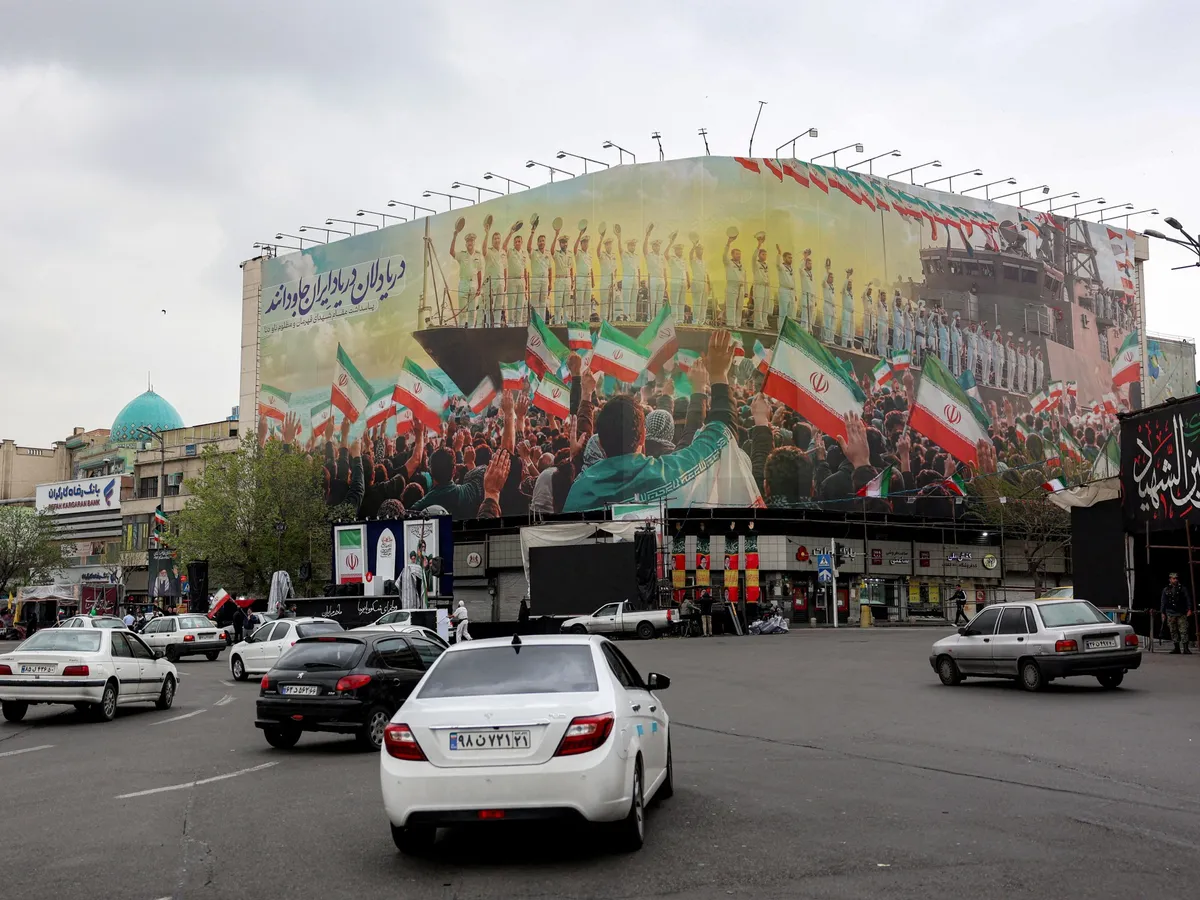
BREAKING, A view of Enghelab Square in central Tehran on March 25, 2026 [AFP]Published On 25 Mar 2026A high-ranking diplomatic source has confirmed that Iran received a 15-point plan from the United States aimed at ending the US-Israeli war on the country.But the source told Al Jazeera on Wednesday that Tehran described the US proposal as “extremely maximalist and unreasonable”.“It is not beautiful even on paper,” the source added, calling the plan deceptive and misleading in its presentation.The comments come as US President Donald Trump has claimed – despite Iranian denials – that negotiations are under way between Washington and Tehran to reach an agreement to end the nearly one-month conflict.The source explained that Iran has a clear understanding of what conditions it requires for a ceasefire and what it will reject.The source also stated that there have been no direct Iran-United States talks since the war began – however, messages have been exchanged through a number of mediators.The response from Iran came hours after sources confirmed to Al Jazeera that Pakistan had shared the US’ ceasefire demands with Iran.Mediators are pushing for possible in-person talks between the Iranians and the Americans, as early as Friday in Pakistan, Egyptian and Pakistani officials said on Wednesday.Egypt’s Foreign Minister Badr Abdelatty, meanwhile, said Cairo was ready to host any meetings related to Iran as long as it serves de-escalation.Abdelatty said in a news conference that Egypt supported Trump’s initiative to negotiate with Iran.On Iran’s response to the US plan, he said “we have to continue our efforts, it’s all about diplomacy and negotiations”.According to Al Jazeera’s Osama Bin Javaid, Pakistan is in a unique position as a mediator because it has a Shia minority, and relatively good ties with Iran including cross-border trade.It also has a defence agreement with Saudi Arabia, and a Sunni majority that is closely aligned with the Gulf states, he said. Pakistan’s military leader also has a relationship with Trump, Javaid added.“So, all of this puts Pakistan in a unique position to act between these two sides: it has no US bases on its soil, so Iran cannot accuse it of being used by the United States, and it is a state that has historically tried to mend relations between these actors,” he said.Turkiye has also been been trying to position itself as a possible mediator, with Harun Armagan, a vice chairman for foreign affairs in Turkiye’s ruling AK Party, telling the Reuters news agency that Ankara has been “playing a role passing messages” between Tehran and Washington.Iran counters with own conditions to end warIranian state television’s English-language broadcaster, Press TV, quoted an anonymous official also stating that Iran rejected the US ceasefire proposal.“Iran will end the war when it decides to do so and when its own conditions are met,” Press TV quoted the official as saying.The official offered Iran’s own five-point plan, which included a halt to killings of its officials, means to make sure no other war is waged against it, reparations for the war, the end of hostilities and Iran’s “exercise of sovereignty over the Strait of Hormuz”.Earlier, two officials from Pakistan described the 15-point US proposal broadly, saying it addressed sanctions relief, a rollback of Iran’s nuclear program, limits on missiles and reopening the Strait of Hormuz, through which a fifth of the world’s oil is shipped.An Egyptian official involved in the mediation efforts said the proposal also includes restrictions on Iran’s support for armed groups.Israeli officials, who have been advocating for Trump to continue the war against Iran, were surprised by the submission of a ceasefire plan, the Associated Press news agency reported, citing an anonymous source.Iran remains highly suspicious of the United States, which twice under the Trump administration has attacked during high-level diplomatic talks, including with the February 28 strikes that started the current war.Iran’s rejection of the US proposal came as Israel launched air attacks on Tehran and Washington deployed paratroopers and more Marines to the region.Iran, meanwhile, launched more attacks on Israel and Gulf Arab countries, including an assault that sparked a huge fire at Kuwait International Airport.
SRCAl Jazeera
LANGEN
LEANCenter
WORDS680
ENT12
WED · 2026-03-25 · 15:11 GMTBRIEF NSR-2026-0325-35256
NSR-2026-0325-35256News Report·EN·Diplomatic
Iran calls US proposal to end war ‘maximalist, unreasonable’
According to a high-ranking diplomatic source, Iran has rejected a 15-point ceasefire proposal from the United States aimed at ending the ongoing US-Israeli war on Iran, deeming it "maximalist and unreasonable." Despite Iranian denials, US President Trump claims negotiations are underway. No direct talks have occurred between Iran and the US since the war began, but messages have been exchanged through mediators.
By Reuters and The Associated PressAl JazeeraFiled 2026-03-25 · 15:11 GMTLean · CenterRead · 3 min
Al JazeeraFIG 01
Reading time
3min
Word count
680words
Sources cited
8cited
Entities identified
12entities
Quality score
100%
§ 01
Briefing Summary
AI-generatedNEWSAR · AI
According to a high-ranking diplomatic source, Iran has rejected a 15-point ceasefire proposal from the United States aimed at ending the ongoing US-Israeli war on Iran, deeming it "maximalist and unreasonable." Despite Iranian denials, US President Trump claims negotiations are underway. No direct talks have occurred between Iran and the US since the war began, but messages have been exchanged through mediators. Pakistan, which shared the US demands with Iran, and Turkiye are attempting to mediate, with potential in-person talks possibly taking place in Pakistan. Egypt has also offered to host meetings related to Iran to de-escalate the conflict and supports Trump's initiative to negotiate with Iran.
Confidence 0.90Sources 8Claims 5Entities 12
§ 02
Article analysis
Model · rule-basedFraming
Diplomatic
Conflict
Tone
Measured
AI-assessed
CalmNeutralAlarmist
Factuality
0.70 / 1.00
Factual
LowHigh
Sources cited
8
Well sourced
FewMany
§ 03
Key claims
5 extracted01
US President Donald Trump has claimed negotiations are under way between Washington and Tehran.
factualUS President Donald Trump
Confidence
1.00
02
Tehran described the US proposal as “extremely maximalist and unreasonable”.
quotehigh-ranking diplomatic source
Confidence
1.00
03
There have been no direct Iran-United States talks since the war began.
factualhigh-ranking diplomatic source
Confidence
0.90
04
Iran received a 15-point plan from the United States aimed at ending the US-Israeli war on the country.
factualhigh-ranking diplomatic source
Confidence
0.90
05
Pakistan shared the US’ ceasefire demands with Iran.
factualsources
Confidence
0.80
§ 04
Full report
3 min read · 680 words§ 05
Entities
12 identifiedKey playerOppositionContextPositiveNeutralNegative
People4
Organizations1
§ 06
Keywords & salience
9 termsus-iran conflict
0.90
iran
0.90
united states
0.80
peace proposal
0.80
negotiations
0.70
ceasefire
0.60
mediators
0.60
pakistan
0.50
diplomacy
0.50
§ 07
Topic connections
Interactive graph Network visualization showing 51 related topics
View Full Graph Person Organization Location Event|Click node to navigate|Edge numbers = shared articles