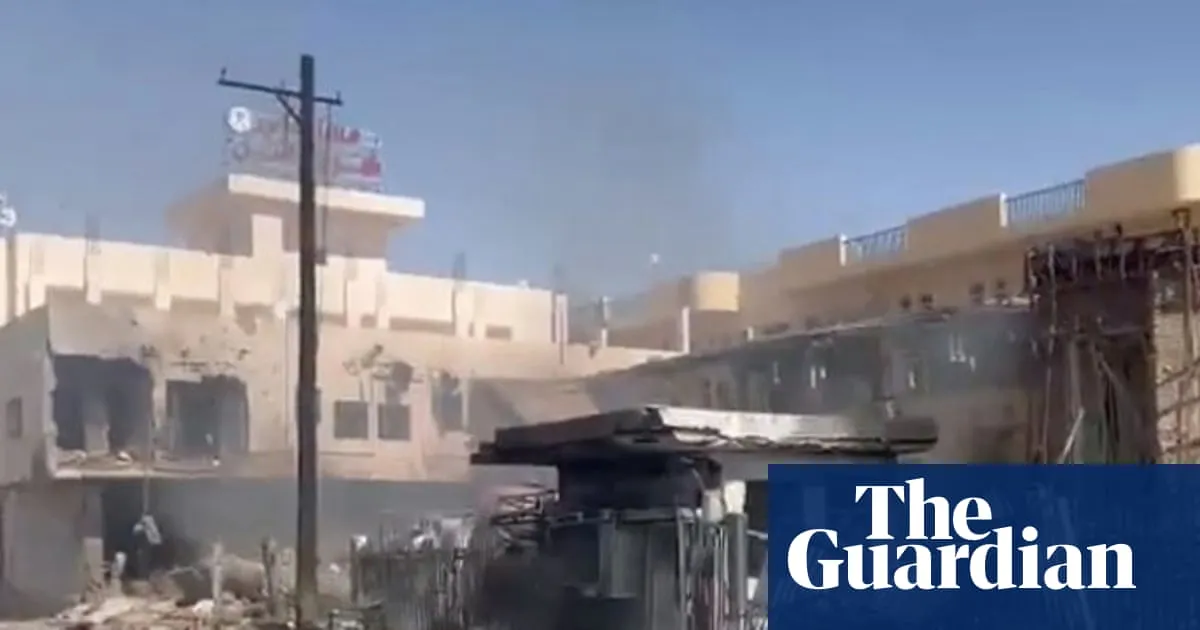
A total stop to hostilities in the Middle East is needed to halt a “health crisis unfolding in real time”, the World Health Organization’s chief in the region has said.Hospitals and other healthcare facilities must be treated as “safe havens”, urged Dr Hanan Balkhy, the WHO’s regional director for the Eastern Mediterranean.She said officials were updating guidance and preparing in case of any impact on nuclear sites, and that attacks on water desalination plants would be “a disaster”.The region’s 22 countries and territories include Iran and the Gulf states, as well as Gaza, Sudan, Afghanistan and Pakistan.“The situation has been quite difficult for some time, but what we’re seeing today is just an actual regional health crisis unfolding in real time in multiple parts of this region,” Balkhy told the Guardian. “It’s not just about lives being lost. It’s about a collapse of access [to healthcare] in many, many dimensions way above and beyond what we would have imagined.”The US-Israel war on Iran has killed more than 1,000 people in Lebanon, over 1,500 in Iran and 16 in Israel, according to each country’s authorities, with more than a dozen deaths reported in the West Bank and Gulf Arab states.People with chronic illnesses were seeing treatment disrupted by hospital closures and “the uprooting and displacement of people where, within less than one month, 3.2 million have been displaced from their homes in Iran and more than 1 million in Lebanon”, Balkhy said.The harms of conflicts across the region, she said, would be long-term even after open hostilities ceased. She said she was concerned about the effects on maternal mortality and mental health, as well as children left orphaned and without education.Dr Hanan Balkhy said preparations were being made in case of attacks on nuclear sites and desalination plants. Photograph: WHOBalkhy said she was also “very, very worried” about the potential for nuclear sites to be hit, whether deliberately or accidentally, and the health repercussions of a lack of water should desalination plants be further targeted.She was speaking before Iran’s Atomic Energy Organization reported a projectile hitting the grounds of the Bushehr nuclear power plant on Tuesday night. The same facility was reportedly hit on 17 March.“My worry is driving me to prepare and to have my teams prepare. And that’s what we’re doing,” she said.Asked about Iran’s threat to destroy desalination facilities, she said “it would be a disaster”, potentially leaving vast numbers of people in Gulf countries trapped without water.The WHO is working with other UN agencies “to try to find ways to potentially mitigate such catastrophe if it does happen”. Balkhy said rainwater could also carry contamination from attacks on oil sites or nuclear facilities into underground water sources.“So even if there was any hope of other types of water sources, it can become contaminated,” she said. “We are seeing this unfolding in a very dangerous way and the only solution for us at this moment is for a significant de-escalation or a pause – and hopefully a permanent pause – in this escalation of the war.”Even if there was conflict, she urged: “Let’s secure the healthcare sector. Let’s not attack hospitals, health workers, and healthcare facilities and patients. Let’s have at least a safe haven for them.”The WHO has verified dozens of attacks on healthcare in Lebanon, Iran and Israel since the US-Iran war began.And last week an attack on El-Daein teaching hospital in East Darfur, Sudan, led to the deaths of at least 70 people, including 13 children, two nurses and a doctor, leaving the hospital nonfunctional.Balkhy said that, in the past, people in countries at war “would go and hide in the hospitals because they were sure it would not be bombed. That’s not the case any more. So I think we need to focus a lot on how do we bring back the compliance with the international humanitarian law on securing healthcare.”Meanwhile, she said the crises in Gaza, Sudan and Yemen were being neglected as the world’s attention turned to the US-Iran conflict. “It is very distressing because, behind that neglect, there’s a lot of hardship and death and sickness and illness and displacement that is going unrecognised.”
SRCThe Guardian - World News
LANGEN
LEANCenter-Left
WORDS693
ENT12
THU · 2026-03-26 · 05:00 GMTBRIEF NSR-2026-0326-36122
NSR-2026-0326-36122News Report·EN·Public Health
WHO warns of health crisis ‘unfolding in real time’ across Middle East
The World Health Organization (WHO) is warning of a rapidly escalating health crisis across the Middle East due to ongoing conflicts. Dr.
Kat Lay Global health correspondentThe Guardian - World NewsFiled 2026-03-26 · 05:00 GMTLean · Center-LeftRead · 3 min
The Guardian - World NewsFIG 01
Reading time
3min
Word count
693words
Sources cited
1cited
Entities identified
12entities
Quality score
100%
§ 01
Briefing Summary
AI-generatedNEWSAR · AI
The World Health Organization (WHO) is warning of a rapidly escalating health crisis across the Middle East due to ongoing conflicts. Dr. Hanan Balkhy, WHO's regional director, emphasized the urgent need for a cessation of hostilities to prevent further collapse of healthcare access. Millions have been displaced in Iran and Lebanon, disrupting treatment for chronic illnesses and raising concerns about maternal mortality, mental health, and orphaned children. The WHO is preparing for potential impacts on nuclear sites and the catastrophic consequences of attacks on water desalination plants, especially after a projectile hit near Iran's Bushehr nuclear power plant. Balkhy stressed the long-term health consequences of the conflicts, even after fighting stops, impacting the region's 22 countries and territories.
Confidence 0.90Sources 1Claims 5Entities 12
§ 02
Article analysis
Model · rule-basedFraming
Public Health
Conflict
Tone
Mixed Tone
AI-assessed
CalmNeutralAlarmist
Factuality
0.70 / 1.00
Factual
LowHigh
Sources cited
1
Limited
FewMany
§ 03
Key claims
5 extracted01
Attacks on water desalination plants would be “a disaster”.
quoteDr Hanan Balkhy, WHO
Confidence
1.00
02
3.2 million have been displaced from their homes in Iran and more than 1 million in Lebanon.
statisticDr Hanan Balkhy, WHO
Confidence
1.00
03
A total stop to hostilities in the Middle East is needed to halt a “health crisis unfolding in real time”.
quoteDr Hanan Balkhy, WHO
Confidence
1.00
04
The US-Israel war on Iran has killed more than 1,000 people in Lebanon, over 1,500 in Iran and 16 in Israel.
statisticeach country’s authorities
Confidence
0.90
05
Rainwater could carry contamination from attacks on oil sites or nuclear facilities into underground water sources.
factualDr Hanan Balkhy, WHO
Confidence
0.80
§ 04
Full report
3 min read · 693 words§ 05
Entities
12 identifiedKey playerOppositionContextPositiveNeutralNegative
Organizations1
§ 06
Keywords & salience
9 termshealth crisis
0.90
middle east
0.80
healthcare facilities
0.70
regional health crisis
0.70
nuclear sites
0.60
desalination plants
0.60
displacement
0.50
who
0.50
maternal mortality
0.40
§ 07
Topic connections
Interactive graph No topic relationship data available yet. This graph will appear once topic relationships have been computed.