Six Arab nations have issued a joint condemnation, holding Baghdad responsible for cross-border attacks by armed factions.Popular Mobilisation Forces men chant slogans against the ISIL (ISIS) in Tikrit, March 30, 2015. Iraqi forces continued their offensive against ISIL on the outskirts of Tikrit 11 years later, in an operation slowed by bombs and booby traps [Alaa Al-Marjani/Reuters]Published On 30 Mar 2026In the shadow of the ongoing United States-Israel war on Iran, the deserts of Iraq have transformed into a staging ground for a secondary conflict. Drones and missiles launched by Iran-aligned armed groups routinely tear through the night sky towards the Arabian Peninsula, turning Iraqi soil into a launchpad while the government in Baghdad struggles to intervene.This escalating barrage has triggered an unprecedented diplomatic crisis, severely testing Iraq’s painstakingly rebuilt ties with its Arab neighbours. On Wednesday, Saudi Arabia, the United Arab Emirates, Qatar, Kuwait, Bahrain and Jordan issued a strongly worded joint statement condemning the attacks on Gulf infrastructure.The six nations described the cross-border strikes as a blatant violation of national sovereignty and international law. They specifically cited United Nations Security Council Resolution 2817, which mandates that Iran immediately halt all attacks on neighbouring countries. Holding the Iraqi government directly responsible for controlling the armed groups operating within its borders, the Arab states asserted their right to self-defence under Article 51 of the UN Charter.Facing mounting regional isolation, the Iraqi Ministry of Foreign Affairs responded on Thursday, stating that the security of Arab countries is “an integral part” of Iraq’s national security.Baghdad categorically rejected the use of its territory to target Gulf states or Jordan, adding that it is taking necessary measures “in accordance with the constitution and the law”. In a calculated diplomatic manoeuvre, the government expressed its “full readiness” to receive any information or evidence regarding the attacks to address them “responsibly and swiftly”.Calculated shadow warDespite Baghdad’s assurances, analysts warn that the government’s inability to rein in these factions on the ground is steadily eroding its sovereignty.Majed al-Qaisi, a retired Iraqi major-general, said groups operating under the umbrella of the Iraq" class="entity-link entity-organization" data-entity-id="42834" data-entity-type="organization">Islamic Resistance in Iraq are launching between 21 and 31 operations daily against targets across the Gulf and Jordan.Al-Qaisi noted that the groups have carried out more than 454 cumulative operations since the US-Israel war on Iran started on February 28, creating a front of psychological and economic attrition against Gulf defences. He observed that Baghdad’s official response appeared aimed more at addressing diplomatic embarrassment than as a proactive security measure.Since the outbreak of the war, Tehran has maintained that it is only targeting US bases in the region. However, Gulf nations have pointed to repeated attacks by Iran against their civilian infrastructure, including energy facilities, industrial plants and hotels. Experts argue that Iran is also deliberately using Iraqi groups to bypass international resolutions and avoid direct legal responsibility.Khaled al-Jaber, director of the Middle East Council on Global Affairs in Doha, Qatar, explained that the transition from direct Iranian state strikes to proxy attacks represents a deliberate twist in the conflict.“Iran is not withdrawing from the confrontation; rather, it is redistributing it through tools that are less politically costly,” al-Jaber said. He noted that this strategy allows actors to strike from the shadows, keeps adversaries hesitant due to blurred lines of responsibility, and tests the limits of Gulf restraint by steadily raising the cost of their patience.Cost of compromised sovereigntyFor Iraq, the inability to prevent its territory from being used to attack its neighbours is exacting a heavy domestic and diplomatic toll.Ahmed Abdel Mohsen al-Mulaifi, a former Kuwaiti minister and member of parliament, argued that a state hosting armed groups operating outside the law cannot be considered fully sovereign. He warned that Tehran’s reliance on proxies in Iraq, Lebanon and Yemen is a deliberate tactic to relieve pressure on itself, effectively using Arab states as shields in its geopolitical struggle.Al-Mulaifi cautioned that if US President Donald Trump follows through on threats of a ground invasion of Iran, Tehran could activate its Iraqi proxies to open dangerous new land fronts across the Kuwaiti and Saudi borders.As more projectiles light up the Iraqi night sky bound for neighbouring capitals, the diplomatic statements from Baghdad ring increasingly hollow against the reality on the ground. Iraq now faces a narrowing window to reclaim its sovereignty before the patience of its Arab neighbours is exhausted entirely.
SRCAl Jazeera
LANGEN
LEANCenter
WORDS724
ENT12
MON · 2026-03-30 · 09:57 GMTBRIEF NSR-2026-0330-43162
NSR-2026-0330-43162News Report·EN·Diplomatic
Iraq risks Arab ties as Iran-aligned groups strike Gulf nations
Iraq's relations with Arab nations are strained due to attacks launched from Iraqi soil by Iran-aligned armed groups targeting Gulf infrastructure. Six Arab nations, including Saudi Arabia and the UAE, issued a joint condemnation, holding Iraq responsible for failing to control these groups and citing violations of sovereignty and international law.
Al Jazeera StaffAl JazeeraFiled 2026-03-30 · 09:57 GMTLean · CenterRead · 3 min
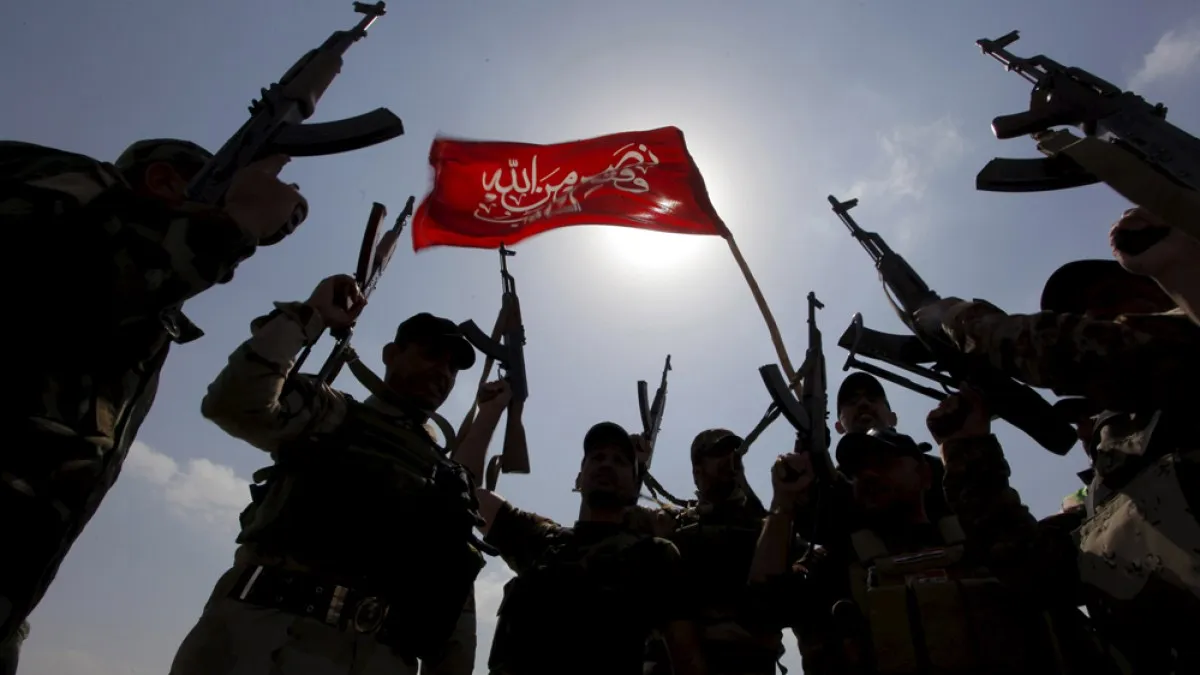
Al JazeeraFIG 01
Reading time
3min
Word count
724words
Sources cited
1cited
Entities identified
12entities
Quality score
100%
§ 01
Briefing Summary
AI-generatedNEWSAR · AI
Iraq's relations with Arab nations are strained due to attacks launched from Iraqi soil by Iran-aligned armed groups targeting Gulf infrastructure. Six Arab nations, including Saudi Arabia and the UAE, issued a joint condemnation, holding Iraq responsible for failing to control these groups and citing violations of sovereignty and international law. They referenced UN Security Council Resolution 2817 and asserted their right to self-defense. Iraq's Foreign Ministry responded by affirming the importance of Arab security and denying the use of its territory for attacks, offering to investigate any evidence. Analysts suggest Iraq's inability to control these factions is undermining its sovereignty.
Confidence 0.90Sources 1Claims 5Entities 12
§ 02
Article analysis
Model · rule-basedFraming
Diplomatic
National Security
Tone
Mixed Tone
AI-assessed
CalmNeutralAlarmist
Factuality
0.70 / 1.00
Factual
LowHigh
Sources cited
1
Limited
FewMany
§ 03
Key claims
5 extracted01
Iraq categorically rejected the use of its territory to target Gulf states or Jordan.
factualArticle (reporting the Iraqi Ministry of Foreign Affairs)
Confidence
1.00
02
The six nations described the cross-border strikes as a blatant violation of national sovereignty and international law.
quoteArticle (reporting the statement of the six nations)
Confidence
1.00
03
Six Arab nations issued a joint condemnation, holding Baghdad responsible for cross-border attacks.
factualArticle
Confidence
1.00
04
The groups have carried out more than 454 cumulative operations since the US-Israel war on Iran started.
statisticMajed al-Qaisi, a retired Iraqi major-general
Confidence
0.80
05
Groups operating under the Islamic Resistance in Iraq are launching between 21 and 31 operations daily.
statisticMajed al-Qaisi, a retired Iraqi major-general
Confidence
0.80
§ 04
Full report
3 min read · 724 words§ 05
Entities
12 identifiedKey playerOppositionContextPositiveNeutralNegative
People1
Organizations2
§ 06
Keywords & salience
10 termsiraq
1.00
iran-aligned groups
0.90
cross-border attacks
0.80
arab ties
0.80
gulf nations
0.70
diplomatic crisis
0.60
national sovereignty
0.60
united nations
0.50
regional isolation
0.50
islamic resistance in iraq
0.40
§ 07
Topic connections
Interactive graph Network visualization showing 51 related topics
View Full Graph Person Organization Location Event|Click node to navigate|Edge numbers = shared articles