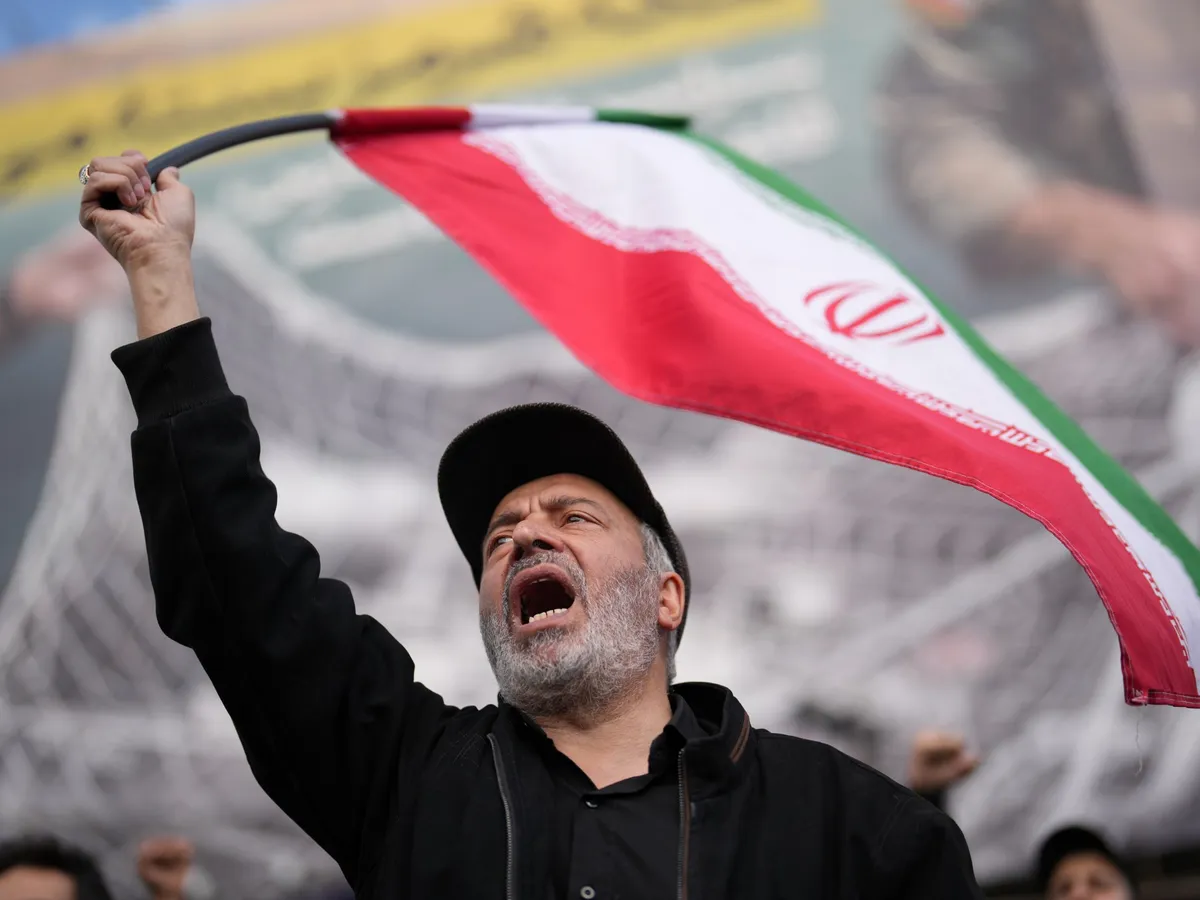
Countries in the region welcome the temporary truce and urge negotiations for the war’s permanent end.A government supporter chants slogans during a gathering after the announcement of a two-week ceasefire with the United States and Israel in Tehran, Iran [Francisco Seco/AP]Published On 8 Apr 2026Iran and the United States have agreed to a two-week ceasefire and allow safe transit through the Strait of Hormuz.The warring sides agreed to suspend attacks as the war entered its 40th day, with hopes now pinned on a peace deal through talks set to begin in Pakistan on Friday.Recommended Stories list of 4 itemslist 1 of 4World welcomes US-Iran ceasefire, urges lasting peace in the Middle Eastlist 2 of 4Netanyahu says US-Iran ceasefire ‘does not include Lebanon’list 3 of 4US politicians react to Trump’s Iran ceasefire with caution, relieflist 4 of 4US ceasefire allows negotiations on Iran’s ‘workable’ 10-point planend of listThe truce in the early hours of Wednesday came after US President Donald Trump said he would suspend attacks, subject to Tehran agreeing to fully reopen the crucial Strait of Hormuz, through which 20 percent of global oil flows.Iran’s foreign ministry said a safe passage through the vital waterway will be possible for a period of two weeks through coordination with the country’s armed forces.Meanwhile, celebrations rang across Iran following the announcement and many world leaders welcomed the development.The weeks-long fighting had embroiled nearly the entire Middle East. Iran launched retaliatory attacks by claiming to target US assets in Gulf Cooperation Council (GCC) countries. Gulf states alleged the Iranian attacks targeted civilian infrastructure as well.Lebanon was also drawn into the war on March 2 after Tehran-aligned Hezbollah launched attacks on Israel. Israel has backed the two-week ceasefire with Iran, but has said it does not include Lebanon, despite Pakistan first announcing that the truce does.Against this backdrop, here is how the Gulf and other Middle Eastern nations are reacting to the ceasefire announcement:Saudi ArabiaThe kingdom’s foreign ministry said it “welcomes” the ceasefire announcement. It urged an end to attacks on countries in the region and said that the Strait of Hormuz should be opened.Saudi Arabia also hopes the ceasefire will “lead to a comprehensive sustainable pacification”, the foreign ministry said in a statement.KuwaitKuwait’s foreign ministry said it hopes the ceasefire will lead to a “comprehensive and permanent settlement.”As one of the nations that has been most impacted by Iranian attacks, the country called for adhering to the ceasefire to pave the way for dialogue between the warring parties, according to the state-run Kuwait News Agency.QatarThe country’s foreign ministry welcomed the ceasefire, considering it an “initial step toward de-escalation” and calling for “building upon it urgently to prevent the expansion of tensions in the region”.The ministry expressed desire for the “full adherence to the ceasefire announcement” and for Iran to “immediately cease all hostile acts”.“The Ministry also stresses the importance of ensuring the security of maritime passages and the freedom of international navigation and trade in accordance with the rules of international law, contributing to the preservation of regional stability and global supply chains,” it said in a statement.United Arab EmiratesAnwar Gargash, the diplomatic adviser to the UAE President, said the “UAE triumphed in a war we sincerely sought to avoid”.“We prevailed through an epic national defense that safeguarded sovereignty and dignity and protected our achievements in the face of treacherous aggression,” Gragash said in a post on X.“Today, we move forward to manage a complex regional landscape with greater leverage, sharper insight, and a more solid capacity to influence and shape the future”, he added, hailing “the UAE’s renaissance model”.LebanonLebanese President Joseph Aoun welcomed the truce, saying he hoped his country would be included in it.Aoun said Beirut “continued efforts to ensure that the regional peace includes Lebanon in a stable and lasting manner”, according a statement from the presidency.Hezbollah legislator Ibrahim Al-Moussawi, meanwhile, has warned of a response from Iran and its allies if Israel “does not adhere to a ceasefire.”“The agreement includes Lebanon, according to its terms, and Iran insisted on this inclusion,” Al-Moussawi told local television channel Al-Jadeed.Israeli strikes have continued to hit the country on Wednesday.OmanOman’s foreign ministry said in a statement published on X that it welcomes the announcement of a ceasefire between Iran and the US and appreciates “the efforts of Pakistan and all parties calling for an end to the war”.“We affirm the importance of intensifying efforts now to find solutions that can end the crisis from its roots and achieve a permanent cessation of the state of war and hostilities in the region,” the ministry said.IraqIraq’s foreign ministry said it “welcomes” the ceasefire but called for “serious and sustainable dialogue” between the US and Iran.The ministry “calls for building upon this positive step by launching serious and sustainable dialogue tracks that address the root causes of the disputes and strengthen mutual trust,” it said on X.Iraq has been drawn into the US-Israeli war on Iran, with Tehran-backed armed groups and US forces trading fire in an escalating cycle of violence.EgyptThe Egyptian foreign ministry said the ceasefire “represents a very important opportunity that must be seized to make room for negotiations, diplomacy, and constructive dialogue”.The ministry said in a statement on Facebook that a truce must be built upon with a full commitment to “stopping military operations and respecting freedom of international navigation”.The post also said that Egypt will continue efforts with Pakistan and Turkiye “to promote security and stability in the region”, and that the talks between the US and Iran “must take into account the legitimate security concerns” of Gulf nations.TurkiyeTurkiye welcomed a ceasefire in the Iran war and said it would support negotiations set to take place in Islamabad, the Turkish foreign ministry said on Wednesday.It stressed the need for the ceasefire to be fully implemented on the ground and said all parties must adhere to the agreement.SudanSudan said the two-week ceasefire was “a positive step towards de-escalation”.“This step represents a positive move toward de-escalation and supporting diplomacy to achieve peace and stability in the region,” the Transitional Sovereignty Council said in a statement.HamasA senior Hamas official hailed the ceasefire as a “significant step” in curbing the US hegemony in the Middle East.“The ceasefire … is undoubtedly a significant step toward diminishing American hegemony in the region and paves the way for the imminent demise of the illegitimate entity,” said Bassem Naim, a Hamas political bureau member, referring to Israel.“The will of the free peoples, ready to pay the price for freedom and independence, has triumphed. Congratulations to the people and leadership of Iran, and our condolences to all the martyrs,” he said in a statement.
SRCAl Jazeera
LANGEN
LEANCenter
WORDS1 102
ENT12
WED · 2026-04-08 · 08:24 GMTBRIEF NSR-2026-0408-58077
NSR-2026-0408-58077News Report·EN·Diplomatic
GCC, other Middle East nations react to Iran-US ceasefire announcement
Following 40 days of conflict, Iran and the United States have agreed to a two-week ceasefire, with talks scheduled to begin in Pakistan. The agreement involves Iran reopening the Strait of Hormuz for safe passage, a crucial waterway for global oil flow.
Al Jazeera StaffAl JazeeraFiled 2026-04-08 · 08:24 GMTLean · CenterRead · 5 min
Al JazeeraFIG 01
Reading time
5min
Word count
1 102words
Sources cited
6cited
Entities identified
12entities
Quality score
100%
§ 01
Briefing Summary
AI-generatedNEWSAR · AI
Following 40 days of conflict, Iran and the United States have agreed to a two-week ceasefire, with talks scheduled to begin in Pakistan. The agreement involves Iran reopening the Strait of Hormuz for safe passage, a crucial waterway for global oil flow. The ceasefire was welcomed by countries in the Middle East, including Saudi Arabia and Kuwait, who expressed hope for a lasting peace. The Gulf states urged an end to attacks in the region and the full opening of the Strait of Hormuz. While Israel supports the ceasefire with Iran, it maintains that the agreement does not extend to Lebanon, despite initial reports to the contrary. The conflict had drawn in much of the Middle East, including attacks on Gulf Cooperation Council countries and involvement of Hezbollah in Lebanon.
Confidence 0.90Sources 6Claims 5Entities 12
§ 02
Article analysis
Model · rule-basedFraming
Diplomatic
Conflict
Tone
Measured
AI-assessed
CalmNeutralAlarmist
Factuality
0.80 / 1.00
Factual
LowHigh
Sources cited
6
Well sourced
FewMany
§ 03
Key claims
5 extracted01
Saudi Arabia “welcomes” the ceasefire announcement.
quoteSaudi Arabia's foreign ministry
Confidence
1.00
02
Israel has backed the two-week ceasefire with Iran, but has said it does not include Lebanon.
factual
Confidence
1.00
03
US President Donald Trump said he would suspend attacks, subject to Tehran agreeing to fully reopen the crucial Strait of Hormuz.
quoteDonald Trump
Confidence
1.00
04
Talks are set to begin in Pakistan on Friday.
factual
Confidence
1.00
05
Iran and the United States have agreed to a two-week ceasefire and allow safe transit through the Strait of Hormuz.
factual
Confidence
1.00
§ 04
Full report
5 min read · 1 102 words§ 05
Entities
12 identifiedKey playerOppositionContextPositiveNeutralNegative
Organizations2
§ 06
Keywords & salience
10 termsceasefire
1.00
united states
0.90
iran
0.90
middle east
0.80
strait of hormuz
0.70
peace deal
0.60
negotiations
0.60
saudi arabia
0.50
gcc
0.50
hezbollah
0.40
§ 07
Topic connections
Interactive graph Network visualization showing 51 related topics
View Full Graph Person Organization Location Event|Click node to navigate|Edge numbers = shared articles