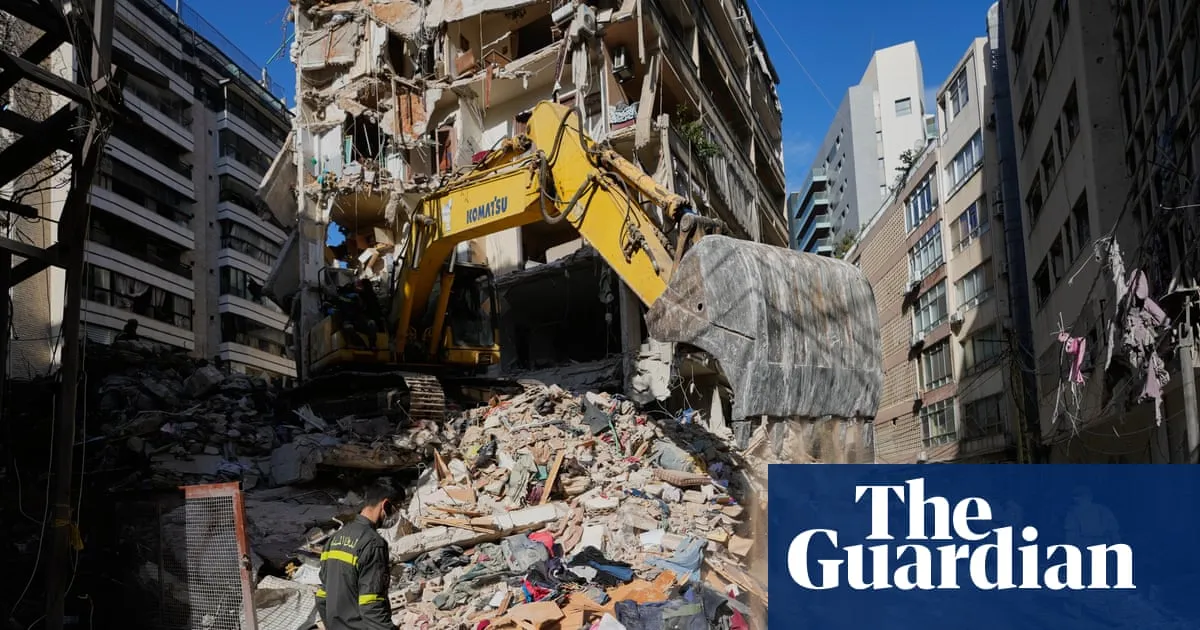
The wave of attacks on Lebanon arrived without warning and initially hit more than 100 targets in 10 minutes, including central Beirut. Photograph: Hussein Malla/APThe wave of attacks on Lebanon arrived without warning and initially hit more than 100 targets in 10 minutes, including central Beirut. Photograph: Hussein Malla/AP Senior international correspondentWhat was the point of Israel’s surprise mass strikes on Lebanon that killed more than 300 people and drew widespread international condemnation?Prime minister Benjamin Netanyahu and other officials have claimed the largest strike against Hezbollah during the month-long war against Iran was carefully aimed at members of the armed group, but the attacks appeared to be as much a piece of violent spectacle to benefit Netanyahu as militarily useful.Others have speculated that the attack – without warning and initially hitting more than 100 targets in 10 minutes including in densely populated residential areas in central Beirut – was aimed at undermining the US-Iran ceasefire that many see as being imposed on an unhappy Netanyahu.The version being briefed in the Israeli media is that Hezbollah had sought to move command posts to civilian areas outside its historical centres, such as the sprawling Dahieh suburb, to better conceal and protect them – a claim Israel has previously made about Hamas in Gaza.But the huge scale of the attack, combined with the lack of the warning and the details of some of those killed – including the Hezbollah secretary general Naim Qassem’s nephew and personal adviser Ali Yusuf Harshi – could point to something more ambitious: a failed attempt to kill Qassem himself. His predecessor, Hassan Nasrallah, was assassinated by Israel in 2024.What is clear is that in the half-baked ceasefire negotiations conducted by Donald Trump and his coterie of amateur diplomats, the question of Israel’s war in Lebanon against a proxy of Tehran has – deliberately or not – been left ticking like a timebomb.9:39Will deadly Israeli attacks in Lebanon shatter US-Iran ceasefire? | The LatestThe Israeli strikes came despite the fact that Hezbollah had said it had been “notified of a ceasefire” and had been “committed to it since this morning”, according to Lebanese political sources.By Thursday, Hezbollah and Israel were trading heavy fire again.Netanyahu’s justification for such a horrific attack on civilian centres hours after the ceasefire had been announced appeared thin at least. His boasts about killing an aide to Qassem and his insistence of Israel’s right to continuing striking in Lebanon suggested to some that it was an attempt to act as a spoiler in a ceasefire he had argued against.Netanyahu’s insistence of Israel’s right to continue striking Lebanon suggested the attacks were aimed at spoiling the ceasefire he had argued against. Photograph: Ronen Zvulun/ReutersInstead, Israeli officials – despite believing that the wider ceasefire may collapse – appear to believe that they have at least two weeks to continue operations in Lebanon as talks between Iran and the US are due to continue.The irony not lost on observers is that it is Israel’s continued fighting that could collapse a deal, with senior Iranian figures warning of a response against Israel on Thursday. The president, Masoud Pezeshkian, said the Israeli strikes on Lebanon violated the ceasefire agreement and would render negotiations meaningless.The Soufan Center thinktank in New York said: “Even if Lebanon was formally outside the deal, the scale of Israel’s strikes was likely to be viewed as escalatory, nonetheless. Israel’s strikes can be understood both as an effort to drive a wedge between Iran and its proxies and as a response to being allegedly sidelined in the original ceasefire discussions.”Israeli officials appear to believe they have at least two weeks to continue attacking Lebanon while talks between Iran and the US continue. Photograph: Mahmoud Zayyat/AFP/Getty ImagesIn its newsletter, the thinktank added: “The Wall Street Journal reported that Israel was informed of the deal only at the last minute and ‘wasn’t happy’. Netanyahu now seems determined to pursue a scorched earth policy in Lebanon, even if – or perhaps especially because – it might scuttle the ceasefire deal.“At the same time, Iran is likely seeking to exploit and widen any existing tensions between the United States and Israel in an effort to divide the two allies.”For Marion Messmer, the director of the international security programme at Chatham House, Israel’s strikes on Lebanon point to a deeper issue: Washington’s difficulty in managing its relationship with Israel, its ally in the war against Iran.In a briefing, Messmer wrote: “Israel’s insistence that its military action in Lebanon is not part of the agreement reveals a key vulnerability and shows the limits of the US ability to manage its allies: the ongoing bombing campaigns in Lebanon could undermine the ceasefire overall and keep the US trapped in a conflict it is now seeking to exit.“After weeks of President Trump being furious with European allies for not sufficiently supporting the US, it now appears to be the alliance relationship with Israel that provides more of a risk to US interests in the Middle East.”Underlining questions about the purpose and timing of Wednesday’s strikes are claims that the Israel Defense Forces’ own assessment is that – despite Israel’s latest invasion into southern Lebanon and its bombing campaign – disarming or defeating Hezbollah is unrealistic.
SRCThe Guardian - World News
LANGEN
LEANCenter-Left
WORDS870
ENT11
THU · 2026-04-09 · 13:27 GMTBRIEF NSR-2026-0409-60385
NSR-2026-0409-60385Analysis·EN·Political Strategy
Did Israel attack Lebanon to spoil Iran war ceasefire as soon as it began?
Following the announcement of a US-Iran ceasefire, Israel launched a surprise wave of attacks on Lebanon, hitting over 100 targets in 10 minutes, including Beirut. The strikes killed over 300 people, drawing international condemnation.
Peter Beaumont Senior international correspondentThe Guardian - World NewsFiled 2026-04-09 · 13:27 GMTLean · Center-LeftRead · 4 min
The Guardian - World NewsFIG 01
Reading time
4min
Word count
870words
Sources cited
4cited
Entities identified
11entities
Quality score
100%
§ 01
Briefing Summary
AI-generatedNEWSAR · AI
Following the announcement of a US-Iran ceasefire, Israel launched a surprise wave of attacks on Lebanon, hitting over 100 targets in 10 minutes, including Beirut. The strikes killed over 300 people, drawing international condemnation. While Prime Minister Netanyahu claimed the attacks targeted Hezbollah members, some speculate the strikes aimed to undermine the US-Iran ceasefire, which Netanyahu reportedly opposed. Another theory suggests Israel attempted to assassinate Hezbollah secretary general Naim Qassem. Despite Hezbollah's claim of adhering to the ceasefire, heavy fire resumed between Hezbollah and Israel, raising concerns about the stability of the newly established agreement.
Confidence 0.90Sources 4Claims 5Entities 11
§ 02
Article analysis
Model · rule-basedFraming
Political Strategy
Conflict
Tone
Mixed Tone
AI-assessed
CalmNeutralAlarmist
Factuality
0.40 / 1.00
Mixed
LowHigh
Sources cited
4
Well sourced
FewMany
§ 03
Key claims
5 extracted01
Hezbollah had said it had been “notified of a ceasefire” and had been “committed to it since this morning”.
quoteLebanese political sources
Confidence
0.90
02
The attacks initially hit more than 100 targets in 10 minutes, including central Beirut.
factualArticle
Confidence
0.90
03
Israel's surprise mass strikes on Lebanon killed more than 300 people and drew widespread international condemnation.
factualArticle
Confidence
0.90
04
Netanyahu claimed the strike against Hezbollah was carefully aimed at members of the armed group.
factualBenjamin Netanyahu
Confidence
0.80
05
Hassan Nasrallah was assassinated by Israel in 2024.
factualArticle
Confidence
0.70
§ 04
Full report
4 min read · 870 words§ 05
Entities
11 identifiedKey playerOppositionContextPositiveNeutralNegative
People4
§ 06
Keywords & salience
10 termsisrael
1.00
lebanon
0.90
attacks
0.80
ceasefire
0.80
iran
0.70
hezbollah
0.70
war
0.60
netanyahu
0.60
strikes
0.50
civilian areas
0.40
§ 07