58 minutes agoJeremy BowenInternational editorBBCThe best hope for the ceasefire talks in Pakistan is that both the United States and Iran have strong reasons to call a halt to the war. The biggest obstacle to their success is a total absence of trust, no discernible common ground and the fact that Israel, America's full partner in the war, has hugely escalated its onslaught on Lebanon.US President Donald Trump is already speaking about the war in the past tense. He has declared victory and needs an exit. Not only does he have a state visit from King Charles in the diary for later this month, followed by a summit with China's President Xi Jinping in May, there are midterm elections in November. With America's summer holiday season looming, Trump also needs petrol prices to fall back to where they were before he went to war. Royal visits, summits and elections do not mix well with wars.EPA/ShutterstockBeirut has been devastated by continuing Israeli airstrikes Iran's regime has its own reasons to end the war. It is as defiant as ever, still able to launch missiles and drones, with its social media warriors pouring out AI videos lampooning Donald Trump. But Iran has suffered massive damage. Cities have come to an economic standstill and the regime needs time to regroup and will try to use the talks in Pakistan to strengthen its position.The Pakistani intermediaries who will be shuttling between the two delegations have a tough job on their hands. The declared positions of the two sides are as far apart as it is possible to be.Trump has a 15-point plan that has not been published but leaked versions make it sound more like a surrender document than a basis for negotiation. Iran's 10-point plan contains a list of demands that America has consistently rejected in the past.Creating a more durable ceasefire will require some kind of agreement to at least keep talking about the two sides' contradictory lists of intractable issues.It would be hard enough to work through them in peacetime.In wartime, without any kind of mutual trust, even a form of words that keeps the ceasefire going irrespective of there being no agreement on wider issues will look positive. No agreement at all points towards the road back to war.The newest, and most urgent problem they face concerns reopening the Strait of Hormuz, the narrow exit from the Gulf. Keeping it closed gives Iran a chokehold on the world economy.Reopening the waterway that was used by hundreds of ships a day until the US and Israel attacked Iran has become the central issue in the negotiation. The millions of civilians in the Middle East who have been caught up in this conflict hope this negotiation will be the war's endgame.No victory paradeThe Americans did not expect to be spending early April sitting down to ceasefire talks when, alongside Israel on 28 February, they ignited the war with huge strikes that killed among many others Iran's supreme leader, his wife and other members of their family.Trump was expecting a quick victory, an Iranian version of the US military's stunning kidnap of the Venezuelan leader Nicolas Maduro and his wife in January. Both are on trial in New York on narco-terrorism charges, and the US has installed his former deputy in the presidential palace. Hopes – expectations – that killing Iran's supreme leader, Ayatollah Ali Khamanei, in the war's first wave of airstrikes would lead to the collapse of the regime were wildly misplaced. His son Mojtaba has not been seen since he was appointed as his successor. There is speculation that he was badly hurt in the attack that killed his parents, as well as reportedly his sister, his wife and one of his sons. With or without the active participation of the new supreme leader, Iran's regime has demonstrated depths of resilience that took Trump by surprise.ReutersMojtaba Khamenei has not been seen since being appointed Iran's supreme leaderNow Donald Trump's representatives, led by his Vice-President JD Vance, must negotiate with adversaries that they claim, incorrectly, to have defeated. "A capital V military victory", as US Defence Secretary Pete Hegseth put it.The Hormuz factorThe war that the US and Israel ignited is already reshuffling Middle Eastern geopolitics. As the longer-term consequences of the war reveal themselves, that process will deepen. The US and Israel have done immense damage to Iran's armed forces as well as its military and civilian infrastructure. However, while the Iranian regime may be battered, it's also intact. Regime change is not happening. Iran can still launch missiles and drones. That means that despite loud claims, the US and Israel have not translated tactical victories into strategic advances.Iran, on the other hand, has shown that the closing of the Strait of Hormuz gives it a strategic edge that Donald Trump either dismissed or did not understand when he listened to Israeli Prime Minister Benjamin Netanyahu's arguments for going to war with Iran.ReutersBenjamin Netanyahu has aggressively pursued his aimsIt should not have been a surprise that Iran blocked the Strait when it was attacked. Iran has threatened to do so in the past, and disrupted oil shipments there during the war with Iraq in the first years of the Islamic Republic in the 1980s. For decades, wargaming the impact of a closure has been a standard part of planning in ministries of foreign affairs and defence in all the countries that depend on shipping routed through the Strait, including the US, but that did not stop Trump's rush into what currently looks like an ill-advised war.Until the US and Israel attacked Iran, ships carrying 20% of the world's oil and gas transited the Strait every day. They also carried other vital byproducts of petrochemical industries that go into agricultural fertiliser and high-tech products including semiconductors. In an integrated global economy, the impact of blocking the Strait is amplified, perhaps more than even Iran's leaders expected.The ability to stop shipping using one of the world's most important trading arteries is a potent weapon that Iran wants to turn into a long-term strategic gain. Alongside demands for the closure of US bases in the region, for reparations for war damage, a return to the enrichment of uranium and the lifting of sanctions, Iran wants to institutionalise its control of the Strait.Doing a deal on the Strait will be every bit as difficult as discussing Iran's nuclear capacities. Iran's nuclear programme was intended to produce more options to deter enemies, whether or not they took the step of turning enriched uranium into a bomb. It turns out that closing the Strait of Hormuz is way cheaper, potentially devastating to the economies of neighbours and enemies, and much easier to implement.During the two-week ceasefire already agreed, Iran is insisting that any ship that wants to transit the Strait of Hormuz will need the permission of Iran's armed forces, or it will be attacked and destroyed.It has charged some of the few vessels that have been allowed through millions of dollars in tolls. If that continues it would be able to raise billions, a prospect that horrifies Gulf Arab states.To double the challenges for the world economy, the Houthis, Iran's ally in Yemen, showed during the Gaza war that they can use their firepower to block Bab al-Mandab, the narrow strait at the southern end of the Red Sea. The Saudis are pumping oil that would normally be exported through the Gulf and the Strait of Hormuz through a pipeline to their Red Sea ports, where it can be shipped to Asia. That would stop if the Houthis blocked the exit south through Bab al-Mandab.ReutersAnti-US sentiment in Iran has not abated since the start of the war Ayatollah Ali Khamenei, the supreme leader killed by Israel at the start of the war, mixed hardline suspicion of America, Israel and the west with a reputation for caution. The younger men, mostly from the Islamic Revolutionary Guard Corps who are now in charge, share his views but not necessarily his instinct to wait and see.Mere survival equals victory for them, which is a claim that the regime's mouthpieces have trumpeted loudly. Now, they might also have a chance to rebuild what they lost in the war.Netanyahu's ambitionIsrael's Benjamin Netanyahu also had a reputation for caution, despite years of aggressive rhetoric – until the Hamas attacks on 7 October 2023. Now he has embraced a doctrine of war. He has repeatedly promised Israelis he is using their undoubted power and ingenuity to reshape the Middle East in a way that will strengthen their country. Netanyahu's aggressive pursuit of his aims has turned Israel into the country that its neighbours see as the single most disruptive force in the region.Destroying Iran's capacity to threaten Israel, directly or through allies and proxies, has been a major preoccupation for Netanyahu throughout his long political life.His desire to continue attacking Iran's Lebanese ally Hezbollah could scupper the ceasefire talks in Pakistan, even if Trump demands a pause in bombing Iran.During the first day of the ceasefire, Israel hit Lebanon with huge airstrikes that killed more than 300 people, according to the health ministry in Beirut.Reuters1.1 million people have been displaced in Lebanon After that, Iran told the Americans that they had a choice – ceasefire or a return to war. The Israeli press reported that Trump asked Netanyahu for restraint. He agreed to Lebanon's request for direct talks, while ordering more airstrikes.Iran and Pakistan say the ceasefire applies to Lebanon. Israel and the US say it does not. The United Kingdom and other worried bystanders with few ways of influencing events, say it should. The confusion surrounding the terms of the talks in Pakistan mirror the confusion of Trump's war aims.ReutersHegseth has declared victory, but the negotiating process will not be easyIsrael says it is targeting Hezbollah. Increasing numbers of Lebanese believe that Israel is in reality targeting Lebanon, as it now occupies a broad band of territory in the south of the country. It has forced thousands of people from homes that in some cases it is destroying, just as it turned much of Gaza to rubble.The long-term consequences of the war will reverberate across the Middle East and beyond. The wealthy Arab monarchies of the Gulf have spent years and billions on turning themselves into global hubs for business, tourism and air travel. A few weeks of Iranian attacks have done lasting damage to that strategy for modernisation and development. They are also reassessing their alliances with the US. They will not break with Washington – they need the Americans too much – but they are looking to diversify their future security. The old model of getting as close as possible to the US has not worked.China is watching closely, so is Russia as Trump once again threatens Nato allies he claims were not there when America needed them.China pushed the Iranians to agree to a ceasefire and is likely to keep pushing to keep them talking. It relies on Middle Eastern oil – Iran has let its own tankers heading to China through the Strait of Hormuz – but will also be ready to exploit any gaps left by Trump's haphazard foreign policy.And what about the people of Iran? They are cut off behind an internet blackout, after weeks of airstrikes, death and fear, whatever their views of the regime. On 28 February, Trump and Netanyahu promised the regime's opponents a chance to take back their country. That has been forgotten.More from InDepthUntil just before the ceasefire, Trump had veered from promises of protection for the regime's opponents to bombing all Iranians back to the "Stone Age".Now the only certainty they have about the future is that it will be hard, and that the regime that has controlled their lives for almost half a century is entrenched, angry and as determined as it has ever been to crush any challenge to its power and Iran's Islamic system.BBC InDepth is the home on the website and app for the best analysis, with fresh perspectives that challenge assumptions and deep reporting on the biggest issues of the day. Emma Barnett and John Simpson bring their pick of the most thought-provoking deep reads and analysis, every Saturday. here
SRCBBC News - World
LANGEN
LEANCenter
WORDS2 036
ENT10
THU · 2026-04-09 · 23:01 GMTBRIEF NSR-2026-0410-61082
NSR-2026-0410-61082Analysis·EN·Diplomatic
Ceasefire or no ceasefire, the Middle East's reshuffling is not yet done
Ceasefire talks between the U.S. and Iran are planned in Pakistan, mediated by Pakistani officials, but face significant obstacles due to a lack of trust and conflicting demands.
BBC News - WorldFiled 2026-04-09 · 23:01 GMTLean · CenterRead · 9 min
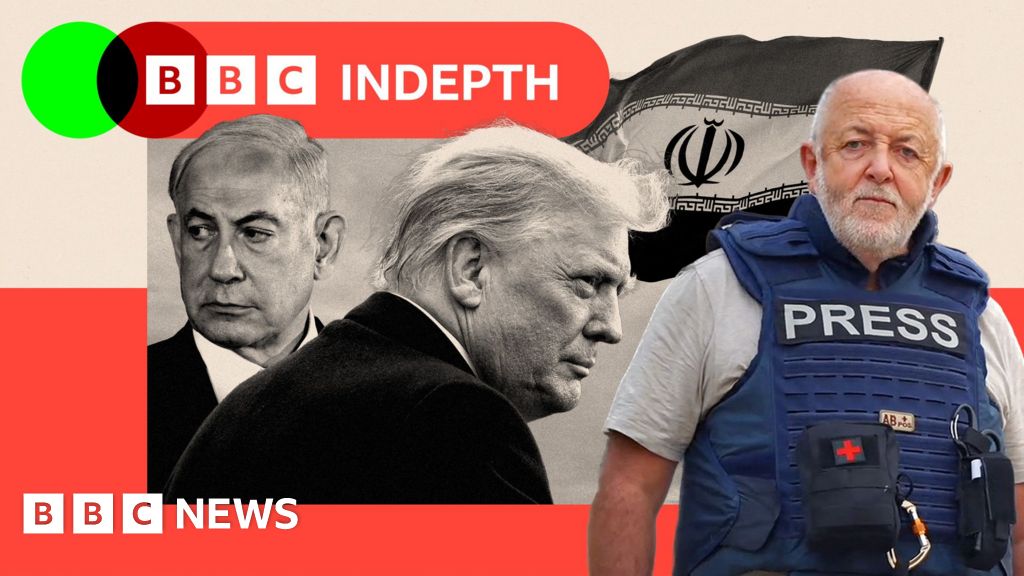
BBC News - WorldFIG 01
Reading time
9min
Word count
2 036words
Sources cited
0cited
Entities identified
10entities
Quality score
100%
§ 01
Briefing Summary
AI-generatedNEWSAR · AI
Ceasefire talks between the U.S. and Iran are planned in Pakistan, mediated by Pakistani officials, but face significant obstacles due to a lack of trust and conflicting demands. The U.S., under President Trump, seeks an exit from the war due to upcoming events like a state visit, a summit, and midterm elections. Iran, despite its defiance, has suffered substantial damage and needs to regroup. Key issues include Trump's 15-point plan, perceived as a surrender document, and Iran's 10-point plan, containing previously rejected demands. A critical immediate concern is reopening the Strait of Hormuz, which Iran's closure of is impacting the global economy. The success of the talks hinges on finding common ground to maintain the ceasefire and prevent a return to war.
Confidence 0.90Claims 5Entities 10
§ 02
Article analysis
Model · rule-basedFraming
Diplomatic
Political Strategy
Tone
Measured
AI-assessed
CalmNeutralAlarmist
Factuality
0.60 / 1.00
Mixed
LowHigh
Sources cited
0
No named sources
FewMany
§ 03
Key claims
5 extracted01
Iran's 10-point plan contains a list of demands that America has consistently rejected in the past.
factual
Confidence
0.90
02
Trump has a 15-point plan that has not been published.
factual
Confidence
0.90
03
Reopening the Strait of Hormuz has become the central issue in the negotiation.
factual
Confidence
0.80
04
Israel has hugely escalated its onslaught on Lebanon.
factual
Confidence
0.80
05
The US and Iran have strong reasons to call a halt to the war.
prediction
Confidence
0.70
§ 04
Full report
9 min read · 2 036 words§ 05
Entities
10 identifiedKey playerOppositionContextPositiveNeutralNegative
People3
§ 06
Keywords & salience
10 termsceasefire
1.00
middle east
0.90
iran
0.80
united states
0.80
war
0.70
strait of hormuz
0.60
negotiation
0.60
trump
0.50
economic standstill
0.50
israel
0.40
§ 07
Topic connections
Interactive graph Network visualization showing 51 related topics
View Full Graph Person Organization Location Event|Click node to navigate|Edge numbers = shared articles