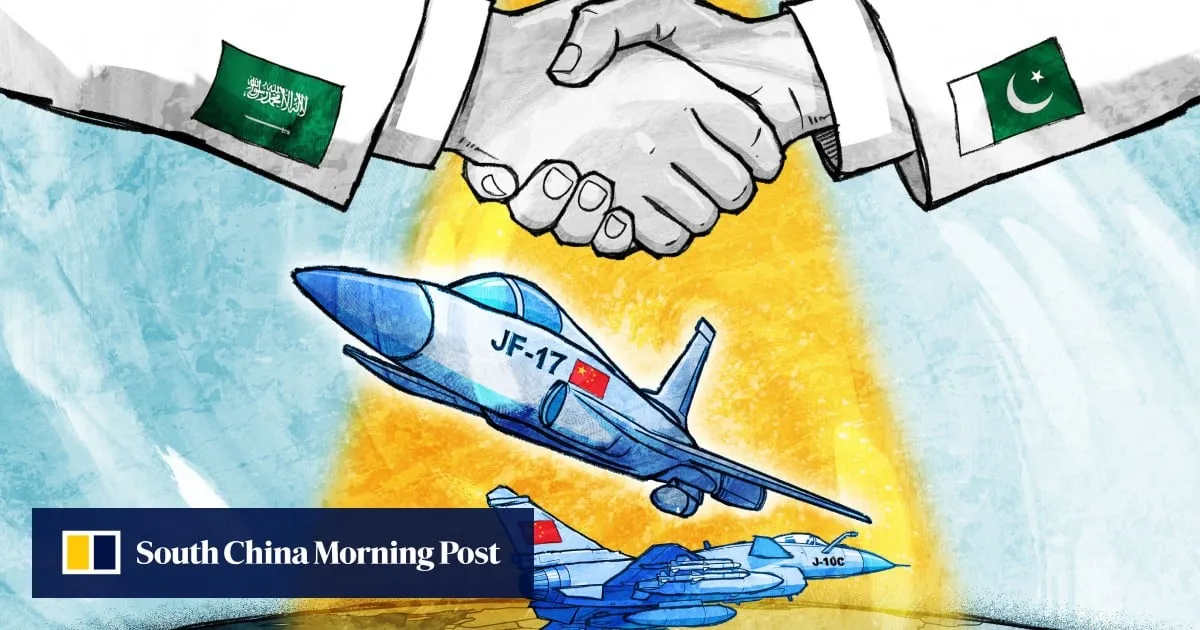
For most military powers, proving the success of one’s technology in real combat almost always requires undertaking the grave risks of war and human casualties.In the case of the People’s Liberation Army, Beijing continues to exercise great caution about joining any armed conflict, and the past few decades have brought astounding progress yet an extremely limited combat footprint for its weaponry.As tensions around Iran persist, Pakistan, whose imported weapons mostly come from China, has raised its stature in Middle Eastern security, playing a mediating role between Washington and Tehran while establishing its military presence in Saudi Arabia.Analysts said Islamabad’s higher profile in the Iran conflict could also boost Chinese weapons systems, giving them “exposure without risks” following Pakistan’s recent deployment of fighter jets in Saudi Arabia.Pakistan has operationalised the JF-17 Block III, the most advanced variant of the fighter series. Photo: HandoutOn April 11, Saudi Arabia’s defence ministry announced the arrival of Pakistan’s military at King Abdulaziz Air Base in the kingdom’s eastern province, as part of the Strategic Mutual Defence Agreement (SMDA) signed between the “two brotherly countries”.
SRCSouth China Morning Post
LANGEN
LEANCenter-Right
WORDS179
ENT10
TUE · 2026-05-05 · 14:00 GMTBRIEF NSR-2026-0505-73940
NSR-2026-0505-73940Analysis·EN·Conflict
Will Pakistan’s new defence pact with Saudi Arabia give Chinese arms risk-free exposure?
Pakistan has deployed fighter jets to Saudi Arabia's King Abdulaziz Air Base as part of a new Strategic Mutual Defence Agreement. This deployment, announced on April 11th, marks a significant step in Pakistan's increased regional security role, particularly amid ongoing tensions with Iran.
Seong Hyeon ChoiSouth China Morning PostFiled 2026-05-05 · 14:00 GMTLean · Center-RightRead · 1 min
South China Morning PostFIG 01
Reading time
1min
Word count
179words
Sources cited
1cited
Entities identified
10entities
Quality score
100%
§ 01
Briefing Summary
AI-generatedNEWSAR · AI
Pakistan has deployed fighter jets to Saudi Arabia's King Abdulaziz Air Base as part of a new Strategic Mutual Defence Agreement. This deployment, announced on April 11th, marks a significant step in Pakistan's increased regional security role, particularly amid ongoing tensions with Iran. Analysts suggest this move could provide Chinese-made weaponry, which Pakistan heavily imports, with valuable combat exposure without direct Chinese involvement in conflict. China's People's Liberation Army has historically been cautious about engaging in armed conflict, limiting real-world testing of its military technology. Pakistan's operationalization of advanced JF-17 Block III fighter jets in Saudi Arabia offers a potential avenue for demonstrating the efficacy of Chinese arms in a strategic regional context.
Confidence 0.90Sources 1Claims 4Entities 10
§ 02
Article analysis
Model · rule-basedFraming
Conflict
Diplomatic
Tone
Measured
AI-assessed
CalmNeutralAlarmist
Factuality
0.60 / 1.00
Mixed
LowHigh
Sources cited
1
Limited
FewMany
§ 03
Key claims
4 extracted01
Saudi Arabia announced the arrival of Pakistan's military on April 11 as part of a Strategic Mutual Defence Agreement.
factualSaudi Arabia's defence ministry
Confidence
1.00
02
Pakistan has operationalised the JF-17 Block III, the most advanced variant of the fighter series.
factual
Confidence
1.00
03
China has made astounding progress in military technology but has an extremely limited combat footprint for its weaponry.
factual
Confidence
0.90
04
Pakistan's deployment of fighter jets in Saudi Arabia could boost Chinese weapons systems, giving them 'exposure without risks'.
quoteAnalysts
Confidence
0.80
§ 04
Full report
1 min read · 179 words§ 05
Entities
10 identifiedKey playerOppositionContextPositiveNeutralNegative
Organizations1
Locations8
§ 06
Keywords & salience
9 termschinese arms
1.00
pakistan defence pact
1.00
saudi arabia
0.90
military presence
0.80
iran conflict
0.70
combat exposure
0.60
jf-17 block iii
0.50
strategic mutual defence agreement
0.50
risk-free exposure
0.40
§ 07
Topic connections
Interactive graph Network visualization showing 51 related topics
View Full Graph Person Organization Location Event|Click node to navigate|Edge numbers = shared articles