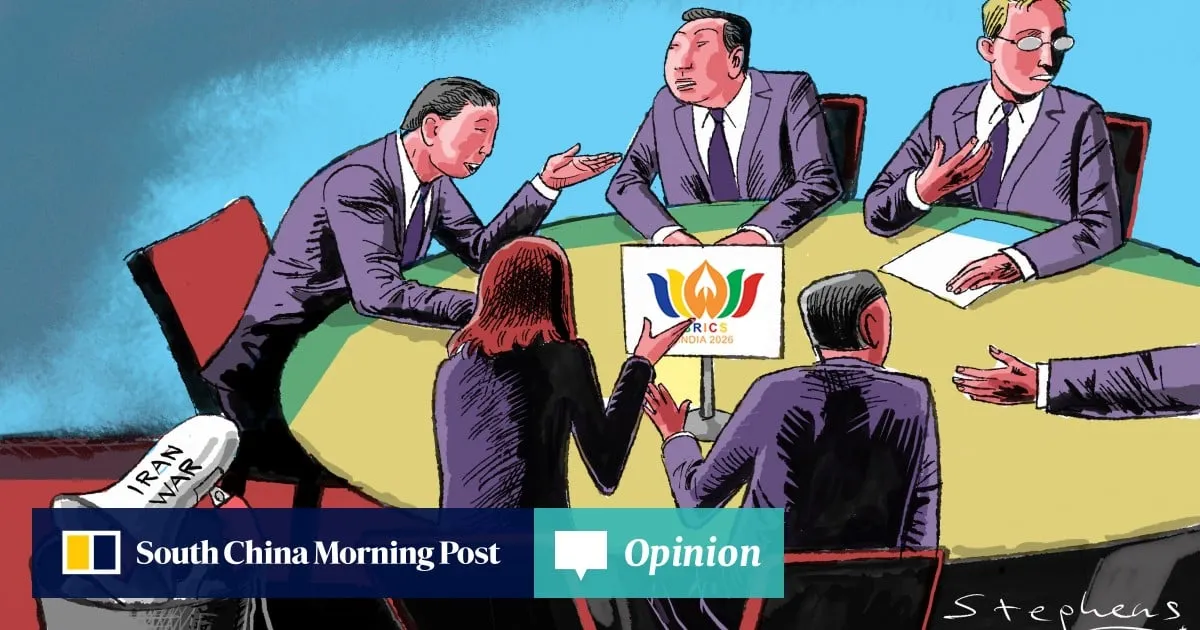
With the war in the Middle East entering its third month, questions have surfaced over its geopolitical ramifications in the region and beyond. An entity that has drawn particular scrutiny is BRICS. The 10-member grouping is defined less by a clear set of common values and more by contingently overlapping interests. It does not and cannot speak with one voice on the conflict.Two BRICS members, Iran and the United Arab Emirates (UAE), are at loggerheads: Tehran has launched missile and drone attacks targeting strategic Emirati sites, including oil facilities in Fujairah, in recent weeks. China has taken a nominally neutral stance on the war, given its robust ties with both Iran and Sunni-majority Arab states, while Russia has been more overt in backing Iran, perhaps with the intention of diverting Western resources from Ukraine.As the BRICS summit chair, India seeks to straddle its deepening strategic ties with Israel and symbolic commitment to the Global South, while ensuring the safety of its diaspora in the Middle East. Its challenges are compounded by the deterioration in relations with the United States under the second Trump administration, and criticism from domestic opposition over the government’s “uncritical silence” on the US-Israel attacks.
SRCSouth China Morning Post
LANGEN
OutletPrivately owned · Hong Kong
WORDS198
ENT12
MON · 2026-05-11 · 21:30 GMTBRIEF NSR-2026-0511-75435
NSR-2026-0511-75435Analysis·EN·Political Strategy
Brics doesn’t need a unified voice on Iran war to have a future
The ongoing Middle East war, now in its third month, has highlighted the diverse and often conflicting interests within the 10-member Brics grouping. Unlike entities with shared values, Brics members have contingently overlapping interests, preventing a unified stance on the conflict.
Brian Y. S. WongSouth China Morning PostFiled 2026-05-11 · 21:30 GMTOutlet · Privately owned · Hong KongRead · 1 min
South China Morning PostFIG 01
Reading time
1min
Word count
198words
Sources cited
0cited
Entities identified
12entities
NEWSAR · AI
The ongoing Middle East war, now in its third month, has highlighted the diverse and often conflicting interests within the 10-member Brics grouping. Unlike entities with shared values, Brics members have contingently overlapping interests, preventing a unified stance on the conflict. For instance, Iran and the UAE, both Brics members, are engaged in hostilities, with Iran targeting Emirati sites. China maintains a neutral position due to its ties with both Iran and Arab states, while Russia appears to support Iran, potentially to divert Western attention from Ukraine. India, as the Brics chair, navigates its strategic ties with Israel, its commitment to the Global South, and the safety of its diaspora, all while facing domestic criticism and strained relations with the United States.
Confidence 0.90Claims 5Entities 12
Framing
Political Strategy
Conflict
Tone
Measured
AI-assessed
CalmNeutralAlarmist
Factuality
0.60 / 1.00
Mixed
LowHigh
Sources cited
0
No named sources
FewMany
01
Two Brics members, Iran and the UAE, are at loggerheads with Iran launching attacks on Emirati sites.
factual
Confidence
0.90
02
India's challenges are compounded by deteriorating relations with the US and domestic criticism.
factual
Confidence
0.80
03
India, as Brics chair, seeks to balance ties with Israel and commitment to the Global South.
factual
Confidence
0.80
04
China has taken a nominally neutral stance on the war, while Russia has backed Iran.
factual
Confidence
0.80
05
Brics is defined less by common values and more by overlapping interests.
factual
Confidence
0.80
§ 04
Full report
1 min read · 198 wordsKey playerOppositionContextPositiveNeutralNegative
Locations9
brics
1.00
middle east war
0.90
geopolitical ramifications
0.80
overlapping interests
0.70
iran
0.60
united arab emirates
0.60
russia
0.50
india
0.50
china
0.50
global south
0.40
§ 07
Connections
Who appears together in the newsIn this articleWider coverageLine weight = articles in common
Laying out network…
Strongest ties articles in common
- 12,267
- 6,988
- 6,840
- 4,854
- 3,926
- 2,491
Recurring context not named in this article
- LTehranlinks 12
- LWashingtonlinks 12
- LPakistanlinks 12
- PDonald Trumplinks 12
- PVladimir Putinlinks 12
- LStrait of Hormuzlinks 12
- OEuropean Unionlinks 12
- LLebanonlinks 12