NEWSAR
Multi-perspective news intelligence
SRCAssociated Press (AP)
LANGEN
LEANCenter
WORDS2 056
ENT12
TUE · 2026-05-12 · 05:53 GMTBRIEF NSR-2026-0512-75486
News/Trump and Xi appear intent on keeping de/Trump and Xi appear intent on keeping deep differences over …
NSR-2026-0512-75486News Report·EN·Diplomatic

Trump and Xi appear intent on keeping deep differences over Iran war from overshadowing China summit

President Donald Trump is traveling to Beijing for a summit with President Xi Jinping, aiming to manage deep disagreements over the ongoing war with Iran. The U.S.
Associated Press (AP)Filed 2026-05-12 · 05:53 GMTLean · CenterRead · 9 min
Trump and Xi appear intent on keeping deep differences over Iran war from overshadowing China summit
Associated Press (AP)FIG 01
Reading time
9min
Word count
2 056words
Sources cited
3cited
Entities identified
12entities
Quality score
100%
§ 01

Briefing Summary

AI-generated
NEWSAR · AI

President Donald Trump is traveling to Beijing for a summit with President Xi Jinping, aiming to manage deep disagreements over the ongoing war with Iran. The U.S. has sought China's leverage to pressure Iran to end the conflict and reopen the Strait of Hormuz, but with limited success. Ahead of the visit, the White House has lowered expectations for a breakthrough on Iran, instead prioritizing progress on other bilateral issues like trade and fentanyl precursor exports. Despite U.S. sanctions on China prior to the trip, Beijing publicly supports ending the war and has engaged in diplomatic efforts. Both nations appear intent on preventing the Iran dispute from derailing broader discussions during the summit.

Confidence 0.90Sources 3Claims 5Entities 12
§ 02

Article analysis

Model · rule-based
Framing
Diplomatic
Political Strategy
Tone
Measured
AI-assessed
CalmNeutralAlarmist
Factuality
0.70 / 1.00
Factual
LowHigh
Sources cited
3
Well sourced
FewMany
§ 03

Key claims

5 extracted
01

China is cautious and risk-averse, not wanting to be involved in issues it doesn't consider its problem.

quoteAhmed Aboudouh
Confidence
1.00
02

U.S. Trade Representative Jamieson Greer stated that the administration does not want differences on Iran to derail broader relationship agreements.

quoteJamieson Greer
Confidence
1.00
03

The U.S. has been trying to persuade China to use its leverage to end the Iran war or reopen the Strait of Hormuz.

factual
Confidence
1.00
04

President Trump is traveling to Beijing to meet with President Xi Jinping to discuss the Iran war and other bilateral issues.

factual
Confidence
1.00
05

The White House has set low expectations for Trump persuading Xi to change China's posture on Iran.

factual
Confidence
0.90
§ 04

Full report

9 min read · 2 056 words
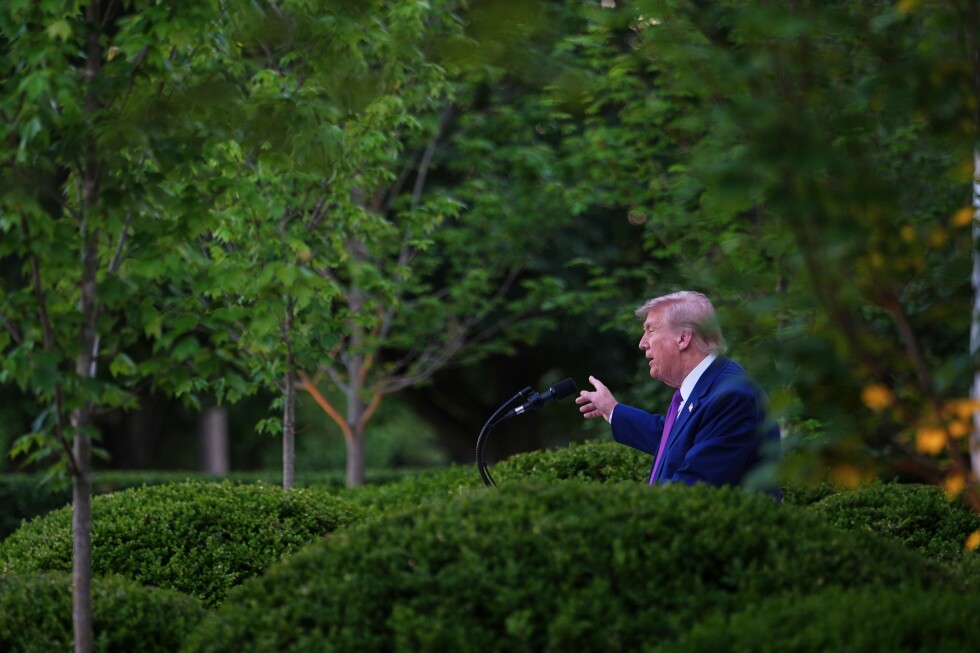
President Donald Trump speaks at a dinner for members of his administration and law enforcement organization leaders, during National Police Week, in the White House Rose Garden, Monday, May 11, 2026, in Washington. (AP Photo/Julia Demaree Nikhinson) 2026-05-12T04:01:06Z WASHINGTON (AP) — President Donald Trump on Tuesday is set to leave for Beijing to meet with President Xi Jinping after weeks of trying, and failing, to persuade the Chinese government to use its considerable leverage to prod Iran to agree to U.S. terms to end the two-month old war — or at the very least, reopen the critical Strait of Hormuz. Trump has veered between venting that China, the world’s biggest buyer of Iranian oil, hasn’t done more to get the Islamic Republic in line, and acknowledging that Xi’s government helped de-escalate the conflict last month by nudging Tehran back to ceasefire talks when negotiations wobbled. But ahead of the U.S. leader’s high-stakes visit, the White House has set low expectations that Trump will be able to persuade Xi to change China’s posture. Instead, the administration seems determined not to let differences on Iran overshadow efforts to make headway on other difficult matters in the complicated relationship — ranging from trade to further Chinese cooperation to block exports of fentanyl precursors. “We don’t want this to be something that derails the broader relationship or the agreements that might come out of our meeting in Beijing,” U.S. Trade Representative Jamieson Greer said on Bloomberg TV last week. freestar.queue.push(function () { window.fsAdCount = window.fsAdCount + 1 || 0; let customChannel = '/dynamic_' + fsAdCount; let adList = document.querySelectorAll(".fs-feed-ad") let thisAd = adList[fsAdCount]; let randId = Math.random().toString(36).slice(2); thisAd.id = randId; let thisPlacement = fsAdCount == 0 ? "apnews_story_feed" : "apnews_story_feed_dynamic"; freestar.newAdSlots({ placementName: thisPlacement, slotId: randId }, customChannel); }); US administration sanctioned China ahead of the trip Beijing publicly insists that it wants to see the war end, and has been working diplomatically behind the scenes to help its ally Pakistan push to broker a peace agreement. It has also sent a “subtle message of discontent to Iran” for closing the Strait of Hormuz, and to the U.S. for its blockade of Iranian shipping, said Ahmed Aboudouh, a specialist on China’s influence in the Middle East with the London-based Chatham House think tank. “They are very cautious, risk-adverse, and they don’t want to be involved in anything that would drag them into something that they don’t consider their problem,” he said. In recent days, Secretary of State Marco Rubio and Treasury Secretary Scott Bessent have stepped up their calls for China to use its influence to help reopen the strait, through which about 20% of the world’s crude flowed before the war began. The State Department announced on Friday that it was sanctioning four entities, including three China-based firms, for providing sensitive satellite imagery that enables Iranian military strikes against U.S. forces in the Middle East. Earlier, the Treasury Department moved to target Chinese oil refineries accused of purchasing oil from Tehran, as well as shippers of the oil. The sanctions cut off the companies from the U.S. financial system and penalize anyone who does business with them. /* Desktop-first: fully collapse by default */ #ap-readmore-embed { display: none; margin: 0; padding: 0; height: 0; min-height: 0; overflow: hidden; text-align: center; position: relative; z-index: 2; } /* Only show on mobile */ @media (max-width: 767px) { #ap-readmore-embed { display: block; margin: 28px 0; height: auto; overflow: visible; } } #ap-readmore-embed .ap-readmore-btn { appearance: none; -webkit-appearance: none; border: 0; background: #000; color: #fff; cursor: pointer; display: inline-flex; align-items: center; justify-content: center; gap: 10px; padding: 14px 22px; border-radius: 999px; font-family: inherit, "AP Sans", -apple-system, BlinkMacSystemFont, "Helvetica Neue", Arial, sans-serif; font-weight: 700; font-size: 16px; letter-spacing: 0.2px; line-height: 1; box-shadow: 0 10px 18px rgba(0,0,0,0.12); transition: transform 120ms ease, box-shadow 120ms ease, opacity 120ms ease; touch-action: manipulation; -webkit-tap-highlight-color: transparent; position: relative; z-index: 3; } #ap-readmore-embed .ap-readmore-btn:hover { transform: translateY(-1px); box-shadow: 0 14px 22px rgba(0,0,0,0.16); } #ap-readmore-embed .ap-readmore-btn:active { transform: translateY(0); box-shadow: 0 10px 18px rgba(0,0,0,0.12); opacity: 0.95; } #ap-readmore-embed .ap-readmore-btn:focus-visible { outline: 3px solid rgba(228, 0, 43, 0.35); outline-offset: 3px; } #ap-readmore-embed .ap-readmore-icon { width: 10px; height: 10px; border-right: 2px solid currentColor; border-bottom: 2px solid currentColor; transform: rotate(45deg); margin-top: -2px; } #ap-readmore-embed .ap-readmore-fade { display: none; height: 48px; margin-top: -48px; pointer-events: none; background: linear-gradient(to bottom, rgba(255,255,255,0), rgba(255,255,255,1)); } Read More (function () { var APRM_EMBED_ID = "ap-readmore-embed"; var APRM_MOBILE_MQ = "(max-width: 767px)"; function APRM_onReady(fn) { if (document.readyState === "loading") { document.addEventListener("DOMContentLoaded", fn); } else { fn(); } } APRM_onReady(function () { var APRM_embedEl = document.getElementById(APRM_EMBED_ID); if (!APRM_embedEl) return; // 🚨 DESKTOP: remove entire module wrapper and bail early if (!window.matchMedia(APRM_MOBILE_MQ).matches) { var APRM_rootModule = APRM_embedEl.closest(".HTMLModuleEnhancement") || APRM_embedEl.closest(".HtmlModule"); if (APRM_rootModule && APRM_rootModule.parentNode) { APRM_rootModule.parentNode.removeChild(APRM_rootModule); } else if (APRM_embedEl.parentNode) { APRM_embedEl.parentNode.removeChild(APRM_embedEl); } return; // stop the rest of the script from running } }); })(); (function () { var EMBED_ID = "ap-readmore-embed"; var BTN_ID = "apReadMoreBtn"; var FADE_ID = "apReadMoreFade"; var STOP_SELECTOR = ".Page-below"; var SIGN_IN_GATE_SELECTOR = ".sign-in-gate-content"; var HIDDEN_ATTR = "data-ap-readmore-hidden"; var MOBILE_MQ = "(max-width: 767px)"; function ready(fn) { if (document.readyState === "loading") { document.addEventListener("DOMContentLoaded", fn); } else { fn(); } } function isElementNode(n) { return n && n.nodeType === 1; } function cancelEvent(e) { if (!e) return; if (typeof e.preventDefault === "function") e.preventDefault(); if (typeof e.stopPropagation === "function") e.stopPropagation(); if (typeof e.stopImmediatePropagation === "function") e.stopImmediatePropagation(); e.cancelBubble = true; e.returnValue = false; } function collapseDesktopEmbed(embed) { if (!embed) return true; if (!window.matchMedia(MOBILE_MQ).matches) { var maybeWrappers = [ embed.parentElement, embed.closest(".html-embed"), embed.closest("[data-type='htmlembed']"), embed.closest("[class*='embed']"), embed.closest("[class*='Embed']") ].filter(Boolean); embed.style.display = "none"; embed.style.margin = "0"; embed.style.padding = "0"; embed.style.height = "0"; embed.style.minHeight = "0"; embed.style.overflow = "hidden"; maybeWrappers.forEach(function (el) { el.style.margin = "0"; el.style.padding = "0"; el.style.height = "0"; el.style.minHeight = "0"; el.style.overflow = "hidden"; }); if (embed.parentNode) { embed.parentNode.removeChild(embed); } return true; } return false; } ready(function () { var embed = document.getElementById(EMBED_ID); var btn = document.getElementById(BTN_ID); var fade = document.getElementById(FADE_ID); if (!embed || !btn) return; if (collapseDesktopEmbed(embed)) return; var signInGate = document.querySelector(SIGN_IN_GATE_SELECTOR); if (signInGate) { embed.innerHTML = ""; return; } // — Analytics: impression when embed enters viewport — if ("IntersectionObserver" in window) { var io = new IntersectionObserver(function (entries, observer) { if (entries[0].isIntersecting) { window.dataLayer = window.dataLayer || []; window.dataLayer.push({ event: "ap_readmore_impression" }); observer.disconnect(); } }, { threshold: 0 }); io.observe(btn); } var stopEl = document.querySelector(STOP_SELECTOR); if (!stopEl) return; var rootCandidates = [ embed.closest(".Page"), embed.closest("article"), embed.closest("main"), document.body ].filter(Boolean); var root = rootCandidates.find(function (c) { return c.contains(stopEl); }) || document.body; var all = root.getElementsByTagName("*"); var hidden = []; for (var i = 0; i Beijing has called the sanctions “illegal unilateral pressure” and enacted a blocking statute — passed in 2021 and never used until now — that prohibits any Chinese entity from recognizing or complying with the sanctions. freestar.queue.push(function () { window.fsAdCount = window.fsAdCount + 1 || 0; let customChannel = '/dynamic_' + fsAdCount; let adList = document.querySelectorAll(".fs-feed-ad") let thisAd = adList[fsAdCount]; let randId = Math.random().toString(36).slice(2); thisAd.id = randId; let thisPlacement = fsAdCount == 0 ? "apnews_story_feed" : "apnews_story_feed_dynamic"; freestar.newAdSlots({ placementName: thisPlacement, slotId: randId }, customChannel); }); Ahead of Trump’s arrival, Chinese Foreign Minister Wang Yi last week hosted his Iranian counterpart Abbas Araghchi in Beijing. The Chinese foreign minister used the moment to defend Iran’s right to develop civilian nuclear energy. Xi has also offered implicit criticism of the U.S. over the war. He has said that safeguarding international rule of law is paramount, adding it “must not be selectively applied or disregarded,” nor should the world be allowed to revert “to the law of the jungle.” freestar.queue.push(function () { window.fsAdCount = window.fsAdCount + 1 || 0; let customChannel = '/dynamic_' + fsAdCount; let adList = document.querySelectorAll(".fs-feed-ad") let thisAd = adList[fsAdCount]; let randId = Math.random().toString(36).slice(2); thisAd.id = randId; let thisPlacement = fsAdCount == 0 ? "apnews_story_feed" : "apnews_story_feed_dynamic"; freestar.newAdSlots({ placementName: thisPlacement, slotId: randId }, customChannel); }); Both China and the US want to avoid a return to a tariff war Trump on Monday downplayed differences with China over Iran and underscored that Xi wants to see the strait reopened. “He’d like to see it get done,” Trump said of the Chinese leader. Like Trump, Xi also has plenty of reason to not let differences over Iran impact other facets of the relationship, analysts say. China imports about half its crude oil and almost one-third of its liquefied natural gas from Middle East countries affected by the closure of the strait, according to China’s General Administration of Customs. Beijing wants to guard against further deterioration of the U.S.-China relationship — something that would add further challenges to its economy. “I think for Xi, a win is continued stability without surrender,” said Craig Singleton, senior director for the Foundation for Defense of Democracies’ China program. “He wants the summit to validate China’s superpower status, preserve the tariff predictability, and to reaffirm that Washington has to deal with Beijing on Beijing’s terms.” freestar.queue.push(function () { window.fsAdCount = window.fsAdCount + 1 || 0; let customChannel = '/dynamic_' + fsAdCount; let adList = document.querySelectorAll(".fs-feed-ad") let thisAd = adList[fsAdCount]; let randId = Math.random().toString(36).slice(2); thisAd.id = randId; let thisPlacement = fsAdCount == 0 ? "apnews_story_feed" : "apnews_story_feed_dynamic"; freestar.newAdSlots({ placementName: thisPlacement, slotId: randId }, customChannel); }); Yet, since the U.S. and Israel launched strikes in late February, there have been difficult moments between Trump and Xi that threatened to set back the relative stability in their relationship. China has long supported Iran’s ballistic missile program and backed it with dual-use industrial components that can be used for missile production, according to the U.S. government. Last month, Trump threatened to impose a 50% tariff on China after reports that Beijing was preparing to deliver a shipment of new air defense systems to Iran, but later backed away from the threat, claiming that he had received written assurance from Xi that he would not provide Tehran with weaponry. Days later, Trump said cryptically that the U.S. Navy had intercepted a Chinese vessel carrying a “gift” for Iran. He has not offered further explanation. freestar.queue.push(function () { window.fsAdCount = window.fsAdCount + 1 || 0; let customChannel = '/dynamic_' + fsAdCount; let adList = document.querySelectorAll(".fs-feed-ad") let thisAd = adList[fsAdCount]; let randId = Math.random().toString(36).slice(2); thisAd.id = randId; let thisPlacement = fsAdCount == 0 ? "apnews_story_feed" : "apnews_story_feed_dynamic"; freestar.newAdSlots({ placementName: thisPlacement, slotId: randId }, customChannel); }); “There have been moments where it seemed like it was going to spill over,” said Patricia Kim, who co-leads the Assessing China Project at the Brookings Institution. “But I think, again, the two sides are pretty invested in not allowing this to destabilize the broader relationship.” Both Trump and Xi may be eager to avoid creating dark economic clouds, as they did last year, when the two powers appeared on the precipice of a massive trade war. Trump had set tariffs on Chinese goods at 145% and China announced a further tightening of rare-earth export controls that would have hurt U.S industry — before the governments backed off from inflicting maximalist penalties on each other. The two sides reached a fragile truce in their long-running trade disputes in October. Trump and other administration officials have made the case that the conflict — particularly the closure of the strait — has caused greater harm to China and its Pacific neighbors than it has to the United States, which is far less dependent on Middle East oil. “China is an export-driven economy. That means they depend on other countries to buy from them,” Rubio told reporters last week, making the case that it was in China’s interest for Iran to let traffic resume. “You can’t buy from them if you can’t ship it there, and you can’t buy from them if your economy is being destroyed by what Iran is doing,” he said. But for now, China has shown little interest in wading deeper into the conflict and has appeared reluctant to be seen siding with Washington. “It will be difficult to get the Chinese deeply involved under any circumstances,” said Kurt Campbell, a former deputy Secretary of State during the Biden administration and chairman of The Asia Group. “They will want to be careful because they can see political quicksand as well as the next guy.” ___ Associated Press writers Didi Tang in Washington, Adam Schreck in Dubai, United Arab Emirates, and David Rising in Bangkok contributed to this report. AAMER MADHANI Madhani covers the White House for The Associated Press. He is based in Washington. twitter mailto
§ 05

Entities

12 identified
§ 06

Keywords & salience

10 terms
china summit
1.00
iran war
1.00
us-china relations
0.90
strait of hormuz
0.80
iran oil
0.70
fentanyl precursors
0.60
trade
0.60
ceasefire talks
0.50
diplomatic efforts
0.40
sanctions
0.40
§ 07

Topic connections

Interactive graph
Network visualization showing 51 related topics
View Full Graph
Person Organization Location Event|Click node to navigate|Edge numbers = shared articles