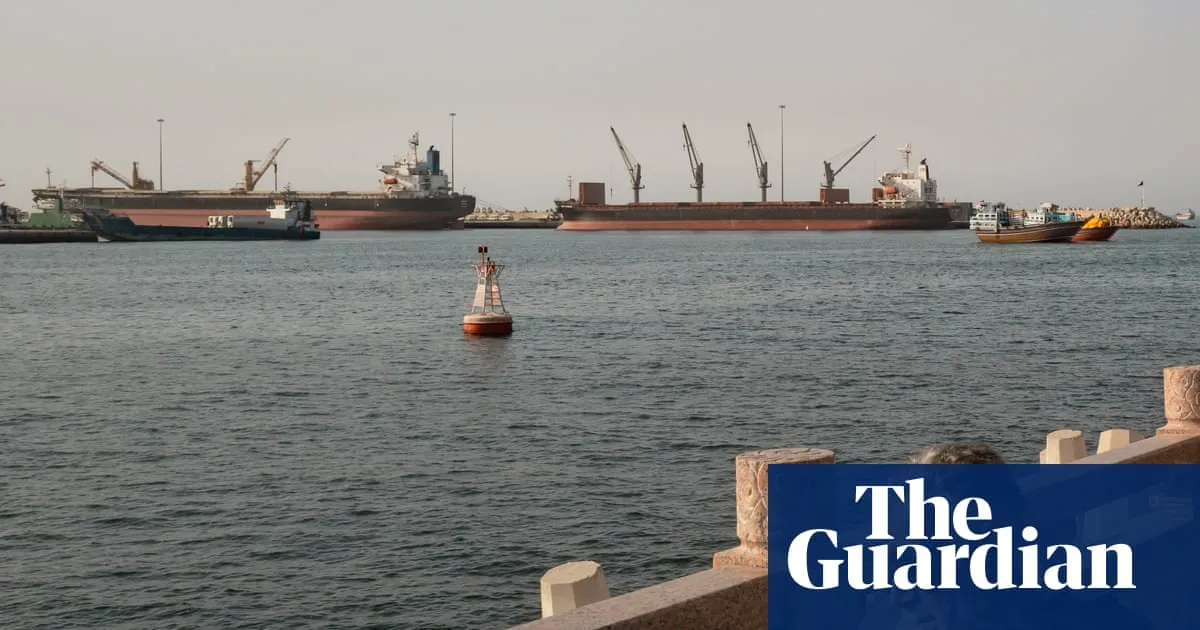
The centre of the Strait of Hormuz is blocked with about 80 mines that will need clearing for normal shipping to resume, the independent tanker owner trade body has said.Several vessels began to exit the Gulf through the key maritime chokepoint on Thursday, after the signing of a memorandum of understanding between the US and Iran.However, shipping is not expected to return to normal for some time, even if the ceasefire lasts, because of the mines and other obstacles, underlining the continuing challenges facing global trade.“The main route … through the middle of the Strait of Hormuz, that’s closed, that’s dangerous,” said Phil Belcher, marine director at Intertanko, the association of independent tanker owners.“The latest figure we had was that there’s 80 mines in the Strait of Hormuz. It’s an enormous amount and it’s going to take some time to clear.”During the conflict Tehran laid mines in the centre of the strait in the traffic separation scheme, which has been in place between Iran and Oman since 1968, to restrict the movement of tankers and other vessels.About 20,000 seafarers were left stuck either side of the channel, although some ships managed to sneak through at night near the Omani coast with their transmitters off and with US assistance. Others paid to travel through Iranian waters in an arrangement nicknamed “Tehran’s tollbooth”.The shipping industry is keen to see a return to using the standard route, which before the conflict allowed about 130 ships a day to safely cross the strait, through which about 20% of global oil used to flow.“This is like a highway where the road in the middle is closed and you are using the hard shoulder,” said Belcher.“We need to get the highway open so we can get the volume of traffic through safely. One of the big issues we’ve got at the moment is the navigational risk, the risk of running aground on the rocks. It’s very close to the rocks on the southern route, the Omani route.”With high numbers of vessels trying to pass through narrow areas of the strait, the shipping industry is warning of the risk of collision. This risk is intensified by the “signal jamming” that Iran has reportedly carried out during the conflict, where electronic interference has prevented ships’ navigating and positioning systems from operating, leaving them effectively sailing blind.A collision, grounding or sinking could further disrupt global trade. Shipping companies still remember the disruption caused in 2021 when the container ship Ever Given blocked the Suez canal for a week.Nearly 600 vessels are believed to still be in the Gulf, where they have been anchored since February, meaning the backlog will take time to clear.Richard Meade, editor-in-chief at maritime data provider Lloyd’s List, said: “We are in uncharted territory. I don’t think [shipping in the strait] is getting back to normal this year.”Further concerns remain over Iran saying it plans to charge a maritime fee to vessels crossing the strait. Such tolls are illegal under international law.Under the terms of the US-Iran memorandum, Iran is required to ensure toll-free passage for commercial vessels for at least 60 days, with full restoration of traffic within 30 days. Tehran has said it would charge ships fees to cover the cost of managing the waterway after the 60-day period.The German container shipping company Hapag-Lloyd has said it would be “fundamentally wrong” to charge vessels to pass through international waters. A company spokesperson added: “Tolls for infrastructure such as the Suez or Panama canals are different, as they reflect major infrastructure investments. That’s not the case in the Strait of Hormuz.”The shipping industry is concerned that Iran charging fees could set a precedent for other key maritime channels that are bordered by several states, including the strait of Malacca – a narrow stretch of water between Singapore, Malaysia and Indonesia – or the Taiwan strait separating the island of Taiwan from mainland China.
SRCThe Guardian - World News
LANGEN
LEANCenter-Left
WORDS648
ENT9
FRI · 2026-06-19 · 06:57 GMTBRIEF NSR-2026-0619-85704
NSR-2026-0619-85704News Report·EN·Economic Impact
Normal shipping will not resume in strait of Hormuz until 80 mines cleared
Normal shipping through the Strait of Hormuz will not resume for some time due to approximately 80 mines blocking the main route. While some vessels have begun exiting the Gulf following a US-Iran memorandum of understanding, the clearing of these mines is a significant obstacle.
Joanna PartridgeThe Guardian - World NewsFiled 2026-06-19 · 06:57 GMTLean · Center-LeftRead · 3 min
The Guardian - World NewsFIG 01
Reading time
3min
Word count
648words
Sources cited
2cited
Entities identified
9entities
Quality score
100%
§ 01
Briefing Summary
AI-generatedNEWSAR · AI
Normal shipping through the Strait of Hormuz will not resume for some time due to approximately 80 mines blocking the main route. While some vessels have begun exiting the Gulf following a US-Iran memorandum of understanding, the clearing of these mines is a significant obstacle. The mines, laid by Iran in the center of the strait, pose a navigational risk and have trapped thousands of seafarers. Alternative routes are dangerous, risking groundings and collisions, exacerbated by reported signal jamming. The shipping industry is concerned about potential disruptions and the legality of Iran's stated plans to charge fees for passage after an initial 60-day toll-free period.
Confidence 0.90Sources 2Claims 5Entities 9
§ 02
Article analysis
Model · rule-basedFraming
Economic Impact
Conflict
Tone
Measured
AI-assessed
CalmNeutralAlarmist
Factuality
0.70 / 1.00
Factual
LowHigh
Sources cited
2
Limited
FewMany
§ 03
Key claims
5 extracted01
The Strait of Hormuz is a key maritime chokepoint through which about 20% of global oil used to flow.
factual
Confidence
0.90
02
The center of the Strait of Hormuz is blocked with about 80 mines that will need clearing for normal shipping to resume.
factualIntertanko
Confidence
0.90
03
Shipping in the strait is not expected to return to normal this year.
predictionRichard Meade, Lloyd's List
Confidence
0.80
04
About 20,000 seafarers were left stuck either side of the channel.
statistic
Confidence
0.80
05
Iran has reportedly carried out signal jamming during the conflict, preventing ships' navigating and positioning systems from operating.
factual
Confidence
0.70
§ 04
Full report
3 min read · 648 words§ 05
Entities
9 identifiedKey playerOppositionContextPositiveNeutralNegative
People1
Organizations2
Locations4
Events1
§ 06
Keywords & salience
9 termsstrait of hormuz
1.00
maritime chokepoint
0.90
mines
0.90
global trade
0.80
shipping
0.80
navigational risk
0.70
oil flow
0.60
us and iran
0.50
signal jamming
0.40
§ 07
Topic connections
Interactive graph Network visualization showing 51 related topics
View Full Graph Person Organization Location Event|Click node to navigate|Edge numbers = shared articles