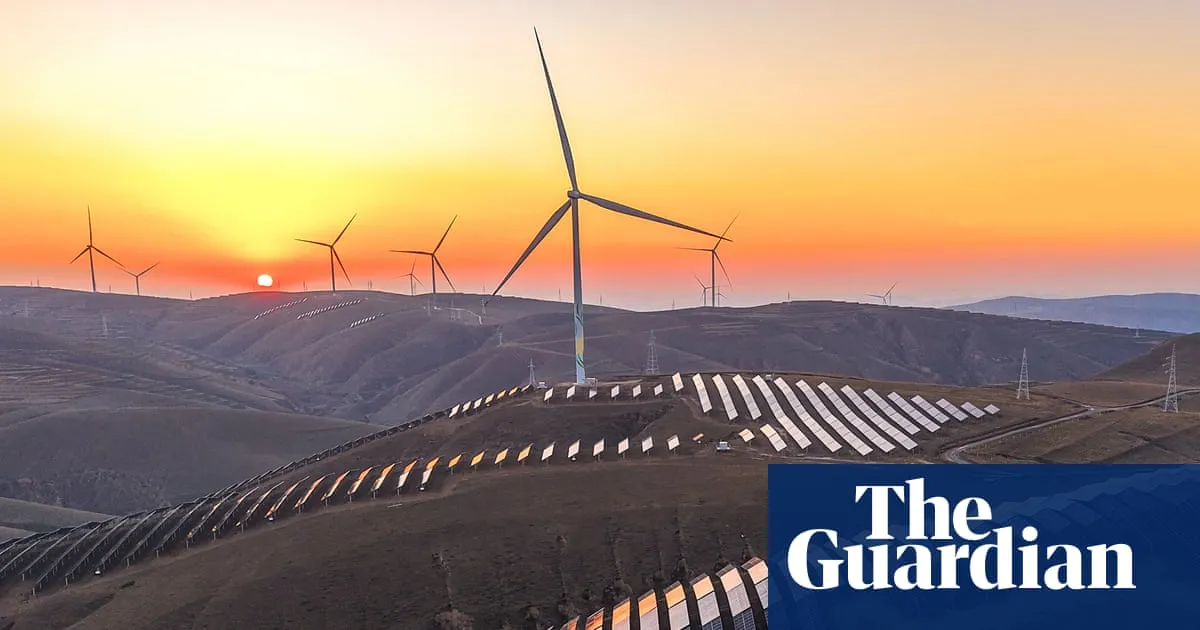
China has emerged as the sole winner in Asia from the Strait of Hormuz crisis, according to a report published on Tuesday.The report by the Asia-group" class="entity-link entity-organization" data-entity-id="33403" data-entity-type="organization">Asia Group thinktank concluded that China had weathered the storm of the global commodities crisis resulting from the closure of the Middle Eastern waterway, and also stood to gain from the economic and geopolitical trends sparked by the wider conflict.Iran virtually closed the strait, a vital waterway through which much of the world’s oil and gas flows, after the US and Israel launched joint strikes on 28 February, targeting government and military sites and killing Iran’s supreme leader, Ali Khamenei. The ensuing crisis has sent global energy prices soaring, with Asia particularly exposed.The report noted that before the strait’s closure, roughly 80% of the oil and nearly 90% of the liquefied natural gas transiting the waterway was destined for Asian markets, along with a significant share of other critical commodities.The report looked at Asia’s largest economies – China, India, Japan and South Korea – as well as emerging markets across south-east Asia. The researchers mapped the economic and political repercussions of the crisis and its impacts across key sectors including manufacturing, energy and agriculture.They concluded that China was a clear winner from the crisis caused by Donald Trump’s foray into the Middle East.The country’s large stockpiles of oil and the hugely ambitious rollout of renewable energy mean it has been less exposed to the energy shock than other countries.How big oil is cashing in on Iran war – The LatestChina has long maintained strategic reserves of energy, and last year took advantage of cheap prices to build up even bigger stockpiles. Its crude imports grew from 11.1m barrels a day to 11.6m in 2025, with over 80% of that increase being sent to stockpiles, according to analysis by Erica Downs, a senior research scholar at the Centre on Global Energy Policy. As of January, China had enough stockpiled to cover 104 days of imports at the 2025 level.The country has also been building massive amounts of renewable energy infrastructure in recent years. Last year it installed 315GW of new solar capacity, more than half of the world’s new solar. The year before, it added 277GW. Beijing is aiming for half of China’s energy to come from non-fossil sources by 2030, with the share from wind and solar reaching 30%, up from 22% in 2025.Although China’s energy mix is still largely based on coal, which accounts for more than 50%, renewables’ share is increasing rapidly.The Asia-group" class="entity-link entity-organization" data-entity-id="33403" data-entity-type="organization">Asia Group’s report said: “With 1.4 terawatts of operating renewable capacity already online and a reported 90-110 days of crude import cover in reserve, China weathered the initial shock better than any regional peer.”China has also benefited from other countries reacting to the crisis by accelerating its clean energy buildout. Beijing dominates the global supply chain in solar and other clean technology industries and in recent years has been pushing much of this production overseas at low prices, to the chagrin of western leaders worried about their own industries.China’s electric vehicle exports soared by more than 110% in May compared with the previous year, while solar shipments in April increased by 60%.Electric vehicles waiting for export on the Hangzhou section of the Beijing-Hangzhou Grand Canal on Monday. Photograph: VCG/Getty ImagesBeijing has called for a ceasefire in the Middle East, and when Trump visited in May and met China’s president, Xi Jinping, he claimed the two countries were united in wanting to find a settlement. But the Asia-group" class="entity-link entity-organization" data-entity-id="33403" data-entity-type="organization">Asia Group report noted: “The crisis allows Beijing to cast the United States as the destabilising actor whose Middle East entanglements impose costs on the world.”There are some risks to China from the instability. Drew Thompson, a senior fellow at the S Rajaratnam School of International Studies in Singapore, said: “It’s tempting to see any loss of credibility in the US as a benefit for China, but that’s not necessarily the case for Beijing, which does not want to supplant Washington as a Middle East hegemon or provider of security for the region.”Wen-Ti Sung, a non-resident fellow with the Atlantic Council’s Global China Hub, based in Taiwan, said the crisis could also make Beijing think twice about a future military assault on Taiwan because it showed the difficulty of navigating ships through hostile territory.The Asia-group" class="entity-link entity-organization" data-entity-id="33403" data-entity-type="organization">Asia Group’s report concluded: “Ultimately Beijing views the pain points not as existential threats, but as challenges to be managed and even opportunities to be exploited.”
SRCThe Guardian - World News
LANGEN
LEANCenter-Left
WORDS745
ENT12
TUE · 2026-06-30 · 11:11 GMTBRIEF NSR-2026-0630-88651
NSR-2026-0630-88651News Report·EN·Economic Impact
China is a clear winner from Trump’s war in Middle East, report concludes
A report by the Asia Group thinktank concludes that China is the sole winner in Asia from the Strait of Hormuz crisis, triggered by US and Israeli strikes on Iran. The crisis has caused global energy prices to soar, with Asia heavily exposed.
Amy Hawkins in BeijingThe Guardian - World NewsFiled 2026-06-30 · 11:11 GMTLean · Center-LeftRead · 3 min
The Guardian - World NewsFIG 01
Reading time
3min
Word count
745words
Sources cited
2cited
Entities identified
12entities
Quality score
100%
§ 01
Briefing Summary
AI-generatedNEWSAR · AI
A report by the Asia Group thinktank concludes that China is the sole winner in Asia from the Strait of Hormuz crisis, triggered by US and Israeli strikes on Iran. The crisis has caused global energy prices to soar, with Asia heavily exposed. China, however, has weathered the storm due to its large energy stockpiles and significant investment in renewable energy, including substantial solar capacity additions. This positions China to benefit from global trends towards solar and electric vehicles, industries where it dominates supply chains. The report suggests the crisis allows China to portray the US as a destabilizing force, while also presenting opportunities for Beijing to manage and exploit challenges.
Confidence 0.90Sources 2Claims 5Entities 12
§ 02
Article analysis
Model · rule-basedFraming
Economic Impact
Political Strategy
Tone
Measured
AI-assessed
CalmNeutralAlarmist
Factuality
0.80 / 1.00
Factual
LowHigh
Sources cited
2
Limited
FewMany
§ 03
Key claims
5 extracted01
China installed 315GW of new solar capacity last year, more than half of the world's new solar.
statisticarticle
Confidence
0.95
02
China had enough stockpiled oil to cover 104 days of imports at the 2025 level as of January.
statisticErica Downs, Centre on Global Energy Policy
Confidence
0.95
03
China weathered the initial shock better than any regional peer with 1.4 terawatts of operating renewable capacity and 90-110 days of crude import cover.
factualThe Asia Group
Confidence
0.90
04
China has weathered the global commodities crisis resulting from the Strait of Hormuz closure due to large oil stockpiles and renewable energy rollout.
factualThe Asia Group
Confidence
0.90
05
China is the sole winner in Asia from the Strait of Hormuz crisis.
factualThe Asia Group
Confidence
0.90
§ 04
Full report
3 min read · 745 words§ 05
Entities
12 identifiedKey playerOppositionContextPositiveNeutralNegative
Organizations1
Locations8
§ 06
Keywords & salience
8 termsstrait of hormuz crisis
1.00
china energy security
0.90
global commodities crisis
0.80
renewable energy
0.70
energy prices
0.60
strategic reserves
0.50
geopolitical trends
0.50
asia economies
0.40
§ 07
Topic connections
Interactive graph Network visualization showing 51 related topics
View Full Graph Person Organization Location Event|Click node to navigate|Edge numbers = shared articles