EXPLAINEREl-Obeid under siege by RSF: Could this be Sudan’s next el-Fasher?UN warns of ‘catastrophe’ in El-Obeid after RSF atrocities in el-Fasher last year.Tents display a Saudi Arabian logo at a camp for displaced people in El-Obeid, Sudan, which is facing attack by the RSF paramilitary [File: Tayeb Siddig/Reuters]Published On 6 Jul 2026Half a million people are trapped in the Sudanese city of El-Obeid, the capital of North Kordofan state, as the Rapid Support Forces (RSF) paramilitary group tries to enforce its dominance over the Kordofan and Darfur regions during a civil war that has wrought devastation on the country for three years.The Office of the United Nations High Commissioner for Human Rights has warned of an impending humanitarian “catastrophe” as El-Obeid is expected to be the next site for major ground clashes between the RSF and Sudanese military. Many countries have also raised the alarm about atrocities being carried out in the city.El-Obeid, which has been cut off by continuous drone attacks for months, is under threat after the mass atrocities carried out by the RSF in el-Fasher, capital of Darfur" class="entity-link entity-location" data-entity-id="1558" data-entity-type="location">North Darfur state.In October, the RSF took over el-Fasher, which it had besieged for 18 months. Last week, Amnesty International said the massacres in the western city amounted to ethnic cleansing while an independent UN mission stated in February that the assault bore the “hallmarks of genocide”.The RSF has been gathering force around the strategically important south-central city of El-Obeid for months, placing about 500,000 people, including 105,000 displaced people, in the middle with nowhere to flee.The war in Sudan began in April 2023 when the RSF attacked the capital, Khartoum. It quickly spread across the country.The war is considered to be one of the worst humanitarian conflicts in the world with tens of thousands killed. It’s also the world’s largest displacement crisis with more than 14 million refugees or internally displaced people.Here’s what we know:What is happening in El-Obeid?El-Obeid has been subject to “relentless” drone attacks by “advancing paramilitaries”, UN High Commissioner for Human Rights Volker Turk said on Friday.A large amount of the city’s infrastructure has been damaged. Attacks on its power station have caused blackouts, disrupted water supplies and hampered the ability of hospitals to operate. The Yale Humanitarian Research Lab reported the city is experiencing an electricity and fuel crisis.Last week, an international coalition of countries warned of impending atrocities in the city. A statement delivered by Norway was presented on behalf of the Coalition for Atrocity Prevention and Justice for Sudan. The group consists of the United Kingdom, Canada, France, Germany, Ireland, the Netherlands and Sierra Leone, and they said they were joined by 21 other countries.“We are gravely alarmed by the urgent risks of atrocities and deliberate killings in Sudan,” the statement warned.“Ten consecutive days of drone strikes have killed at least 50 civilians across El Obeid and North Kordofan, and have caused significant damage to civilian infrastructure,” the statement continued.“Widespread credible reports of ethnically targeted violence, including sexual and gender-based violence, are deplorable.”The UN has called on the international community to prevent another catastrophe in Sudan.Why is El-Obeid strategically important?El-Obeid sits on a key route between the RSF-controlled Darfur region and some of the army-controlled eastern regions.Whoever holds El-Obeid controls a key gateway through which goods, people and supplies flow into central Sudan. Government forces have their 5th Infantry Division and airbase there. The city is also home to an oil pipeline and a large Arabic gum market.If the city falls into the hands of the RSF, it would severely limit the army’s ability to control the Kordofan region. The RSF would also be in control of a supply route connecting its western strongholds to the rest of the country.Ahmed Ben Omer, an independent Sudan analyst, told Al Jazeera that the potential fall of El-Obeid would trigger a strategic shift in the war: “The city sits at the heart of a network linking Darfur, Kordofan and central Sudan. Control of it would give the RSF an opportunity to connect vast geographical areas and rebuild its political project after losing Khartoum.”The RSF was expelled from the national capital in March 2025.What happened in el-Fasher?el-Fasher was subjected to a brutal massacre by invading RSF forces last year. Thousands of civilians were killed after the Sudanese army retreated.Like El-Obeid now, the city had been under RSF siege for 18 months – from May 2024 until October 2025 – when its forces stormed it. During that time, Amnesty International accused the RSF of crimes against humanity after survivors said civilians were subjected to sexual violence, targeted killings, torture and detentions. They were also cut off from food, water and humanitarian assistance.The UN had warned about the impending humanitarian crisis in el-Fasher as well, but the international community did not act.Leena Badri, a nonresident fellow at the Tahrir Institute for Middle East Policy, said there are some major differences between El-Obeid and el-Fasher that indicate how the war is evolving on a military basis.“el-Fasher underwent a full, prolonged siege,” she said. “El-Obeid is really an example of the pervasive use of drones, and how the use of drones then essentially creates the conditions of a siege without having them to do an actual full encirclement of the city.”The end result – starvation – is likely to be the same for the people trapped in El-Obeid, however, Omer said. “A siege serves a clear purpose: exhausting the population, driving up the cost of living, disrupting markets, restricting the movement of goods and gradually draining the city from within.”He noted that in el-Fasher, the city fought a military battle “while its residents fight a daily battle for food, water and medicine” and warned that prolonged pressure on El-Obeid could lead to famine, which was confirmed in el-Fasher in September.What are conditions like in El-Obeid now?Badri said residents in El-Obeid are in extremely dire circumstances as the drone strikes on infrastructure and water supplies have forced residents to turn to wells and water tanks outside the city.“Food prices have surged up to 300 percent, and water prices have doubled. Aid access has also shrunk because of the security situation,” she said.Turk, the UN rights chief, told the UN Human Rights Council last week: “Civilians have been subjected to siege-like conditions for 18 months, battered by relentless drone attacks, as the Sudanese armed forces and the Rapid Support Forces battle for control over areas surrounding the city.”Omer told Al Jazeera that stopping a potential catastrophe is a matter of political will and influence from international actors.“The United States has sanctions and financial-pressure tools. Egypt carries direct security and political weight in the Sudan file,” he said. “Saudi Arabia has significant diplomatic and regional influence and hosted the Jeddah process. The UN Security Council possesses legal and political tools.”The Jeddah process refers to talks held shortly after the war began. They resulted in an agreement aimed at ending the war in May 2023, but fighting resumed a day after it took effect.
SRCAl Jazeera
LANGEN
LEANCenter
WORDS1 159
ENT12
MON · 2026-07-06 · 12:21 GMTBRIEF NSR-2026-0706-90522
NSR-2026-0706-90522News Report·EN·Conflict
El-Obeid under siege by RSF: Could this be Sudan’s next el-Fasher?
The city of el-Obeid in Sudan's North Kordofan state is under threat after the Rapid Support Forces (RSF) paramilitary group has been gathering force around it for months. The UN High Commissioner for Human Rights has warned of an impending humanitarian "catastrophe" as the RSF tries to enforce its dominance over the region, following mass atrocities carried out by the group in el-Fasher last year.
Marthe van der WolfAl JazeeraFiled 2026-07-06 · 12:21 GMTLean · CenterRead · 5 min
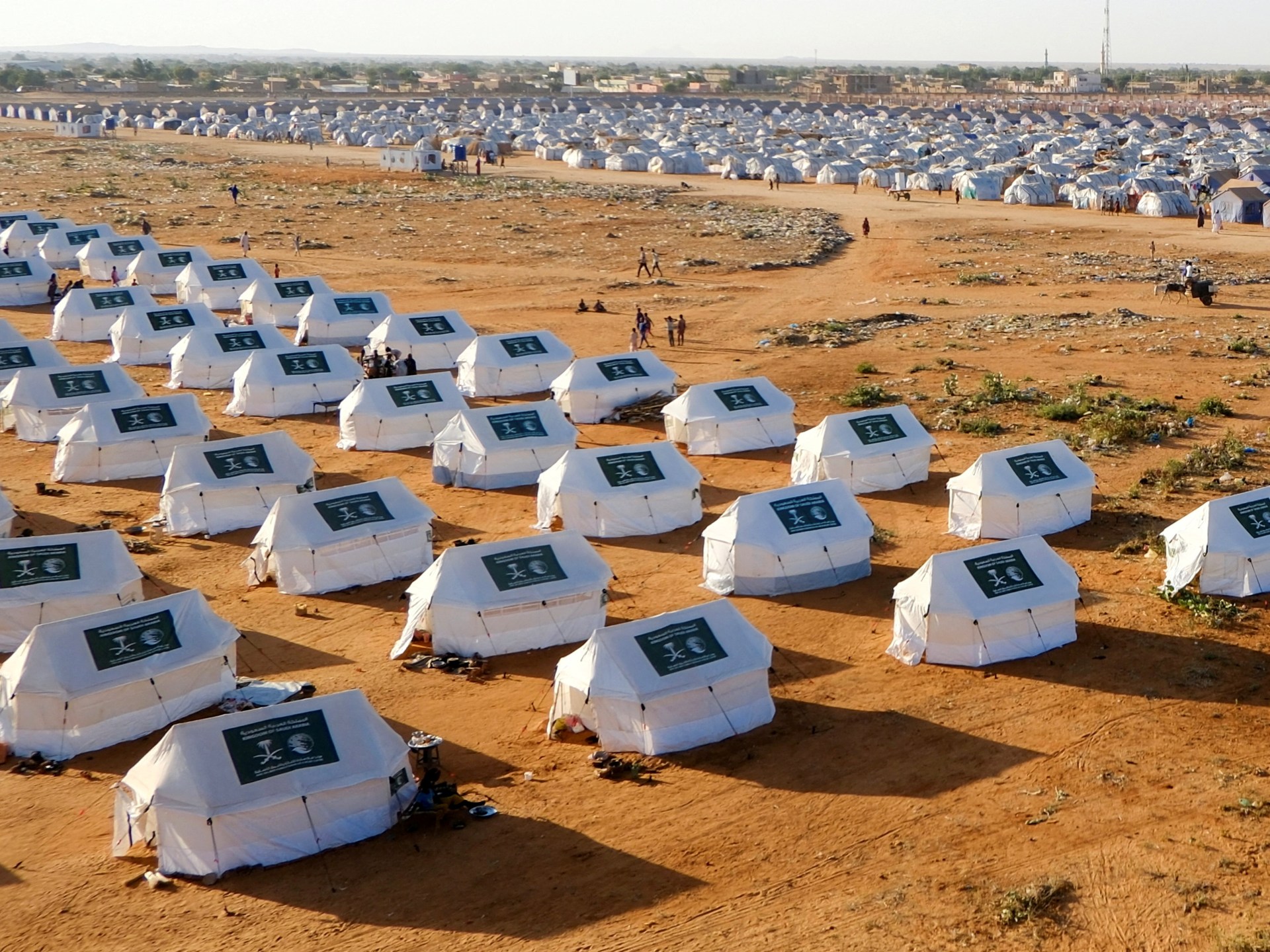
Al JazeeraFIG 01
Reading time
5min
Word count
1 159words
Sources cited
5cited
Entities identified
12entities
Quality score
100%
§ 01
Briefing Summary
AI-generatedNEWSAR · AI
The city of el-Obeid in Sudan's North Kordofan state is under threat after the Rapid Support Forces (RSF) paramilitary group has been gathering force around it for months. The UN High Commissioner for Human Rights has warned of an impending humanitarian "catastrophe" as the RSF tries to enforce its dominance over the region, following mass atrocities carried out by the group in el-Fasher last year. El-Obeid is home to 500,000 people, including 105,000 displaced persons, and sits on a key route between the RSF-controlled Darfur region and eastern regions controlled by government forces. The city's infrastructure has been damaged due to relentless drone attacks, causing power outages, water shortages, and disruptions to hospitals. An international coalition of countries has warned of impending atrocities in el-Obeid, citing credible reports of ethnically targeted violence.
Confidence 0.90Sources 5Claims 5Entities 12
§ 02
Article analysis
Model · rule-basedFraming
Conflict
Human Rights
Tone
Mixed Tone
AI-assessed
CalmNeutralAlarmist
Factuality
0.80 / 1.00
Factual
LowHigh
Sources cited
5
Well sourced
FewMany
§ 03
Key claims
5 extracted01
The UN warns of an impending humanitarian catastrophe in el-Obeid due to expected major ground clashes.
quoteOffice of the United Nations High Commissioner for Human Rights
Confidence
1.00
02
An international coalition of countries warned of impending atrocities and deliberate killings in Sudan.
quoteCoalition for Atrocity Prevention and Justice for Sudan (led by Norway)
Confidence
0.95
03
The RSF's actions in el-Fasher last year have been described as ethnic cleansing by Amnesty International and bearing hallmarks of genocide by a UN mission.
factualAmnesty International, UN mission
Confidence
0.90
04
Half a million people are trapped in el-Obeid, Sudan, as the RSF attempts to dominate Kordofan and Darfur regions.
statistic
Confidence
0.90
05
El-Obeid is experiencing an electricity and fuel crisis due to damaged infrastructure and drone attacks.
factualYale Humanitarian Research Lab
Confidence
0.85
§ 04
Full report
5 min read · 1 159 words§ 05
Entities
12 identifiedKey playerOppositionContextPositiveNeutralNegative
Organizations4
§ 06
Keywords & salience
10 termsrsf
1.00
el-obeid
1.00
sudan civil war
1.00
humanitarian catastrophe
0.90
displaced people
0.80
atrocities
0.70
genocide
0.60
ethnic cleansing
0.60
drone attacks
0.50
el-fasher
0.50
§ 07
Topic connections
Interactive graph Network visualization showing 51 related topics
View Full Graph Person Organization Location Event|Click node to navigate|Edge numbers = shared articles