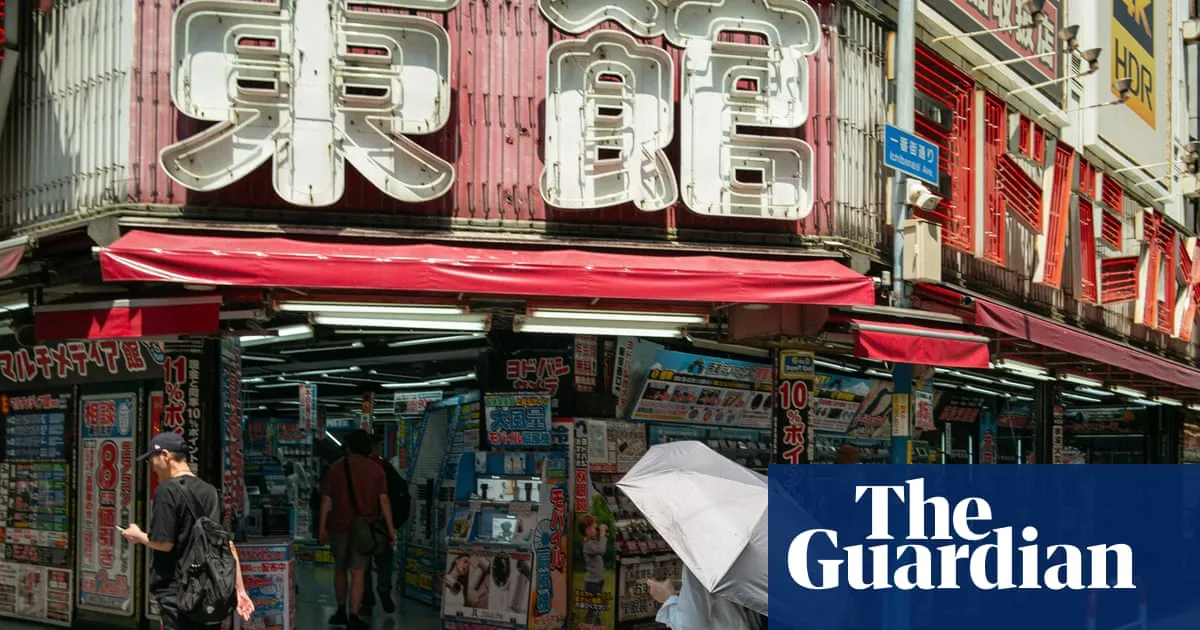
Japan logged its first official kokushobi or “cruelly hot day” on Tuesday since the new term for when temperatures top 40 degrees Celsius was introduced in April. The Japan-meteorological-agency" class="entity-link entity-organization" data-entity-id="3275" data-entity-type="organization">Japan Meteorological Agency coined the new designation to warn the public of the heat dangers of days that were once freak weather events but have now become more common.The central Japan cities of Gujo and Tajimi in Gifu prefecture, along with Toyota in Aichi prefecture, all hit 40C. Gujo’s 40C and Toyota’s 40.1C were all-time highs recorded at their respective weather stations.Across 914 weather stations nationwide, 278 registered temperatures exceeding 35C or moshobi – “extremely hot days,” the highest level of warning until the recent introduction of the new terminology. Days over 25C are called natsubi or “summer days”, while those exceeding 30C are known as manatsubi – “true summer days.”On Monday, a man in his 40s was found dead on a street in Sanjo, Niigata prefecture, while another in his 70s died in Kanagawa, southwest of Tokyo. Both are believed to have succumbed to the heat.Heatstroke deaths topped 2,000 for the first time in 2024, while more than 100,000 people were taken to hospital last year between the beginning of May and late September, according to the fire and disaster management agency.The rising heat is affecting many aspects of Japanese life – including yields and the quality of rice, a staple. In response, farmers are planting more heat-tolerant varieties, while some are switching to crops such as avocado that have not traditionally been grown at scale in Japan.Impacts are also being seen in sport, with the most high-profile being the restructuring of the hugely popular koshien national high school baseball tournament. Played in the sweltering heat of August, the games have been split into morning and evening sessions since 2024 to reduce the chances of heatstroke for both players and spectators.Meanwhile, office workers are being encouraged to wear shorts on hot summer days, the latest relaxing of Japan’s buttoned-down corporate culture as part of “Cool Biz” measures to reduce electricity consumption through lower use of airconditioning. Previous initiatives have encouraged “salarymen” to shed jackets and ties, and wear short-sleeved shirts but this year’s expected scorching summer has prompted calls for another level of casualness.Tokyo governor Yuriko Koike announced the new clothing recommendations for office wear which also include polo shirts, T-shirts and trainers where appropriate, against the backdrop of expected high temperatures and a “challenging outlook for electricity supply”.A study by the National Institute for Environmental Studies (NIES) and Tokyo’s Waseda University in 2025 found that without drastic cuts to greenhouse gas emissions, school sports will become unplayable outdoors by the 2060s.Average summer temperatures in Japan have risen about 1.3C over the past 100 years, according to the Japan-meteorological-agency" class="entity-link entity-organization" data-entity-id="3275" data-entity-type="organization">Japan Meteorological Agency (JMA). Both 2023 and 2024 were the hottest years since records began in 1898, but last year saw those levels surpassed again. The summer of 2025 was 2.4C above the average of the previous three decades, with 132 weather stations logging their highest ever average heat and a new all-time Japanese high of 41.8C at Isesaki, Gunma, north of Tokyo, on 5 August.
SRCThe Guardian - World News
LANGEN
LEANCenter-Left
WORDS523
ENT12
WED · 2026-07-22 · 03:48 GMTBRIEF NSR-2026-0722-94928
NSR-2026-0722-94928News Report·EN·Public Health
Japan records its first ‘cruelly hot day’ as cities swelter in 40-degree heat
Japan has officially recorded its first "cruelly hot day" (kokushobi) when temperatures exceeded 40 degrees Celsius, a new designation introduced by the Japan Meteorological Agency in April to warn of increasing heat dangers. Cities in central Japan, including Gujo and Toyota, reached 40C or higher, with some setting all-time records.
Gavin Blair in TokyoThe Guardian - World NewsFiled 2026-07-22 · 03:48 GMTLean · Center-LeftRead · 3 min
The Guardian - World NewsFIG 01
Reading time
3min
Word count
523words
Sources cited
3cited
Entities identified
12entities
Quality score
100%
§ 01
Briefing Summary
AI-generatedNEWSAR · AI
Japan has officially recorded its first "cruelly hot day" (kokushobi) when temperatures exceeded 40 degrees Celsius, a new designation introduced by the Japan Meteorological Agency in April to warn of increasing heat dangers. Cities in central Japan, including Gujo and Toyota, reached 40C or higher, with some setting all-time records. This extreme heat follows a trend of rising average summer temperatures and has led to heatstroke deaths and hospitalizations. The article notes impacts on agriculture, with farmers adapting crops, and sports, with the Koshien baseball tournament adjusting schedules. In response to the heat and concerns about electricity supply, office workers are now encouraged to wear shorts and other casual attire as part of "Cool Biz" initiatives.
Confidence 0.90Sources 3Claims 5Entities 12
§ 02
Article analysis
Model · rule-basedFraming
Public Health
Environmental
Tone
Mixed Tone
AI-assessed
CalmNeutralAlarmist
Factuality
0.90 / 1.00
Factual
LowHigh
Sources cited
3
Well sourced
FewMany
§ 03
Key claims
5 extracted01
Office workers are being encouraged to wear shorts, polo shirts, T-shirts, and trainers to reduce electricity consumption.
factualTokyo governor Yuriko Koike
Confidence
1.00
02
Average summer temperatures in Japan have risen approximately 1.3C over the past 100 years.
statisticJapan Meteorological Agency
Confidence
1.00
03
Heatstroke deaths topped 2,000 for the first time in 2024, with over 100,000 hospitalizations last year.
statisticfire and disaster management agency
Confidence
1.00
04
Japan recorded its first 'cruelly hot day' with temperatures exceeding 40 degrees Celsius.
factualJapan Meteorological Agency
Confidence
1.00
05
Without drastic cuts to greenhouse gas emissions, school sports may become unplayable outdoors by the 2060s.
predictionNational Institute for Environmental Studies and Waseda University
Confidence
0.80
§ 04
Full report
3 min read · 523 words§ 05
Entities
12 identifiedKey playerOppositionContextPositiveNeutralNegative
People1
§ 06
Keywords & salience
9 termsextreme heat
1.00
heatwave
0.90
japan
0.80
heatstroke
0.70
kokushobi
0.60
climate change
0.50
agriculture
0.40
public health
0.40
cool biz
0.40
§ 07
Topic connections
Interactive graph Network visualization showing 51 related topics
View Full Graph Person Organization Location Event|Click node to navigate|Edge numbers = shared articles