Denmark’s prime minister has called for “constructive” talks over Greenland that respect its territorial integrity, as Europeans gave a wary welcome to Donald Trump’s decision to drop tariff threats against countries opposing his plans to seize the island.“We can negotiate all political aspects – security, investment, the economy – but we cannot negotiate our sovereignty,” Mette Frederiksen said on Thursday, after the US president suggested a deal was in sight to end the dispute over the territory.Trump said after meeting NATO’s secretary general, Mark Rutte, that the “framework of a future deal” had been found to settle the issue after weeks of escalating tensions that risked the biggest breakdown in transatlantic relations in decades.Frederiksen said she had been informed that the talks between Trump and Rutte in Davos, Switzerland, on Wednesday had not involved compromising the sovereignty of Denmark or Greenland, a largely self-governing territory of the Danish kingdom.“Denmark wishes to continue a constructive dialogue with its allies on ways to strengthen security in the Arctic, including the US Golden Dome [missile-defence system], provided this is done with respect for our territorial integrity,” she said.Rutte told an audience in Davos on Thursday that he had a “very good discussion” with Trump on how NATO allies could work collectively to ensure Arctic security, including not just Greenland but the seven alliance nations with land in the Arctic.“One workstream coming out of yesterday … is to make sure when it comes to Greenland, particularly, that we ensure that the Chinese and the Russians will not gain access to the Greenland economy [or] militarily to Greenland,” he said.Trump on Wednesday abruptly backed away from his threat to use tariffs as leverage to seize Greenland and also ruled out the use of force, stepping back from weeks of aggressive rhetoric that shook the NATO alliance and risked a new trade war with Europe.At the weekend he threatened to impose a 10% tariff on imports from Denmark, France, Germany, Sweden, the UK, the Netherlands and Finland unless they dropped their objections to his Greenland plans, prompting EU leaders to consider retaliation.Trump has repeatedly said the US needs to take control of the territory for “national security”, despite the US already having a military base on the island and a bilateral agreement with Denmark allowing it to significantly expand its presence there.While details of the proposed agreement remain scant, Trump said it was “a deal that everybody’s very happy with. It’s the ultimate long-term deal. It puts everybody in a really good position, especially as it pertains to security and to minerals.”EU leaders were due to gather in Brussels later on Thursday for an emergency meeting to discuss how to handle the unpredictable US president amid a lingering sense that transatlantic ties had been irreparably damaged by his grab for the Arctic island.European officials welcomed news of a deal, while expressing caution. Italy’s prime minister, Giorgia Meloni, claimed a victory of sorts, saying that Italy had “always maintained it is essential to continue fostering dialogue” between allies.The Dutch prime minister, Dick Schoof, said it was “positive we are now on the path to de-escalation”, but added that the US, Canada and Europe must now “continue to work together within NATO to strengthen security in the Arctic region”.The German chancellor, Friedrich Merz, welcomed Trump’s shift in rhetoric. “Despite all the frustration and anger of recent months, let us not be too quick to write off the transatlantic partnership,” Merz said in a speech at Davos.“We Europeans, we Germans, know how precious the trust is on which NATO rests. In an age of great powers, the United States, too, will depend on this trust. It is their – and our – decisive competitive advantage.”France’s finance minister, Roland Lescure, said the announcement was “a first positive sign that things are moving in the right direction. The magic word for the last 48 hours has been de-escalation. Right now, we’re de-escalating.”Sweden’s foreign affairs minister, Maria Stenergard, suggested resistance from Denmark’s allies had “had an effect”. European leaders had lined up to criticise what the French president, Emmanuel Macron, called Trump’s “new colonialism”.The bloc also floated retaliatory economic action, including tariffs on €93bn (£80bn) of US imports and the bloc’s “big bazooka” – its “anti-coercion instrument” – which would limit US access to European markets including investment and digital services.Teresa Ribera, a European Commission executive vice-president, said the EU needed to speak out against Trump. “Silence is too ambiguous, too dangerous,” she said in an interview with La Vanguardia. “If Europe remains silent in the face of Trump, it fuels fear.”A European diplomat agreed that a strong EU reaction had influenced Trump. “EU firmness and unity have contributed to get him to change his position,” they said. “Obviously also internal political pressure in the US, and market reaction.”However, Germany’s vice-chancellor, Lars Klingbeil, said Europe “should wait and see what substantive agreements are reached. No matter what solution is now found, everyone must understand that we cannot sit back, relax and be satisfied.”Trump’s push for Greenland, first floated in 2019, had intensified dramatically over recent weeks, with the president saying the US would take control of the vast Arctic island “one way or the other”, and: “Now it is time, and it will be done!!!”
SRCThe Guardian - World News
LANGEN
LeanCenter-Left
WORDS873
ENT11
THU · 2026-01-22 · 10:37 GMTBRIEF NSR-2026-0122-9636
NSR-2026-0122-9636News Report·EN·Diplomatic
Denmark PM calls for ‘constructive’ Greenland negotiation with Trump
Danish Prime Minister Mette Frederiksen is advocating for "constructive" negotiations with the U.S. regarding Greenland, emphasizing the need to respect its sovereignty.
Jon Henley Europe correspondentThe Guardian - World NewsFiled 2026-01-22 · 10:37 GMTLean · Center-LeftRead · 4 min
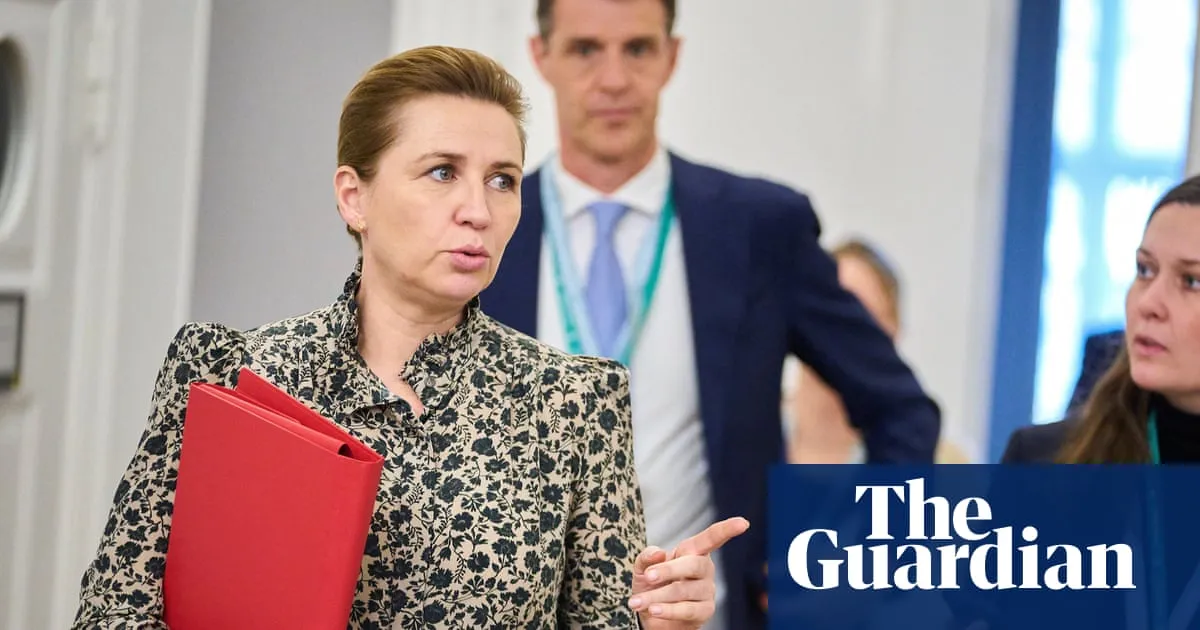
The Guardian - World NewsFIG 01
Reading time
4min
Word count
873words
Sources cited
3cited
Entities identified
11entities
NEWSAR · AI
Danish Prime Minister Mette Frederiksen is advocating for "constructive" negotiations with the U.S. regarding Greenland, emphasizing the need to respect its sovereignty. This follows President Trump's suggestion that a deal was in sight to resolve the dispute over the territory. Frederiksen clarified that discussions should focus on political aspects like security, investment, and the economy, but not sovereignty. Trump had previously threatened tariffs against European countries opposing his plans for Greenland, citing U.S. national security interests. The Netherlands Prime Minister Mark Rutte discussed with Trump how NATO allies can collectively ensure Arctic security, including Greenland, and prevent Chinese or Russian access to its economy or military. Trump has since backed away from tariff threats and the use of force.
Confidence 0.90Sources 3Claims 5Entities 11
Framing
Diplomatic
National Security
Tone
Measured
AI-assessed
CalmNeutralAlarmist
Factuality
0.80 / 1.00
Factual
LowHigh
Sources cited
3
Well sourced
FewMany
01
Trump backed away from tariff threats to seize Greenland.
factualArticle
Confidence
1.00
02
Rutte said Nato allies could work collectively to ensure Arctic security.
quoteMark Rutte
Confidence
1.00
03
Trump said a framework of a future deal had been found to settle the issue.
quoteTrump
Confidence
1.00
04
We can negotiate all political aspects... but we cannot negotiate our sovereignty.
quoteMette Frederiksen
Confidence
1.00
05
Denmark's PM calls for constructive talks over Greenland that respect its territorial integrity.
factualArticle
Confidence
1.00
§ 04
Full report
4 min read · 873 wordsKey playerOppositionContextPositiveNeutralNegative
People3
greenland
1.00
denmark
0.90
sovereignty
0.80
negotiation
0.70
territorial integrity
0.60
arctic security
0.60
tariffs
0.50
us
0.50
transatlantic relations
0.40
§ 07
Connections
Who appears together in the newsIn this articleWider coverageLine weight = articles in common
Laying out network…
Strongest ties articles in common
- 15,001
- 4,854
- 2,491
- 2,429
- 1,765
- 1,175
Recurring context not named in this article
- LWashingtonlinks 11
- LEuropelinks 11
- LIranlinks 11
- LIsraellinks 11
- LGermanylinks 11
- PVladimir Putinlinks 11
- LFrancelinks 11
- LUkrainelinks 11