Saudi Arabia, Turkey and Pakistan have signed a key defense agreement 1 of 2 | Turkish President Recep Tayyip Erdogan, right, and Saudi Crown Prince Mohammed bin Salman shake hands during a welcome ceremony, in Ankara, Turkey, Wednesday, June 22, 2022. (AP Photo/Burhan Ozbilici, File) 2 of 2 | This handout photograph released by the state-run Saudi Press Agency shows Pakistani Prime Minister Shehbaz Sharif, left, embracing Saudi Arabia’s Crown Prince Mohammed bin Salman after signing a joint defense pact in Riyadh, Saudi Arabia, Wednesday, Sept. 17, 2025. (Saudi Press Agency via AP, file) By SUZAN FRASER and MUNIR AHMED Updated 1:48 PM MESZ, August 7, 2026 Add AP News on Google Add AP News as your preferred source to see more of our stories on Google. Share Share Facebook Copy Link copied Print Email X LinkedIn Bluesky Flipboard Pinterest Reddit ANKARA, Turkey (AP) — Saudi Arabia, Turkey and Pakistan signed a defense agreement on Friday that would treat an attack on one as an attack on all three, Turkish and Pakistani officials said, solidifying cooperation between the three regional powers at a time of growing security concerns. The agreement was signed in the Saudi holy city of Mecca during a meeting between Saudi Crown Prince Mohammed bin Salman, Turkish President Recep Tayyip Erdogan and Pakistan’s Prime Minister Shehbaz Sharif. The agreement between the three Sunni Muslim-majority states brings together oil-rich Saudi Arabia and nuclear power Pakistan as well as Turkey, which has NATO’s second-largest army and a rapidly growing defense industry. It would increase cooperation and deterrence at a time of increased regional uncertainty and threats from the war in Iran. “The agreement is intended to strengthen collective deterrence against any act of aggression, and stipulates that any armed attack against any one of the three states shall be regarded as an attack against them all,” the Pakistani Foreign Ministry and Turkey’s presidential communications directorate said in identical statements. “It further provides for the enhancement of all aspects of defense cooperation among the three States,” the statements said, adding that the agreement was called the “Mecca-joint-defense-agreement" class="entity-link entity-event" data-entity-id="180439" data-entity-type="event">Mecca Joint Defense Agreement.” Earlier, Turkish media reports said it is likely to allow joint military exercises and training, technology transfers and the sharing of intelligence. Turkey, Pakistan, Saudi Arabia sign a mutual defense deal, and other Middle East news 2 MIN READ U.S. and Pakistan condemn Houthi Red Sea threats to shipping and Saudi Arabia 4 MIN READ Erdogan says Turkey could get 1M barrels of oil a day from energy deal with Iraq 4 MIN READ Saudi Arabia, whose critical infrastructure and oil facilities have come under attack as part of the war in Iran, has been looking to diversify its defense partnerships. In September, Pakistan and Saudi Arabia signed a mutual defense pact that also defines any attack on either nation as an attack on both. The agreement also comes amid rising tensions between Turkey and Israel over Gaza and other regional conflicts, including the war in Iran and Lebanon. A Turkish government official described the agreement as “purely defensive in nature,” saying the sides have pledged mutual support only for defense. The official, who spoke on condition of anonymity because he was not authorized to discuss the issue publicly, insisted that the deal is “not against any specific actor” and was open for other regional countries to join. The agreement does not abrogate or replace any bilateral or multilateral agreements between these states or with other states and organizations, the official added. In Islamabad, defense analyst Abdullah Khan described the agreement as a natural evolution and formalization of decades of strategic ties among Pakistan, Saudi Arabia, and Turkey, saying a changing regional security environment and the evolving nature of warfare had increased the need for closer cooperation. Khan said the pact was “purely defensive” and not directed against any country, with collective deterrence intended to raise the cost of aggression and prevent conflict. The analyst said three countries bring complementary strengths to the arrangement: Pakistan’s military experience and expertise in managing escalation, Saudi Arabia’s economic strength and regional influence, and Turkey’s advanced defense technology and industrial capabilities. Sharif arrived on Thursday for a three-day visit accompanied by a high-level delegation that includes Army Chief Field Marshal Asim Munir. Erdogan traveled to Saudi Arabia on Friday. In addition to discussing ways to help defuse tensions between the United States and Iran, the three leaders were expected to explore expanding trade, economic ties and broader security cooperation, officials said. Pakistan’s Foreign Ministry said that while Sharif’s visit took place against the backdrop of heightened tensions in the Gulf, it extends beyond the immediate crisis and is aimed at strengthening bilateral relations and boosting coordination on regional and international issues.
SRCAssociated Press (AP)
LANGEN
LeanCenter
WORDS787
ENT10
FRI · 2026-08-07 · 10:23 GMTBRIEF NSR-2026-0807-100101
NSR-2026-0807-100101News Report·EN·National Security
Officials say Saudi Arabia, Turkey and Pakistan to sign a key defense agreement
Saudi Arabia, Turkey, and Pakistan have signed a mutual defense agreement, dubbed the "Mecca Joint Defense Agreement," solidifying cooperation between the three regional powers. The pact, signed in Mecca during a meeting of Saudi Crown Prince Mohammed bin Salman, Turkish President Recep Tayyip Erdogan, and Pakistani Prime Minister Shehbaz Sharif, stipulates that an attack on one signatory will be considered an attack on all.
Associated Press (AP)Filed 2026-08-07 · 10:23 GMTLean · CenterRead · 4 min
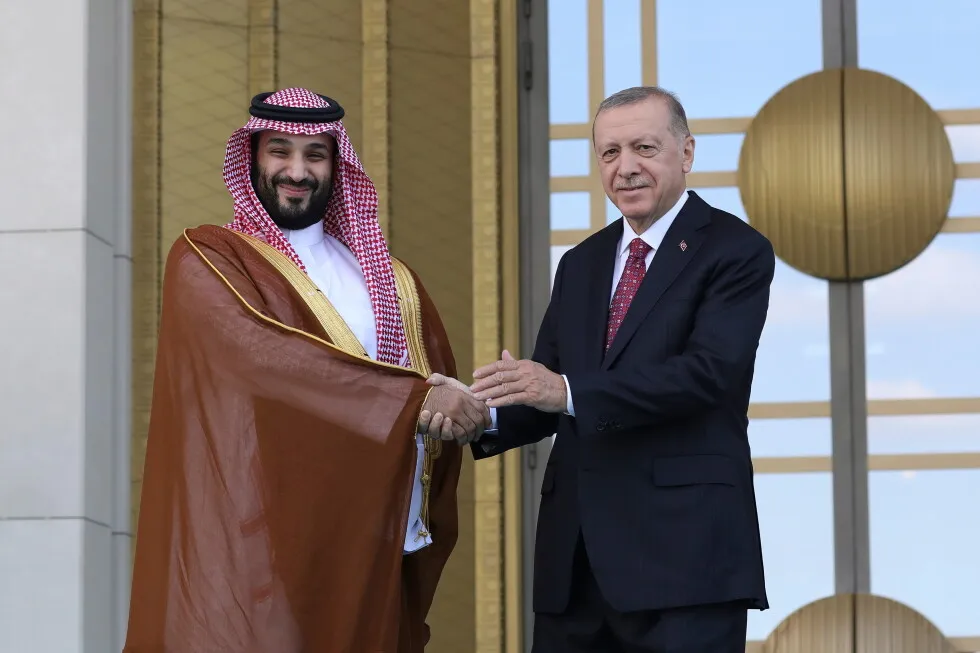
Associated Press (AP)FIG 01
Reading time
4min
Word count
787words
Sources cited
3cited
Entities identified
10entities
NEWSAR · AI
Saudi Arabia, Turkey, and Pakistan have signed a mutual defense agreement, dubbed the "Mecca Joint Defense Agreement," solidifying cooperation between the three regional powers. The pact, signed in Mecca during a meeting of Saudi Crown Prince Mohammed bin Salman, Turkish President Recep Tayyip Erdogan, and Pakistani Prime Minister Shehbaz Sharif, stipulates that an attack on one signatory will be considered an attack on all. The agreement aims to enhance collective deterrence and defense cooperation, including potential joint military exercises, technology transfers, and intelligence sharing. This move comes amid growing regional security concerns and aims to strengthen ties between the three Sunni Muslim-majority states, leveraging Saudi Arabia's economic strength, Pakistan's military experience, and Turkey's defense industry.
Confidence 0.90Sources 3Claims 5Entities 10
Framing
National Security
Diplomatic
Tone
Measured
AI-assessed
CalmNeutralAlarmist
Factuality
0.90 / 1.00
Factual
LowHigh
Sources cited
3
Well sourced
FewMany
01
The agreement further provides for the enhancement of all aspects of defense cooperation among the three States.
quotePakistani Foreign Ministry and Turkey’s presidential communications directorate
Confidence
1.00
02
The agreement is intended to strengthen collective deterrence against any act of aggression.
quotePakistani Foreign Ministry and Turkey’s presidential communications directorate
Confidence
1.00
03
The agreement was signed in Mecca during a meeting between Saudi Crown Prince Mohammed bin Salman, Turkish President Recep Tayyip Erdogan, and Pakistan’s Prime Minister Shehbaz Sharif.
factual
Confidence
1.00
04
Saudi Arabia, Turkey, and Pakistan signed a defense agreement treating an attack on one as an attack on all three.
factualTurkish and Pakistani officials
Confidence
1.00
05
Earlier, Turkish media reports said it is likely to allow joint military exercises and training, technology transfers and the sharing of intelligence.
factualTurkish media reports
Confidence
0.80
§ 04
Full report
4 min read · 787 wordsKey playerOppositionContextPositiveNeutralNegative
People3
Organizations1
Locations5
defense agreement
1.00
collective deterrence
0.90
saudi arabia
0.80
turkey
0.80
pakistan
0.80
regional powers
0.70
security concerns
0.60
defense cooperation
0.50
mecca joint defense agreement
0.50
military exercises
0.40
§ 07
Connections
Who appears together in the newsIn this articleWider coverageLine weight = articles in common
Laying out network…
Strongest ties articles in common
- 1,279
- 1,097
- 640
- 418
- 266
- 234
Recurring context not named in this article
- LIsraellinks 9
- PDonald Trumplinks 9
- LStrait of Hormuzlinks 9
- LChinalinks 9
- LYemenlinks 9
- LMiddle Eastlinks 9
- LUnited Stateslinks 9
- LFrancelinks 9