Five years after the Taliban swept to power, does the West have any influence?BBCIn a whitewashed basement in a village south of Kabul, a dozen young women bustle about, stirring cauldrons of bubbling cherries and plums, and sticking labels on glass jam jars. Ventures like this are one of the rare spaces where women are still able to gain skills and employment in Taliban-ruled Afghanistan.It is run by Najia, a 47-year-old Afghan entrepreneur and mother of nine children who was married at the age of 14.If the authorities hadn't barred girls and young women from secondary schools and universities, many of the women in this workshop, including Naija's daughters, would be studying for a different kind of future.Jam-making workshops are one of vanishingly few ways women can still learn and make money But now, even this is being squeezed too. Recent rules say women have to ask men to take their products to market, and only men can sit at their stalls to show their wares at trade fairs. The Taliban gives various reasons for this, including claiming that women aren't wearing proper hijab or head covering."The world has to talk to the Taliban in a different way because it's just not working," says Najia. "The lives of Afghan women have to change because we're losing hope."Five years after this ultra-conservative Islamist movement took charge, women are banned from much of the public sphere and girls are prohibited from going to school over the age of 12. Many inside and outside Afghanistan are asking the same pressing question: what's the best way to engage the Taliban to try to achieve meaningful change?The issue is deeply divisive. There are fissures between many groups, with a huge array of conflicting issues at stake. These include women's rights, unpredictable Taliban edicts, international sanctions and aid cuts during a spiralling humanitarian crisis. The international response is split between Western countries often focused on human rights and others more interested in investment opportunities. And the West itself is divided on the best response.Many now accept that whatever they're doing, it's not working.Engage, not isolateFew voices call for absolute isolation, not when the United Nations warns that 22 million Afghans – nearly half the of the population – rely on some form of foreign assistance to help them survive.The country has been battered by multiple shocks: an agonising economic crisis; devastating natural disasters; clashes with neighbouring Pakistan, and the influx of millions of Afghans deported from countries near and far into this impoverished land.And there's no avoiding it – the Taliban are in charge now.In the years since their fighters swept into Kabul on 15 August 2021, they've grown in confidence and consolidated control despite intermittent attacks by armed opposition groups based abroad, as well as Islamic State fighters.ReutersThe Taliban took Kabul in a lightning offensiveThe Taliban are collecting tax revenues and signing deals in mining, energy and more with Beijing, Moscow, Abu Dhabi, and Tashkent, along with other neighbours.But they're still strangled by international sanctions linked to terrorism and human rights. Russia is the only country to formally recognise their rule, and they haven't been allowed to take up what they see as their rightful seat at the UN in New York.But formal diplomatic recognition is no longer the focal point."The West is losing the argument over recognition," says a former senior UN official who requested anonymity because they continue to work in Afghanistan. They point to the growing number of countries which have conferred de facto recognition by clinching deals, accrediting diplomats, operating embassies, and more."There's no doubt the Taliban would like to be recognised at the UN but it's no longer as potent a bargaining chip as it was at the beginning," they assess.Behind the soaring blast walls of the foreign ministry in Kabul, in the sprawling compound of manicured lawns and graceful historic buildings, Taliban diplomats keep adding names and flags to the growing collection of Afghan embassies worldwide which are now under their control, rather than the last holdouts of the government they ousted. The current tally is more than 40.ReutersNatural disasters and poverty have caused further problems "We need to come closer diplomatically rather than talking from a distance if we want to make progress in our relationship," says Zabihullah Mujahid, the main Taliban spokesman.We meet in Kandahar in southern Afghanistan, the real seat of power. This is where the Taliban's reclusive emir, Hibatullah Akhundzada, has been steadily building his political and military base and issuing hundreds of edicts, many of them focused on erasing women and girls from public life – what he portrays as an Islamic obligation to protect them.This five-year mark is widely seen as an inflection point."An unstable and potentially dangerous equilibrium," is how the situation was described in closed-door remarks by a senior UN official at a recent international gathering.And, yet, Afghanistan has fallen far under the world's radar. Wars in Ukraine and the Middle East absorb international attention, and Europe's burning issue is how to stop so many Afghans fleeing towards their shores. It's a startling reversal."It's extraordinary given the scale of Western effort from 2001-2021 how ignored Afghanistan is now," remarks a Western diplomat who recently served as an envoy to the country. They did not want to be named because they're still in the diplomatic service.BBC/Prem BoominathanZabihullah Mujahid says closer diplomacy will help talks"The real diplomatic gap is the US," they added, in reference to the current US administration's decision to eliminate their special envoy position and dismantle many agencies, including the US Agency for International Development (USAID), which once led the world's approach on almost every Afghan issue.Even within Taliban ranks, especially among those known to differ with some of the strictest edicts handed down by their emir, there is frustration that the world doesn't seem willing or able to forge a different kind of relationship."We want to be part of the international community," emphasises Mullah Abdul Salam Zaeef, a founding member of the Taliban who now runs a madrasa for boys and girls on the outskirts of Kabul. Unlike mainstream schools, madrasas take girls of all ages and some, especially those run privately, are teaching more than religious classes."Just putting pressure won't work," he tells us. He takes the long view of Afghanistan's history of resisting foreign invaders. "We didn't surrender to the Russians, to the Americans, so why would the Taliban surrender now?"Open dialogueUN officials believe their presence in Afghanistan makes a difference, however limited. They point to progress on issues such as the treatment of prisoners, their detailed discussions on the harsh implementation of the morality code known as the Propagation of Virtue and Prevention of Vice, as well as efforts to improve humanitarian access."Engagement is slow, progress is incremental, and reversals are frequent," is the UN's sober summary of the past five years of on-off dialogue.But it still insists it needs to stay the course."A stalled process is better than no process," emphasises Georgette Gagnon, a deputy special representative of the secretary-general for Afghanistan, who is now the acting head of the UN mission in Kabul.The UN has been criticised for not pushing back enough against the Taliban, including for holding forums such as the so-called Doha Process, in which a Taliban delegation travelled to the Qatari capital in 2024 to discuss a range of issues, on condition that no Afghan women's representatives were at the table. UN officials insist all issues were discussed, and that subsequent meetings included their participation.A new process called Mosaic approaches negotiations in a more structured format, on six core issues. On one side there are human rights including women's rights, inclusive governance, and counterterrorism. On the other, there are Taliban demands – sanctions relief, unfreezing assets, diplomatic representation."Confidence and reciprocity are beginning to take shape to open the door to engagement on the most difficult issues," says Gagnon whom we meet inside the UN's vast, heavily fortified compound. She calls them "small steps on the long road".She insists it has to be done through a collective effort, not only through discussions by individual governments. "Pressure has not worked so far, threats have not worked; our best chance lies in consistent and common messaging and action."For some sceptics, even inside the UN, there's worry that the Mosaic approach isn't going to work either.But just keeping the lights on, preventing a slide into isolation, and continuing protection work with vulnerable communities, especially women, is seen as essential.Talk quietlyIn dusty provincial capitals and farmers' fields, where international and Afghan aid agencies wrestle with ways to work on the ground, the conversations continue day in day out.It's there that edicts handed down by the reclusive emir are translated into what are known as workarounds. These workarounds can mean women are able to work in some agency sectors from home, or in different rooms, on different floors, or even in different buildings to men."Everything in Afghanistan is relationships, and day-to-day that can help make things easier," says Chris Kinder, the chairman of Afghanaid, a British charity which has been working in Afghanistan for more than 40 years. He emphasises that most of these conversations on access and implementation are conducted by experienced Afghan staff.My own visits to provincial cities and towns in recent years have underscored how some local Taliban officials try to find pragmatic solutions. But others remain deeply suspicious of any foreign assistance.Local agreements were described by another charity as "verbal and fragile".Kinder rejects criticism that aid agencies have had to compromise on principles to keep their projects in place."The Taliban have their red lines and we, and our donors, have ours. We discuss approaches so both sides understand where they are coming from."Here too, many aid officials call for a more unified approach.Talk tougher"We need to keep talking, but now we need to set conditions," is the view of Najia the jam maker. It's a stance also taken by women activists in the diaspora and human rights groups who say dialogue has been a one-way street, with the Taliban not offering any significant changes in return.They insist discussion should not go beyond aid issues until they do.A recent flashpoint was the decision by EU officials in June to host a Taliban foreign ministry delegation in Brussels for the first time since the Taliban returned to power. Representatives of 15 member states joined this one-day meeting to discuss processes to send back Afghan nationals who had no legal right to remain in the EU.The EU called them "technical-level" talks. The Taliban saw them differently. A spokesperson described the agenda as including possible consular presence in Europe and the "need for trust-building measures"."The diplomatic community is well aware that there are already existing channels through which technical issues can be discussed with the Taliban," says Rina Amiri, an Afghan-born former American diplomat who served as the US special envoy for Afghan women, girls and human rights from 2022 to 2025 and also grappled with the terms under which to meet the Taliban."Meeting in Brussels was clearly a decision that was about politics, not logistics," she says.The critics call it "creeping normalisation".Will it work?"After these last five years I spent in Afghanistan, what do I have to show?" asks Mahbouba Seraj, an Afghan activist who runs a shelter, when we visit her in Kabul. When the Taliban took over in 2021, Seraj made headlines when she announced that she would stay in her country to fight for women's rights.Seraj, 78, now says she's preparing to leave.Her last shelter, which provided a life-saving refuge for more than 30 Afghan women fleeing domestic abuse, was shut down in December. Her repeated appeals to Taliban leaders to re-open classrooms for women and girls have been ignored."These small windows that the world sees, the little openings here and there including secret schools for girls, are just meant to fool everybody," she laments with visible sadness.But Seraj calls on the international community to keep talking."They have to talk, but they have to make sure that when they sit down and talk, it's not just a lot of people just filling the air."Activists say women and girls have been forgottenThere are others who say the same."Only more capable diplomacy through quiet and confidential engagement can deliver the change," says a former Afghan official who's been involved in discreet discussions with Taliban officials. He hopes whoever is chosen as the new UN Secretary General and takes office at the start of next year will engage more effectively.But, in the end, it's not the international community which is in the driving seat of any change."I don't think the answer is the world finding the right language to talk to the Taliban," says a Western analyst who's long been involved in Afghanistan and like others interviewed for this article asked to remain anonymous. "Five years on, it's very clear that real change can only come from within."Some senior Taliban officials have occasionally spoken out about the emir's harshest orders, in particular the closure of girls' schools, and there've been rare instances when some were able to find ways to roll back his rules. One such case was last year's nation-wide internet shutdown which paralysed daily life and was later reversed.More from InDepthThe emir's edicts are regarded as absolute. The movement has shown it values unity, and power, above all else. Even the entreaties of Islamic scholars and officials of Islamic countries the world over have not bent the iron will of the emir and his enforcers, especially on the most sensitive issue of education.Five years on, there are no simple or swift solutions.At Najia's jam workshop, a table bristling with her framed training certificates – from local Afghan institutes to the now defunct USAID – attests to her efforts to become a bigger and better entrepreneur in the face of cascading restrictions.Year on year, a new society starts to take shape. But many Afghans still keep pushing and praying for a different future – and hope the world won't forget them.Lead image: GettyBBC InDepth is the home on the website and app for the best analysis, with fresh perspectives that challenge assumptions and deep reporting on the biggest issues of the day. Emma Barnett and John Simpson bring their pick of the most thought-provoking deep reads and analysis, every Saturday. here
SRCBBC News - World
LANGEN
LEANCenter
WORDS2 376
ENT10
FRI · 2026-08-14 · 17:00 GMTBRIEF NSR-2026-0814-102532
NSR-2026-0814-102532News Report·EN·Human Rights
Five years after the Taliban swept to power, does the West have any influence?
Five years after the Taliban regained control of Afghanistan, the West's influence is questioned as engagement strategies appear ineffective. Despite international sanctions and a severe humanitarian crisis, the Taliban has consolidated power, with women increasingly excluded from public life and education.
15 hours agoShareSaveAdd as preferred on GoogleLyse DoucetChief international correspondentBBC News - WorldFiled 2026-08-14 · 17:00 GMTLean · CenterRead · 10 min
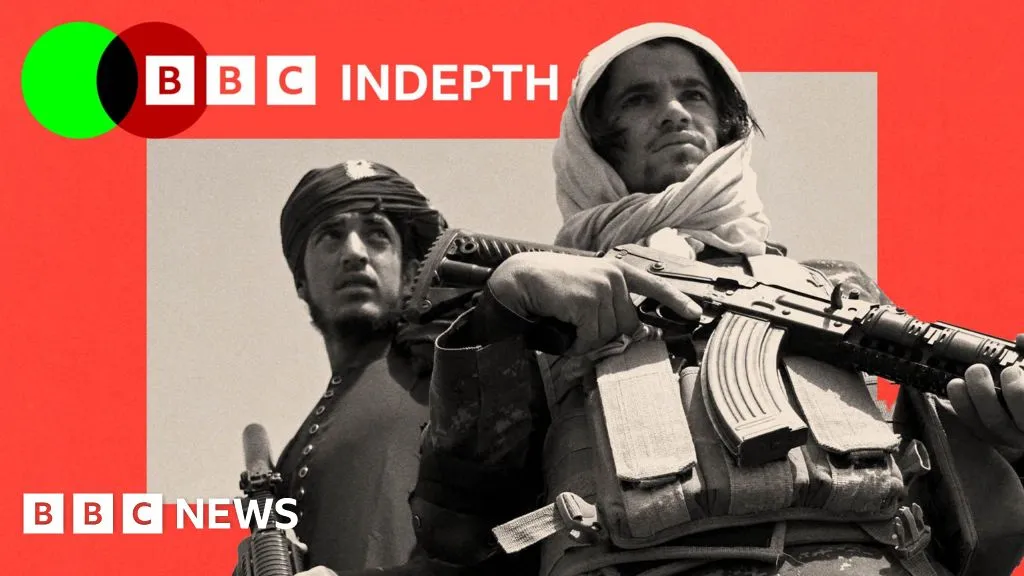
BBC News - WorldFIG 01
Reading time
10min
Word count
2 376words
Sources cited
2cited
Entities identified
10entities
Quality score
100%
§ 01
Briefing Summary
AI-generatedNEWSAR · AI
Five years after the Taliban regained control of Afghanistan, the West's influence is questioned as engagement strategies appear ineffective. Despite international sanctions and a severe humanitarian crisis, the Taliban has consolidated power, with women increasingly excluded from public life and education. While some advocate for continued engagement due to Afghanistan's reliance on aid, others note the Taliban's growing de facto recognition through diplomatic and economic ties with countries like China and Russia. The Taliban seeks closer diplomatic relations, while the West remains divided on how best to achieve meaningful change, particularly regarding women's rights.
Confidence 0.90Sources 2Claims 5Entities 10
§ 02
Article analysis
Model · rule-basedFraming
Human Rights
Diplomatic
Tone
Measured
AI-assessed
CalmNeutralAlarmist
Factuality
0.60 / 1.00
Mixed
LowHigh
Sources cited
2
Limited
FewMany
§ 03
Key claims
5 extracted01
The world has to talk to the Taliban in a different way because it's just not working.
quoteNajia
Confidence
1.00
02
22 million Afghans rely on some form of foreign assistance to help them survive.
statisticUnited Nations
Confidence
0.95
03
Women are banned from much of the public sphere and girls are prohibited from going to school over the age of 12 in Taliban-ruled Afghanistan.
factual
Confidence
0.90
04
The international response to the Taliban is split between Western countries focused on human rights and others interested in investment opportunities.
factual
Confidence
0.85
05
Recent rules require women to ask men to take their products to market and only men can sit at their stalls.
factual
Confidence
0.80
§ 04
Full report
10 min read · 2 376 words§ 05
Entities
10 identifiedKey playerOppositionContextPositiveNeutralNegative
People1
Organizations2
Locations4
§ 06
Keywords & salience
9 termswomen's rights
1.00
taliban rule
1.00
western influence
0.90
afghanistan
0.80
humanitarian crisis
0.70
economic crisis
0.60
international sanctions
0.50
foreign assistance
0.50
engagement strategy
0.40
§ 07
Topic connections
Interactive graph Network visualization showing 41 related topics
View Full Graph Person Organization Location Event|Click node to navigate|Edge numbers = shared articles