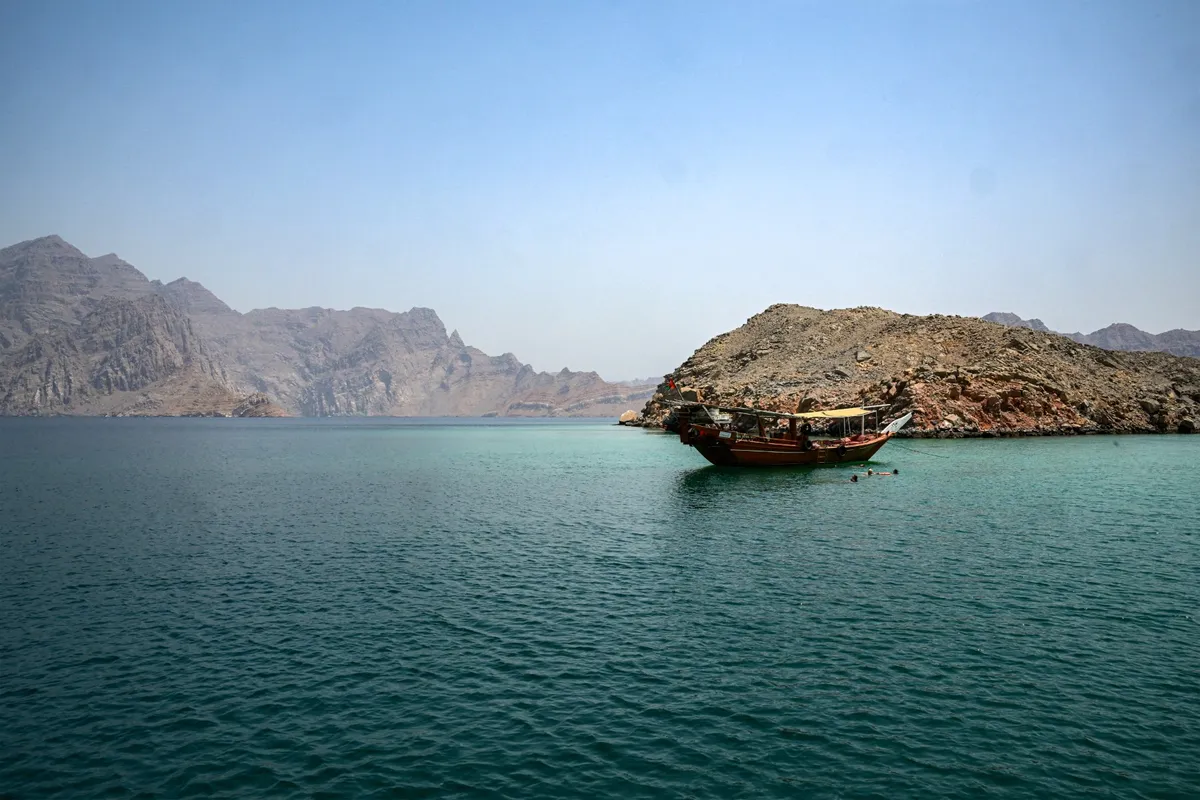
EXPLAINERThe global energy watchdog has pledged the largest release in its history from strategic oil reserves to calm volatile markets amid the war on Iran. But is the ‘one-shot’ tactic worth it?A dhow sails in the waters of the Strait of Hormuz off Khasab in Oman's northern Musandam peninsula on June 25, 2025 [File: Giuseppe Cacace/AFP]Published On 13 Mar 2026The International Energy Agency (IEA), a global energy watchdog, with several of the wealthiest countries as member nations, has announced the largest release of government oil reserves in its history, two weeks after the United States and Israel started their war on Iran with strikes on Tehran.In retaliatory attacks, Tehran has launched strikes on Israel as well as US military assets and energy facilities in Gulf countries, and has closed the Strait of Hormuz, a vital artery in the global oil supply chain, driving up crude prices to more than $100 per barrel.“The war in the Middle East is creating the largest supply disruption in the history of the global oil market,” the IEA said in its monthly market report.While the IEA’s 32 member nations appeared hesitant earlier in the week to tap into the strategic reserves, they ultimately announced they would release nearly 400 million barrels of emergency crude. That’s one-third of the grouping’s total holding of 1.2 billion barrels of government reserves.Previously, IEA member nations have released oil from emergency reserves five times: During the 1990-1991 Gulf War; after Hurricane Katrina in 2005; during the Libyan civil war in 2011; and twice after the Russian invasion of Ukraine.But is this latest release sufficient to calm down the disrupted market?Security personnel ride on motorbikes, on a day of a protest marking the annual al-Quds Day (Jerusalem Day) on the last Friday of the holy month of Ramadan in Tehran, Iran, on March 13, 2026 [Alaa Al Marjani/Reuters]What has the IEA announced?The energy watchdog argued that the supply shock triggered by Iran’s strikes on cargo vessels and its blockade of the Strait of Hormuz meant energy markets are facing a worse crisis than during the Gulf War of 1991 and Russia’s 2022 invasion of Ukraine.Before the US and Israel attacked Tehran – and assassinated Iran’s Supreme Leader Ayatollah Ali Khamenei – on February 28, Brent crude was trading at about $65 per barrel. Now, it is above $100, and Iranian leaders have warned countries that it will not allow “one litre of oil” to pass the Hormuz Strait if attacks continue, and that the price could go above $200 per barrel.Earlier this week, former IMF economist Olivier Blanchard was quoted by news outlet Business Insider that this could be possible if tankers carrying oil cannot be protected from Iranian attacks. “I find it hard not to have as a central scenario where oil prices will remain very high for a long time, higher than the market current prices,” Blanchard said on Thursday.The IEA’s announcement of a plan to release 400 million barrels of oil is much higher than the 2022 release of 182 million barrels of oil by the group’s members after Russia invaded Ukraine.“Energy security is the founding mandate of the IEA, and I am pleased that IEA members are showing strong solidarity in taking decisive action together,” said Fatih Birol, executive director of the Paris-based IEA.Birol applauded the member nations’ decision to contribute to the release from their strategic reserves. “This is a major action aiming to alleviate the immediate impacts of the disruption in markets,” Birol said. “But, to be clear, the most important thing for a return to stable flows of oil and gas is the resumption of transit through the Strait of Hormuz.”About one-fifth of the world’s oil is transported through the Strait of Hormuz. That’s more than 20 million barrels daily on average. And coordinated IEA releases are usually spread over weeks or months, meaning only a portion of the 400 million planned barrels will be released in the short term.The IEA has not yet provided a precise timeline for releasing the oil.Neil Quilliam, an associate fellow with the Middle East and North Africa Programme at Chatham House, London, said, ultimately, the IEA release “will not make a large material difference” in the ongoing crisis.“It really depends on the pace of the release. It is not clear yet what the schedule is,” Quilliam told Al Jazeera. By some calculations, such relief could evaporate as soon as three weeks.“It’s a one-shot solution. It’s a high-risk strategy,” he said. “So, once that all is finished, there is no real alternative.”After new Supreme Leader Mojtaba Khamenei, son of the slain ayatollah, struck an even more defiant tone in his first address on Thursday, oil prices shot up yet again.Israeli soldiers walk by a billboard commissioned by evangelical group Friends of Zion, which displays a picture of US President Donald Trump with the words ‘Thank you God & Donald Trump’, in Tel Aviv, Israel, amid the US-Israeli conflict with Iran, on March 12, 2026 [Nir Elias/Reuters]What has the US announced?The US created its own strategic petroleum reserve in 1975 after the Arab oil embargo exposed Washington’s energy security vulnerabilities.It has the world’s largest reserve of countries which publicly report such reserves, with a maximum capacity of about 720 million barrels.At present, Washington only holds about 415 million barrels of crude, stored in underground salt caverns along the Gulf Coast in Texas and Louisiana, as stocks have been depleted by Russia’s war on Ukraine.Only China is estimated to have a larger stockpile currently, but Beijing’s holdings are not made public.The US is currently the world’s largest oil producer and consumer, and has confirmed that it will release 172 million barrels of oil from its strategic petroleum reserve as its contribution to coordinated efforts with the IEA.US President Donald Trump told a local news channel on Thursday that the US government would tap the strategic reserve, in its boldest bid yet to stabilise prices in the energy sector, and “then we’ll fill it up”.Trump has previously criticised former President Joe Biden’s administration for tapping the reserve to bring down petrol prices.Secretary of Energy Chris Wright said the release would begin next week and take roughly 120 days for delivery. He added that the government would then work to replace about 200 million barrels in the next year.Will this plug the oil shortage straight away?No.“Oil molecules move fast, and so do markets. What matters is how fast the released volumes actually move,” Maksim Sonin, an energy executive who works with Stanford University’s Center for Fuels of the Future, told Al Jazeera.“Unless the underlying problem is solved, no release can fix the market,” he added.Helima Croft, head of global commodity strategy at RBC Capital Markets, added: “While the IEA has decided to release 400 million barrels from the group’s strategic oil reserves, with commitments from Japan, South Korea, France, Germany, the UK, and the US announced thus far, the market impact of the move may prove limited.“Supplies will be constrained by the pace at which oil can be extracted from reserves.”Trump and his officials have changed their position on the endgame from the hostilities against Iran, frequently by the time the sun sets in the other part of the world. The US president, however, insists that the conflict is a blip and not another drawn-out war.“But the fact that they’ve rolled in with the IEA, and they’re releasing 172 million barrels, is significant,” Quilliam told Al Jazeera. “If we get beyond that timeframe [of ending the fighting and days that the strategic oil reserves can cover], what is the situation gonna be like?”People queue to refuel their vehicles at a petrol station in Chennai on March 12, 2026 as an oil price spike caused by the war in the Middle East causes exasperation at petrol pumps across Asia, where many economies are heavily dependent on fossil fuel imports [R Satish Babu/AFP]How quickly can the oil be released?Not very. On paper, the US claims it can release 4.4 million barrels a day; however, its actual output is much smaller, and deliveries could take weeks to reach after a drawdown is signed.
SRCAl Jazeera
LANGEN
LEANCenter
WORDS1 347
ENT10
FRI · 2026-03-13 · 13:08 GMTBRIEF NSR-2026-0313-24204
NSR-2026-0313-24204News Report·EN·Economic Impact
IEA announces release of 400 million barrels of oil. But is it enough?
In March 2026, the International Energy Agency (IEA) announced the release of nearly 400 million barrels of oil from its strategic reserves, the largest release in its history. This action was taken in response to a significant supply disruption caused by the war between the United States, Israel, and Iran, which began in late February 2026.
Yashraj SharmaAl JazeeraFiled 2026-03-13 · 13:08 GMTLean · CenterRead · 6 min
Al JazeeraFIG 01
Reading time
6min
Word count
1 347words
Sources cited
1cited
Entities identified
10entities
Quality score
100%
§ 01
Briefing Summary
AI-generatedNEWSAR · AI
In March 2026, the International Energy Agency (IEA) announced the release of nearly 400 million barrels of oil from its strategic reserves, the largest release in its history. This action was taken in response to a significant supply disruption caused by the war between the United States, Israel, and Iran, which began in late February 2026. Iran's retaliatory strikes, including the closure of the Strait of Hormuz, a critical oil supply route, drove crude prices above $100 per barrel. The IEA, comprised of 32 member nations, aims to stabilize volatile energy markets with this release, which represents one-third of its total government reserves. The agency believes the current crisis surpasses the impact of the 1991 Gulf War and the 2022 Russian invasion of Ukraine on global oil markets.
Confidence 0.90Sources 1Claims 5Entities 10
§ 02
Article analysis
Model · rule-basedFraming
Economic Impact
National Security
Tone
Mixed Tone
AI-assessed
CalmNeutralAlarmist
Factuality
0.70 / 1.00
Factual
LowHigh
Sources cited
1
Limited
FewMany
§ 03
Key claims
5 extracted01
Iranian leaders have warned countries that they will not allow “one litre of oil” to pass the Hormuz Strait if attacks continue.
quoteIranian leaders
Confidence
1.00
02
Brent crude was trading at about $65 per barrel before the US and Israel attacked Tehran.
factual
Confidence
1.00
03
IEA announces release of nearly 400 million barrels of emergency crude.
factualIEA
Confidence
1.00
04
The war in the Middle East is creating the largest supply disruption in the history of the global oil market.
quoteIEA
Confidence
0.90
05
Oil prices could rise above $200 per barrel if tankers carrying oil cannot be protected from Iranian attacks.
predictionOlivier Blanchard
Confidence
0.70
§ 04
Full report
6 min read · 1 347 words§ 05
Entities
10 identifiedKey playerOppositionContextPositiveNeutralNegative
Organizations1
Locations7
§ 06
Keywords & salience
9 termsoil reserves
0.90
iea
0.80
oil market
0.70
strait of hormuz
0.70
war on iran
0.60
supply disruption
0.60
energy markets
0.50
crude prices
0.50
emergency crude
0.40
§ 07
Topic connections
Interactive graph Network visualization showing 28 related topics
View Full Graph Person Organization Location Event|Click node to navigate|Edge numbers = shared articles