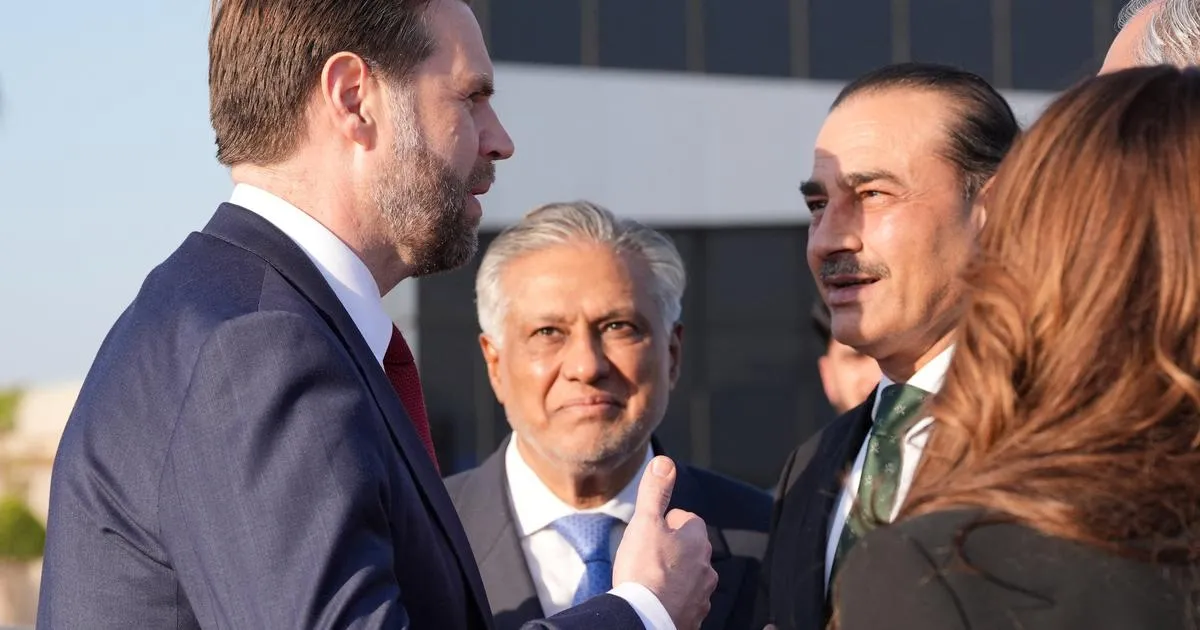
Le 12 avril 2026 à 09h17 JD Vance a déploré l’absence de «promesse ferme» de Téhéran pour un abandon de son programme d’armement nucléaire. Personne ne s’est exprimé, ni côté américain, ni côté iranien, sur la poursuite ou non de la trêve en cours. Passer la publicité Passer la publicité Près de 21 heures de négociations qui n’ont pas abouti. Les États-Unis et l'Iran ont échoué à trouver un accord pour mettre fin à la guerre au Moyen-Orient, au terme de négociations marathon à Islamabad, a annoncé dimanche le vice-président américain JD Vance, qui rentre aux États-Unis après avoir fait, selon lui, une «offre finale et la meilleure possible» à l'Iran. Médiateur dans ces discussions de plus de 20 heures, le Pakistan a rapidement appelé à ce que le cessez-le-feu de deux semaines reste observé, malgré cet échec à trouver un accord de trêve durable. Mais personne ni côté américain ni côté iranien ne s'est exprimé sur la poursuite ou non de cette trêve, la première dans la guerre déclenchée le 28 février par l'offensive américano-israélienne sur l'Iran, qui a fait des milliers de morts dans la région et se poursuit au Liban. «Nous rentrons aux États-Unis sans être parvenus à un accord», a déclaré JD Vance lors d'une brève conférence de presse à Islamabad, où Américains et Iraniens négociaient depuis samedi, à un niveau inédit entre les deux pays ennemis depuis la Révolution islamique de 1979. «Je pense que c'est une mauvaise nouvelle pour l'Iran bien plus que ce ne l'est pour les États-Unis d'Amérique», a-t-il considéré. Passer la publicité «Demandes déraisonnables» des États-Unis Le vice-président américain a déploré l'absence de «promesse ferme» de Téhéran pour un abandon de son programme d'armement nucléaire, exigence clé du président américain Donald Trump depuis le déclenchement du conflit qui a ébranlé l'économie mondiale. «Nous repartons d'ici avec une proposition très simple, une approche qui constitue notre offre finale et la meilleure que nous puissions faire. Nous verrons si les Iraniens l'acceptent», a-t-il ajouté, avant de rapidement remonter dans son avion et quitter le Pakistan. L'Iran a confirmé la fin des discussions, attribuant leur échec aux «demandes déraisonnables» des États-Unis, selon la télévision d'État iranienne. «Il était évident dès le départ que nous ne devions pas nous attendre à atteindre un accord en une seule session (de négociations). Personne ne s'y attendait», a déclaré dimanche le porte-parole de la diplomatie iranienne, Esmaeil Baqaei, évoquant «une atmosphère de suspicion et de méfiance». Côté américain, JD Vance était accompagné par l'émissaire spécial Steve Witkoff et Jared Kushner, gendre du président Donald Trump. L'Iran était notamment représenté par son influent président du Parlement, Mohammad Bagher Ghalibaf, ainsi que le ministre des Affaires étrangères Abbas Araghchi, à la tête d'une délégation de quelque 70 personnes. Le vice-président américain a laissé entendre qu'il accordait encore du temps à l'Iran pour examiner l'offre des États-Unis. À lire aussi Négociations entre les États-Unis et l’Iran : «Le moindre progrès côté iranien sera neutralisé par des pièges internes», estime Jacques Audibert Engagement à ne pas construire l’arme nucléaire «Le fait est simplement que nous avons besoin d'un engagement formel de leur part, par lequel ils ne chercheront pas à se doter d'une arme nucléaire et qu'ils ne chercheront pas à se procurer les moyens qui leur permettraient d'en fabriquer une rapidement», a déclaré JD Vance. «La question est simple: voyons-nous un engagement fondamental de la part des Iraniens à ne pas développer d'arme nucléaire - pas seulement aujourd'hui, pas seulement dans deux ans, mais à long terme? Nous n'avons pas encore vu cela. Nous espérons le voir», a-t-il poursuivi. Si JD Vance a placé la question du nucléaire au cœur de l'échec des discussions, il n'a pas fait mention explicitement du détroit d'Ormuz lors de sa conférence de presse. Ce passage stratégique pour l'approvisionnement mondial en hydrocarbures du Golfe, est de facto bloqué depuis le début du conflit par l'Iran, avec des conséquences en cascade sur l'économie mondiale, entre pénuries et hausses de prix. Passer la publicité Le porte-parole de la diplomatie iranienne a lui évoqué «la complexité des problèmes et des conditions entourant les négociations». «Lors de ce cycle, de nouveaux sujets ont été ajoutés, notamment la question du détroit d'Ormuz et les dossiers régionaux, chacun avec ses propres conditions et considérations spécifiques», a ajouté Esmaeil Baqaei. «On balaye le détroit» L'armée américaine a affirmé samedi que deux de ses destroyers avaient franchi le détroit dans une opération préalable à son déminage. «On balaye le détroit», a renchéri Donald Trump, auprès de la presse. Les Gardiens de la révolution, armée idéologique de la République islamique d'Iran, ont eux averti tôt dimanche qu'ils agiraient avec «sévérité» contre les navires militaires transitant par le détroit. «Cela m'est égal» si un accord est conclu ou non avec l'Iran, a également affirmé samedi Donald Trump, alors que les discussions étaient encore en cours au Pakistan. «Nous les avons vaincus militairement», avait-il assuré. En six semaines de conflit, la guerre au Moyen-Orient a fait des milliers de morts, surtout en Iran et au Liban. Après l'entrée en vigueur du cessez-le-feu, Israël a soutenu que le Liban, où il combat le Hezbollah, n'était pas inclus dans l'accord. Au total, les autorités libanaises ont dit samedi avoir décompté 2020 morts et 6436 blessés depuis le 2 mars. Mercredi, Israël avait mené au Liban les frappes les plus meurtrières de cette guerre, avec au moins 357 morts en une journée, selon un dernier bilan. Selon la présidence libanaise, des pourparlers doivent avoir lieu mardi entre le Liban et Israël à Washington, rejetés par le Hezbollah. Le premier ministre Benyamin Netanyahou a dit samedi soir vouloir un accord de paix «qui tiendra pour des générations». «Nous rentrons aux États-Unis sans être parvenus à un accord» : ce que l’on sait de l’échec des négociations avec l’Iran S'ABONNER Kamala Harris, ancienne vice-présidente de Joe Biden, dit «réfléchir» à se présenter à la présidentielle en 2028 L’ex-sénatrice de Californie, aujourd’hui dépourvue de tout mandat d’élue, sillonne les États-Unis depuis l’an dernier pour parler de son livre 107 jours. Elle y règle ses comptes avec l’ancien président démocrate et son entourage. Guide suprême iranien «défiguré», détroit d’Ormuz, uranium... Ce qu’il faut retenir de la conférence de presse de Pete Hegseth après le cessez-le-feu Le ministre américain de la Défense s’est exprimé ce mercredi lors d’une conférence de presse au lendemain de l’annonce d’une trêve entre les États-Unis et l’Iran. Chasseur américain abattu pour la première fois par l’Iran : Washington serait parvenu à secourir un pilote, Trump «briefé» sur la situation Selon CBS et CNN, citant deux responsables américains, un membre d’équipage a été sauvé lors d’une opération de secours. Contrairement aux premières affirmations iraniennes, l’appareil américain serait un F-15E, avec deux membres d’équipage, et non un chasseur furtif F-35. Négociations entre les États-Unis et l’Iran : «Le moindre progrès côté iranien sera neutralisé par des pièges internes», estime Jacques Audibert ENTRETIEN - Le conseiller diplomatique de François Hollande a négocié pour la France l’accord sur le nucléaire de 2015 avec les Iraniens. Et notamment avec Abbas Araghchi, le ministre des Affaires étrangères, qui fait partie de la délégation envoyée au Pakistan. «Nous sommes certainement prêts à tendre la main» : à Islamabad, la fragile ouverture des négociations de paix entre les États-Unis et l’Iran DÉCRYPTAGE - Le cessez-le-feu au Moyen-Orient dépend du succès de négociations difficiles, qui se déroulent dans un climat tendu entre les représentants iraniens et américains, au Pakistan. «C’est le consommateur qui va payer» : à quoi faut-il s’attendre en cas d’instauration d’un péage sur Ormuz ? L’Iran veut pérenniser sa domination sur ce bras de mer stratégique par où transite une grande quantité de la production d’hydrocarbure mondiale. Julien Lalanne de Saint-Quentin : «Comment l’Iran transforme le détroit d’Ormuz en atout stratégique et financier» FIGAROVOX/TRIBUNE - La prise du contrôle du détroit par l’Iran et l’instauration d’un péage pourrait faire d’Ormuz un instrument durable de rente et de puissance pour Téhéran, analyse Julien Lalanne de Saint-Quentin, enseignant à King’s College. Comment Benyamin Netanyahou a convaincu Donald Trump de frapper l’Iran DÉCRYPTAGE - Un ouvrage à paraître raconte que les proches collaborateurs du président, malgré leurs réticences, n’ont guère cherché à le dissuader. Face à ses déconvenues en Iran, Donald Trump dirige sa colère vers ses alliés de l’Otan RÉCIT - Comme s’il les tenait pour responsables des mécomptes des opérations contre l’Iran, le président américain semble déterminé à prendre des mesures punitives contre les anciens partenaires historiques des États-Unis. Les Français rejettent massivement Donald Trump et sa guerre contre l’Iran SONDAGE - Une majorité estime que Téhéran sort vainqueur d’un conflit qui renforce le régime et fragilise la paix dans le monde, selon le sondage Odoxa-Backbone pour Le Figaro. Ran Halévi : « Les prouesses militaires des États-Unis et Israël sont gâchées par le vide stratégique de leurs actions » TRIBUNE - Malgré les succès militaires obtenus en Iran, les États-Unis et Israël n’ont ni brisé le régime de Téhéran, ni réellement réduit son pouvoir de nuisance dans la région, analyse l’historien, pour qui cette impasse stratégique met en lumière un vide politique. Guerre en Iran : Moscou dresse le constat d’une « défaite stratégique des États-Unis » DÉCRYPTAGE - Le Kremlin s’est félicité mercredi du cessez-le-feu mais les experts proches du pouvoir doutent de la fin du conflit au Proche-Orient et n’hésitent plus à critiquer ouvertement Donald Trump. Cessez-le-feu en Iran : «Tout le monde applique la méthode Trump : toujours revendiquer la victoire, toujours nier la défaite» ENTRETIEN - Les États-Unis, l’Iran et d’autres acteurs du conflit au Moyen-Orient se livrent à une vraie bataille des récits pour revendiquer le succès de l’accord de trêve conclu mardi. Mais la réalité est plus complexe, relève l’historien Pierre Razoux.
SRCLe Figaro
LANGFR
LEANCenter-Right
WORDS1 622
ENT8
SUN · 2026-04-12 · 07:17 GMTBRIEF NSR-2026-0412-64092
NSR-2026-0412-64092News Report·FR·Diplomatic
«Nous rentrons aux États-Unis sans être parvenus à un accord» : ce que l’on sait de l’échec des négociations avec l’Iran
Les négociations entre les États-Unis et l'Iran à Islamabad, Pakistan, visant à mettre fin à la guerre au Moyen-Orient, ont échoué le 12 avril 2026. Le vice-président américain, JD Vance, a annoncé le retour des États-Unis sans accord, déplorant l'absence d'engagement ferme de l'Iran concernant son programme nucléaire.
Par Le Figaro avec AFPLe FigaroFiled 2026-04-12 · 07:17 GMTLean · Center-RightRead · 7 min
Le FigaroFIG 01
Reading time
7min
Word count
1 622words
Sources cited
4cited
Entities identified
8entities
Quality score
100%
§ 01
Briefing Summary
AI-generatedNEWSAR · AI
Les négociations entre les États-Unis et l'Iran à Islamabad, Pakistan, visant à mettre fin à la guerre au Moyen-Orient, ont échoué le 12 avril 2026. Le vice-président américain, JD Vance, a annoncé le retour des États-Unis sans accord, déplorant l'absence d'engagement ferme de l'Iran concernant son programme nucléaire. L'Iran a attribué l'échec aux "demandes déraisonnables" des États-Unis. Le Pakistan, médiateur des discussions, a appelé au maintien du cessez-le-feu de deux semaines, bien qu'aucun des deux pays n'ait confirmé sa prolongation. Ces négociations étaient les premières à ce niveau entre les deux pays depuis 1979.
Confidence 0.90Sources 4Claims 5Entities 8
§ 02
Article analysis
Model · rule-basedFraming
Diplomatic
Conflict
Tone
Measured
AI-assessed
CalmNeutralAlarmist
Factuality
0.70 / 1.00
Factual
LowHigh
Sources cited
4
Well sourced
FewMany
§ 03
Key claims
5 extracted01
The war was triggered on February 28 by an American-Israeli offensive on Iran.
factualnull
Confidence
1.00
02
The ceasefire of two weeks should remain observed, despite the failure to find a lasting truce agreement.
factualPakistan
Confidence
1.00
03
Iran attributed the failure of the discussions to 'unreasonable demands' from the United States.
factualIranian state television
Confidence
1.00
04
JD Vance deplored the absence of a 'firm promise' from Tehran to abandon its nuclear weapons program.
quoteJD Vance
Confidence
1.00
05
The United States and Iran failed to reach an agreement to end the war in the Middle East after marathon negotiations in Islamabad.
factualnull
Confidence
1.00
§ 04
Full report
7 min read · 1 622 words§ 05
Entities
8 identifiedKey playerOppositionContextPositiveNeutralNegative
§ 06
Keywords & salience
9 termsnégociations
0.90
échec des négociations
0.80
états-unis
0.80
iran
0.80
accord
0.70
guerre au moyen-orient
0.60
programme d’armement nucléaire
0.60
demandes déraisonnables
0.50
trêve
0.50
§ 07
Topic connections
Interactive graph Network visualization showing 51 related topics
View Full Graph Person Organization Location Event|Click node to navigate|Edge numbers = shared articles